Reversibility of Heart Failure after Catheter Ablation in Patients with Ventricular Pre-Excitation-Induced Cardiomyopathy
Introduction
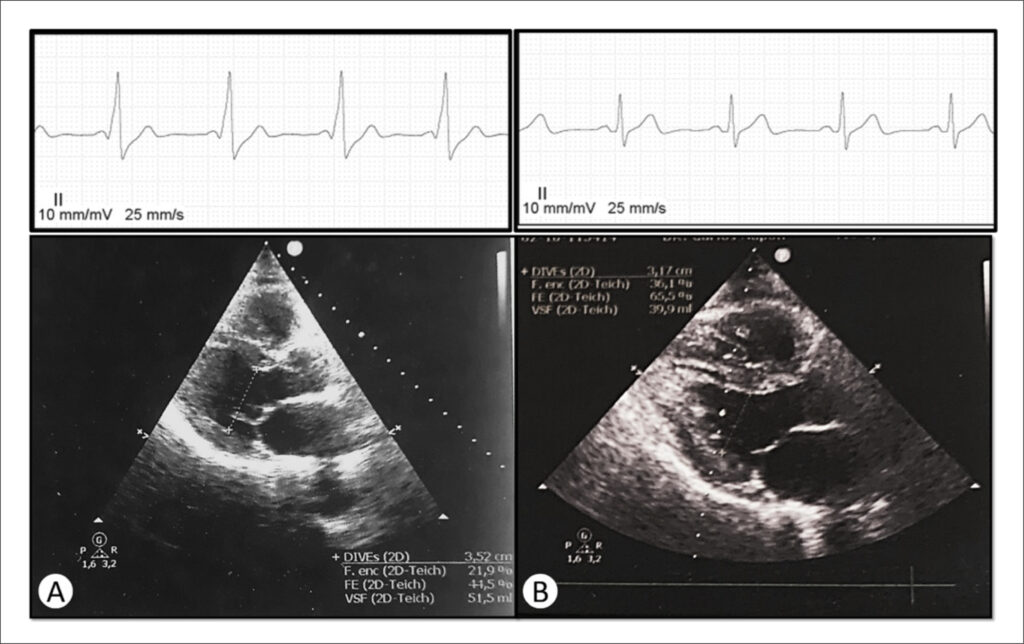
Ventricular pre-excitation is characterized by the presence of an atrioventricular accessory pathway, predisposing patients to cardiac arrhythmias that may lead to syncope, palpitations, or sudden death. Although rare, a possible complication is the development of heart failure (HF), referred to as pre-excitation–induced cardiomyopathy. It has been suggested that the eccentric ventricular activation caused by the accessory pathway leads to mechanical ventricular dyssynchrony, resulting in structural alterations and ventricular dysfunction. Case reports have described improvement of HF after catheter ablation of the accessory pathway. It is important to alert the medical community to this rare entity, which should be considered in patients with ventricular pre-excitation and reduced ejection fraction, as it represents a potentially reversible cause of HF following ablation.
[…]
Images
Image gallery fullscreen viewer
Comments are moderated by the editorial team before publication. Discussions should be evidence-based and use scientific language. Conflicts of interest should be declared.