Beyond Humor: Laughter as a Cardiovascular Stimulus
Why Laughter Matters to the Cardiovascular System
Cardiovascular disease (CVD) remains the leading cause of mortality worldwide, despite substantial advances in pharmacological and interventional therapies. In this context, non-pharmacological strategies that are low-cost, scalable, and accessible have attracted growing interest. Laughter therapy (LT), traditionally associated with psychological well-being, has emerged as a potential adjunctive physiological stimulus capable of eliciting measurable cardiovascular responses.–
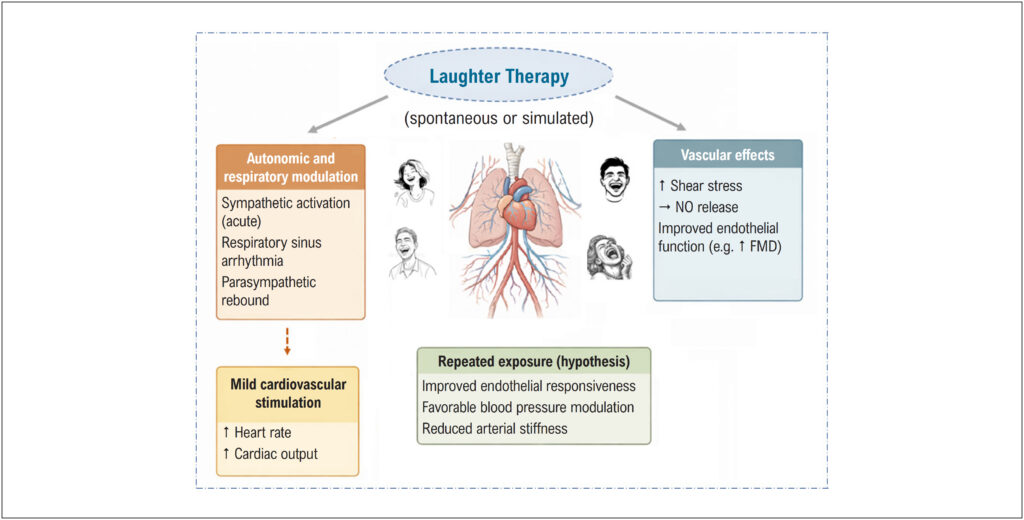
Observational data suggest that individuals with coronary artery disease laugh less frequently and exhibit higher levels of anger and hostility – psychological traits associated with adverse cardiovascular outcomes. Moreover, lower daily laughter frequency has been linked to increased CVD incidence and mortality., While these associations do not establish causality, they raise an important physiological question: can laughter itself act as a meaningful cardiovascular stimulus? The hypothesized physiological pathways through which LT may influence autonomic regulation, hemodynamics, and vascular function are summarized in .
[…]
Images
Image gallery fullscreen viewer
Comments are moderated by the editorial team before publication. Discussions should be evidence-based and use scientific language. Conflicts of interest should be declared.