Long-Term Effects of Pulmonary Valve Implantation and Prosthesis Evolution in Patients with Repaired Tetralogy of Fallot
Abstract
Background
Pulmonary valve regurgitation is a significant long-term complication in patients with tetralogy of Fallot (TOF).
Objective
This study aims to investigate the effects of pulmonary valve implantation (PVI) on the anatomy and function of the right ventricle (RV) and the long-term evolution of the implanted prosthesis in the pulmonary position.
Methods
A single-center retrospective cohort analysis was performed in 56 consecutive patients with TOF who underwent PVI. The study included patients of both sexes, aged ≥ 12 years, and involved assessing clinical and surgical data, pre- and post-operative cardiovascular magnetic resonance imaging, and echocardiogram data more than 1 year after PVI.
Results
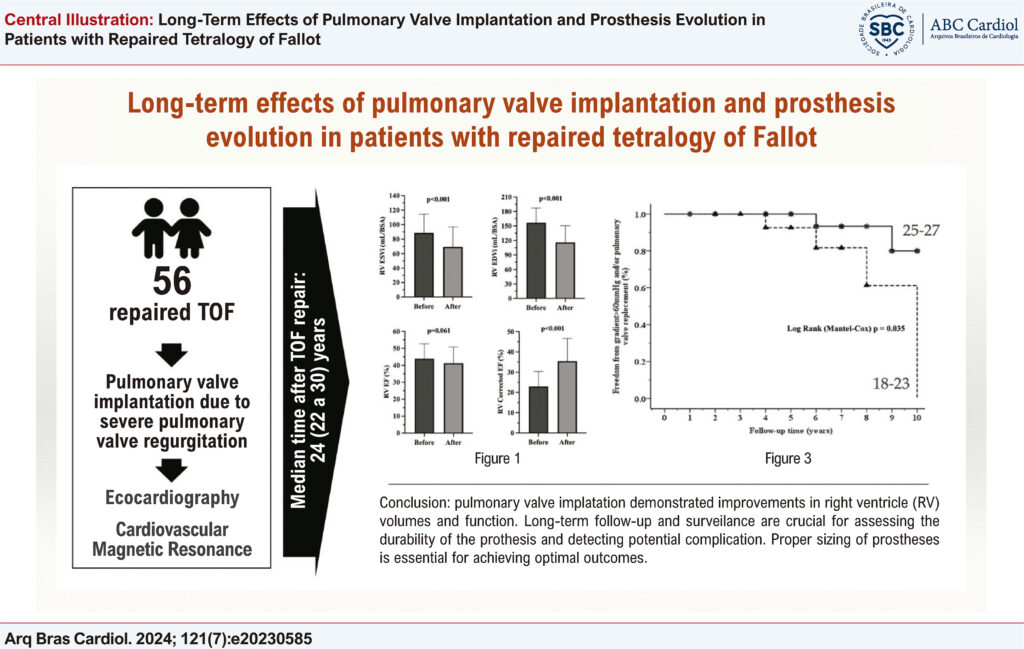
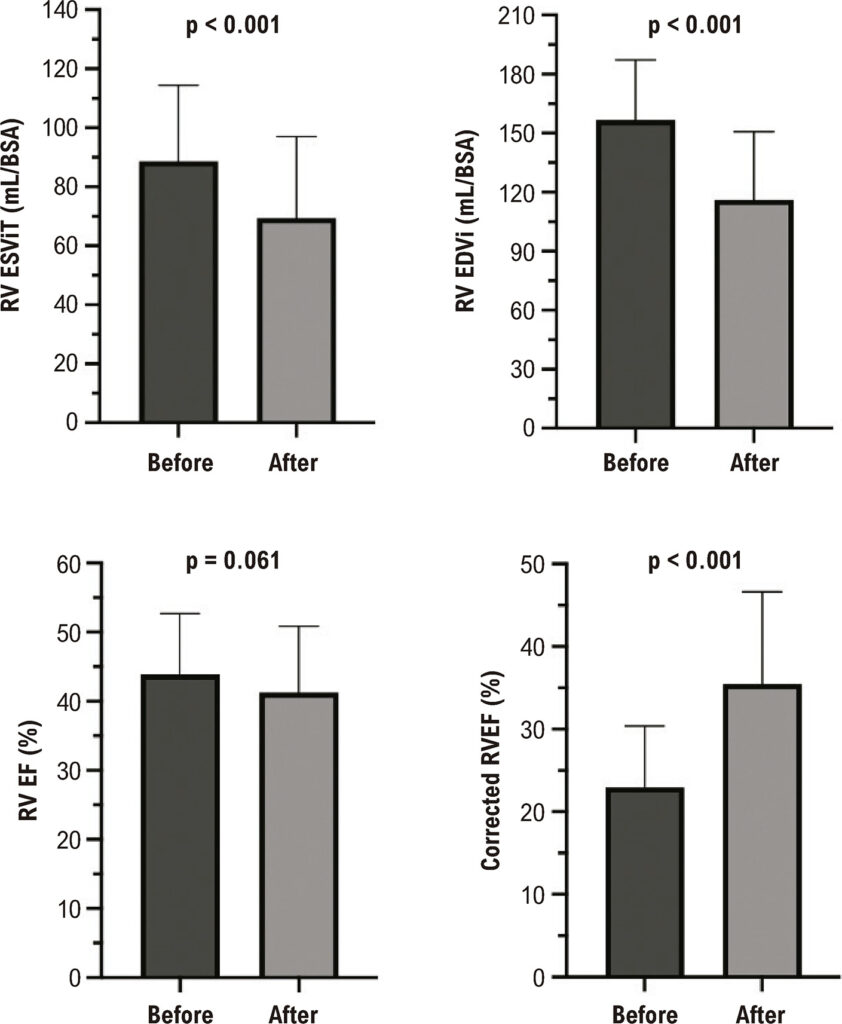
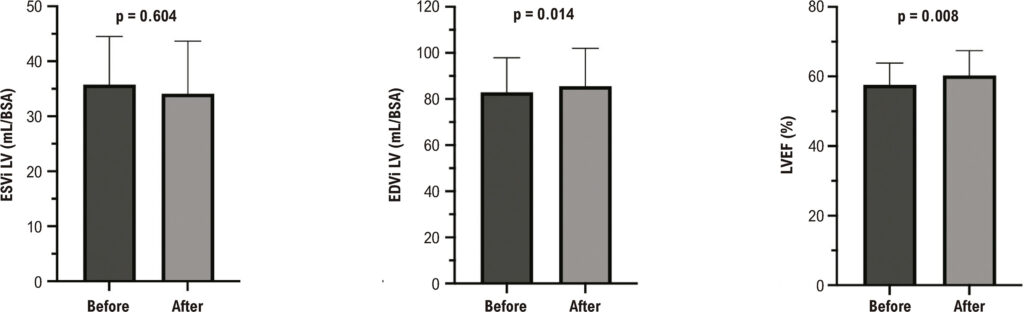
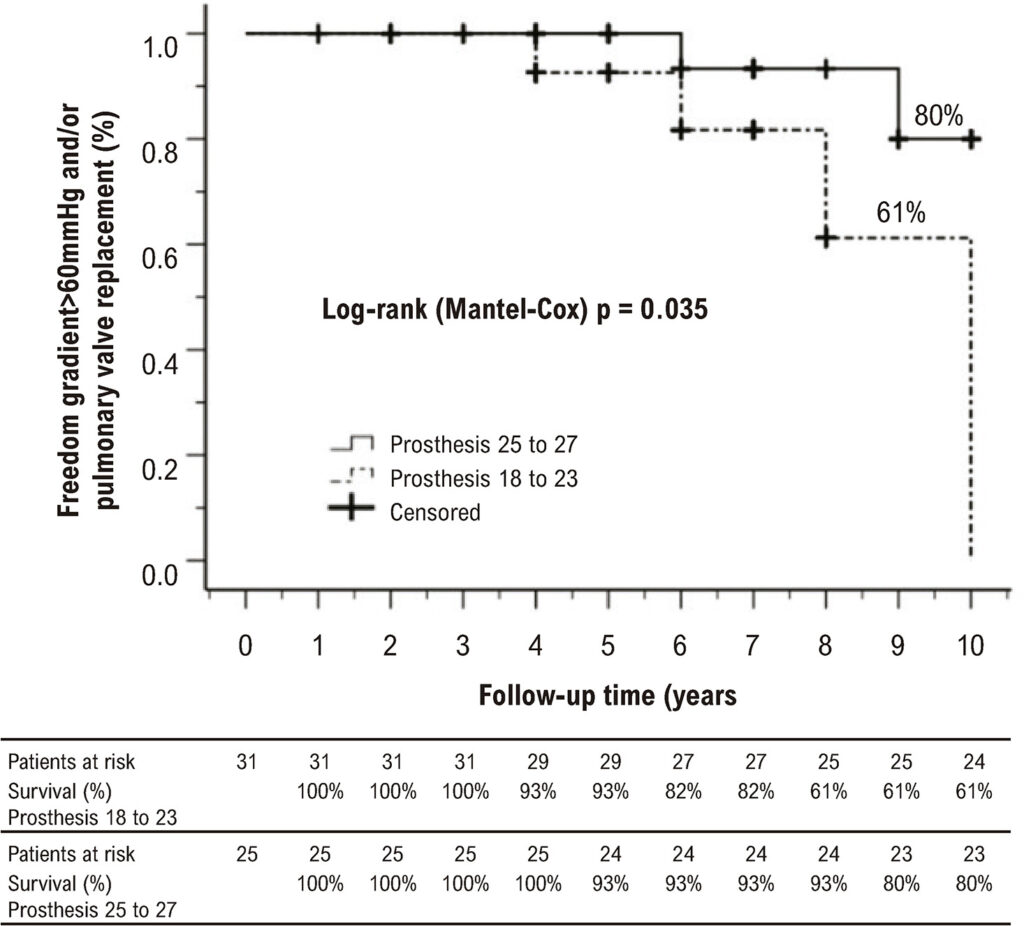
After PVI, there was a significant decrease in RV end-systolic volume indexed by body surface area (BSA), from 89 mL/BSA to 69 mL/BSA (p < 0.001) and indexed RV end-diastolic volume, from 157 mL/BSA to 116 mL/BSA (p < 0.001). Moreover, there was an increase in corrected RV ejection fraction [] from 23% to 35% (p 60 mmHg compared to larger prostheses (sizes 25 to 27; p = 0.029; confidence interval: 1.18 to 17.8).
Conclusion
As expected, PVI demonstrated improvements in RV volumes and function. Long-term follow-up and surveillance are crucial for assessing the durability of the prosthesis and detecting potential complications. Proper sizing of prostheses is essential for improved prosthesis longevity.
Images
Image gallery fullscreen viewer
Comments are moderated by the editorial team before publication. Discussions should be evidence-based and use scientific language. Conflicts of interest should be declared.