Epicardial Fat Volume Is Associated with Endothelial Dysfunction, but not with Coronary Calcification: From the Brazilian Longitudinal Study of Adult Health (ELSA-Brasil)
Abstract
Background
The increase in epicardial fat volume (EFV) is related to coronary artery disease (CAD), independent of visceral or subcutaneous fat. The mechanism underlying this association is unclear. Coronary artery calcium (CAC) score and endothelial dysfunction are related to coronary events, but whether EFV is related to these markers needs further clarification.
Objectives
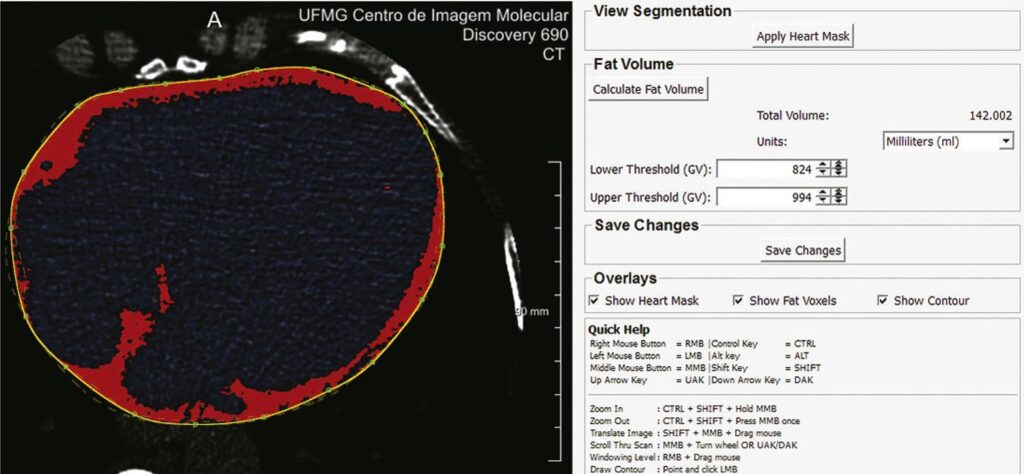
To evaluate the association between automatically measured EFV, cardiovascular risk factors, CAC, and endothelial function.
Methods
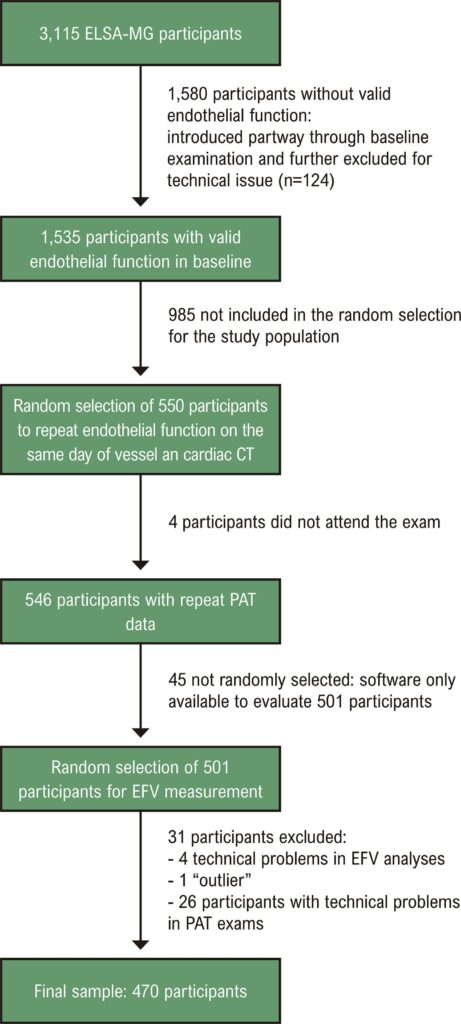
In 470 participants from the Brazilian Longitudinal Study of Adult Health (ELSA-Brasil) with measures of EFV, CAC score and endothelial function, we performed multivariable models to evaluate the relation between cardiovascular risk factors and EFV (response variable), and between EFV (explanatory variable) and endothelial function variables or CAC score. Two-sided p <0.05 was considered statistically significant.
Results
Mean age was 55 ± 8 years, 52.3% of patients were men. Mean EFV was 111mL (IQ 86-144), and the prevalence of CAC score=0 was 55%. In the multivariable analyses, increased EFV was related to female sex, older age, waist circumference, and triglycerides (p0.
Conclusion
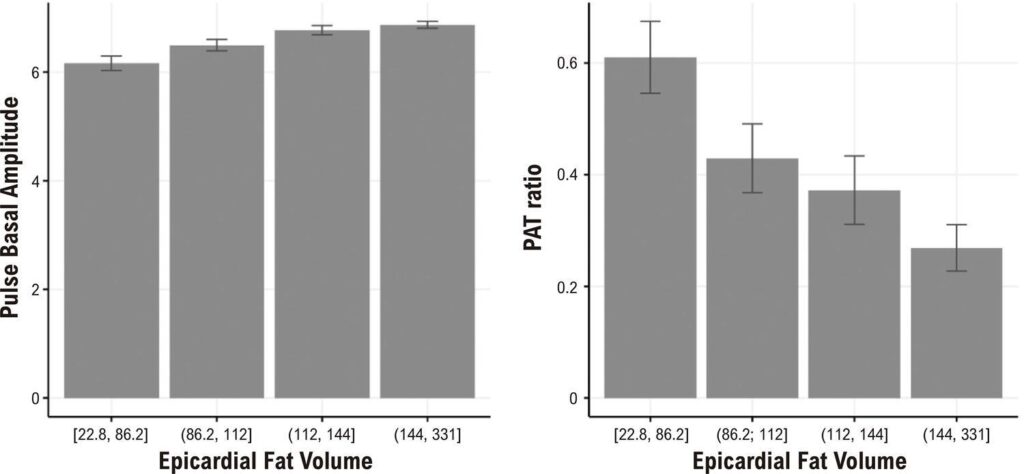
Higher EFV was associated with impaired endothelial function, but not with CAC. The results suggest that EFV is related to the development of CAD through a pathway different from the CAC pathway, possibly through aggravation of endothelial dysfunction and microvascular disease.
Images
Image gallery fullscreen viewer
Comments are moderated by the editorial team before publication. Discussions should be evidence-based and use scientific language. Conflicts of interest should be declared.