Percutaneous coronary intervention in Brazil: results from the Brazilian Public Health System
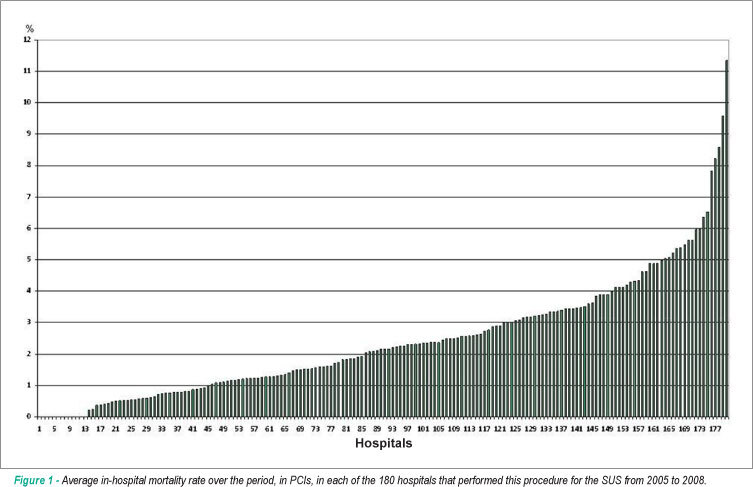
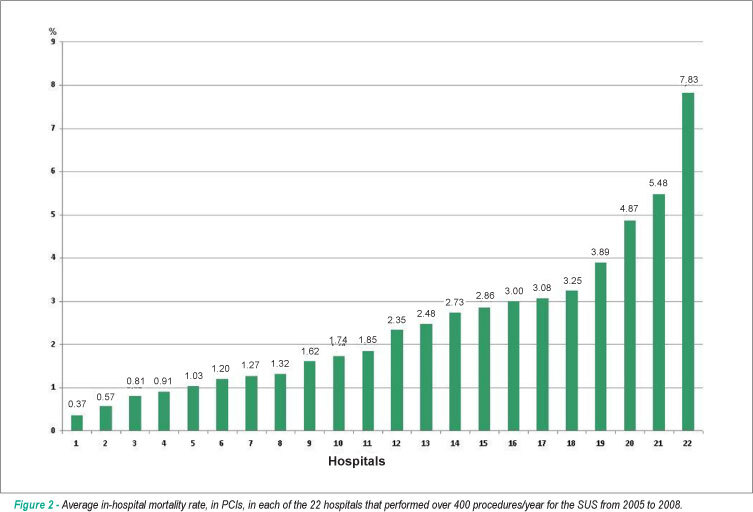
BACKGROUND: The Brazilian Public Health System (SUS) holds approximately 80% of percutaneous coronary interventions (PCI) in Brazil. Being aware of these data will enable to design a proper plan for the treatment of coronary artery disease (CAD). OBJECTIVE: To review and discuss the results of PCIs performed by the SUS. METHODS: We reviewed data from SIH/DATASUS available for public consultation. RESULTS: From 2005 to 2008, 166,514 procedures were performed in 180 hospitals. Average hospital mortality was 2.33%, ranging from 0% to 11.35%, being lower in the Southeast, 2.03% and higher in the northern region, 3.64% (p 0.05). Mortality was higher in females (p 65 to = (p < 0.001). In the diagnosis of angina (79,324, 47.64%) mortality was 1.03%, and AMI (33,286, 32.30%) 6.35% (p < 0.0000001). In the single stent implantation, the most common (102,165, 61.36%), mortality was 1.20%, and primary PCI (27,125, 16.29%), 6.96%. CONCLUSION: Although it is growing, the number of PCIs in Brazil is still low. High-volume hospitals, in smaller numbers, accounted for most procedures. Single stent implantation through hospital admission was reported to be most commonly used procedure. Mortality rates were highly variable among the hospitals. Primary PCI was responsible for the highest mortality rate.
Images
Image gallery fullscreen viewer
Comments are moderated by the editorial team before publication. Discussions should be evidence-based and use scientific language. Conflicts of interest should be declared.