Gender influence on the immediate and medium-term progression after primary percutaneous coronary intervention and analysis of independent risk factors for death or events
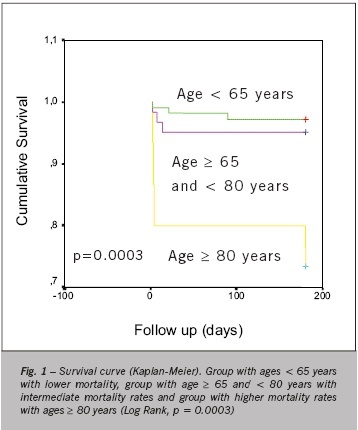
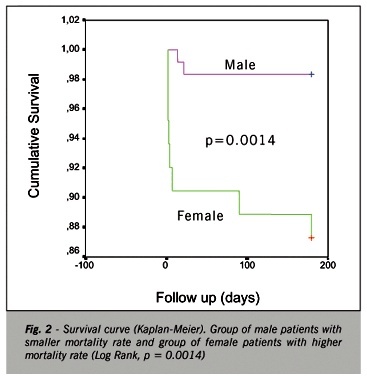
OBJECTIVE: Determine gender-related differences and risk factors for death and events, both in-hospital and at six-month evolution, of patients admitted within the first twelve hours of ST-segment elevation acute myocardial infarction and who underwent primary percutaneous coronary intervention. METHODS: Between July 1998 and December 2000, 199 consecutive patients were enrolled in the study, with elevation myocardial infarction and without cardiogenic shock, outcome, in-hospital and six-month progression were studied. RESULTS: Clinical characteristics were similar in both groups, except that women were older than men (67.04 ± 11.53 x 59.70 ± 10.88, p < 0.0001). In-hospital mortality was higher among women (9.1% x 1.5%, p = 0.0171), as was the incidence of major events (12.1% x 3.0%, p = 0.0026). The difference in mortality rates remained the same at six months (12.1% x 1.5%, p = 0.0026). The multivariate analysis predicted death: female gender and an age over eighty years, and major events and/or stable angina multivessel: disease and severe ventricular dysfunction. CONCLUSION: Female gender and an age over eighty years were independent predictors of mortality, six months of patients who had undergone primary percutaneous intervention.
Images
Image gallery fullscreen viewer
Comments are moderated by the editorial team before publication. Discussions should be evidence-based and use scientific language. Conflicts of interest should be declared.