Home exercise program: short term effects on physical aptitude and blood pressure in hypertensive individuals
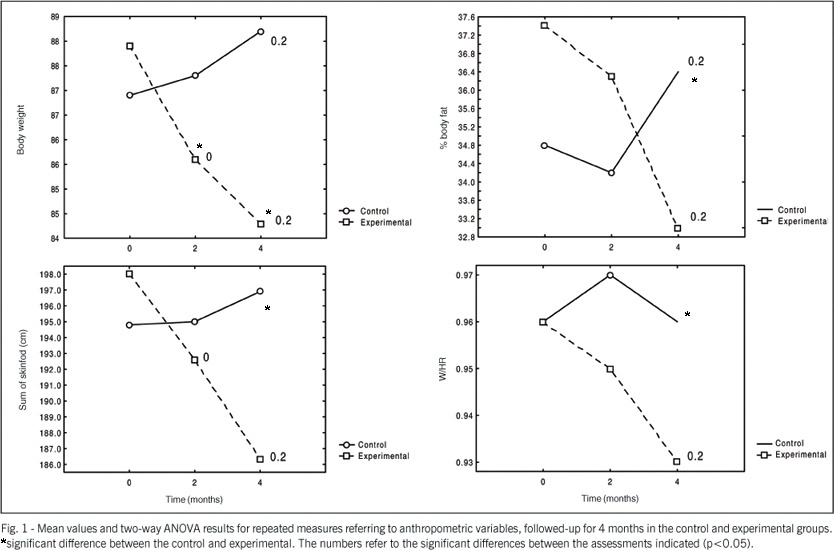
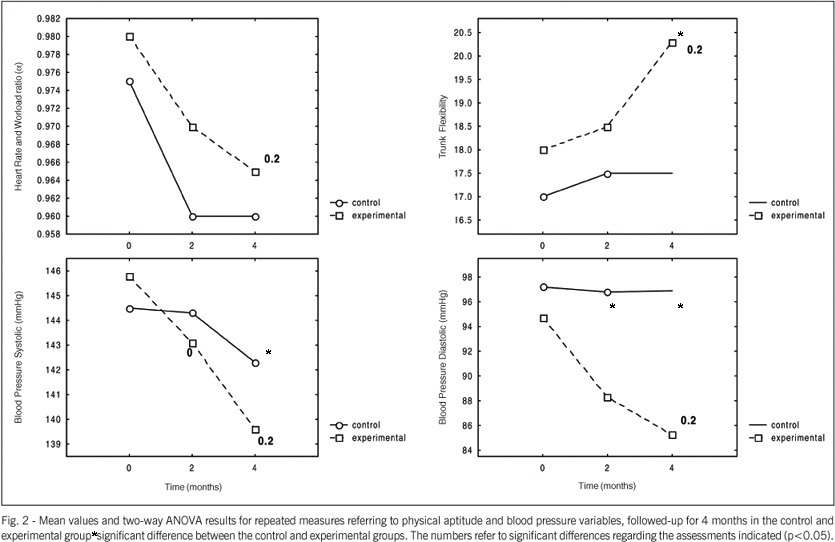
OBJECTIVE: To observe the influence of a four-month-unsupervised-exercise program performed at home on the blood pressure (BP) and physical performance in hypertensive adults. METHODS: A target group with 26 men and 52 women, and a control group with 9 men and 7 women were observed, with ages ranging from 25 to 77 years old. The target group underwent a home exercise program, basically with aerobic activity (60-80% of the estimated maximum heart rate for the age, 30min of walking at least 3 times a week), in addition to the flexibility exercises. Guidelines on the control chart and variables that could influence the treatment were given at each assessment. Patients were followed-up for four months, with assessments every 2 months observing: BP at rest; body weight, waist-hip ratio (W/HR), body fat percentage (%F), sum of skinfold measurements (SM) and central-peripheral skinfold ratio (C/P); trunk flexibility (TF); heart rate and workload ratio during submaximal test in cycle ergometer (HR/W), represented by the regression curve inclination between both (a). RESULTS: The target group demonstrated significant alterations in weight (-3.7 kg), WHR (-0.03), SM (-12 mm), %F (-4.4%), TF (+2.3 cm), HR/W (-0.02) and BP (-6 and -9 mmHg for systolic and diastolic pressure respectively). The control group presented small weight alterations (+1.3 Kg) and %F (+1.7%). CONCLUSION: Unsupervised exercise home programs, even in short term, may present positive effects on the blood pressure and physical performance in hypertensive individuals.
Images
Image gallery fullscreen viewer
Comments are moderated by the editorial team before publication. Discussions should be evidence-based and use scientific language. Conflicts of interest should be declared.