Use of Ivabradine in the Treatment of Patients with Postural Orthostatic Tachycardia Syndrome (POTS): A Systematic Review
Abstract
Background
Postural Orthostatic Tachycardia Syndrome (POTS) is an autonomic dysfunction characterized by symptoms of orthostatic intolerance, associated with an increase in heart rate within 10 minutes of assuming an upright position or head-up tilt, in the absence of hypotension. There are three phenotypes of POTS – neuropathic, hypovolemic, and hyperadrenergic – and all result in tachycardia and altered cerebral perfusion. Pharmacological therapy is indicated in certain cases; however, no specific medication has yet been approved for this condition. Some studies have shown that ivabradine may be beneficial, as it reduces heart rate without affecting blood pressure.
Objectives
To evaluate the efficacy and safety of ivabradine in the treatment of POTS.
Method
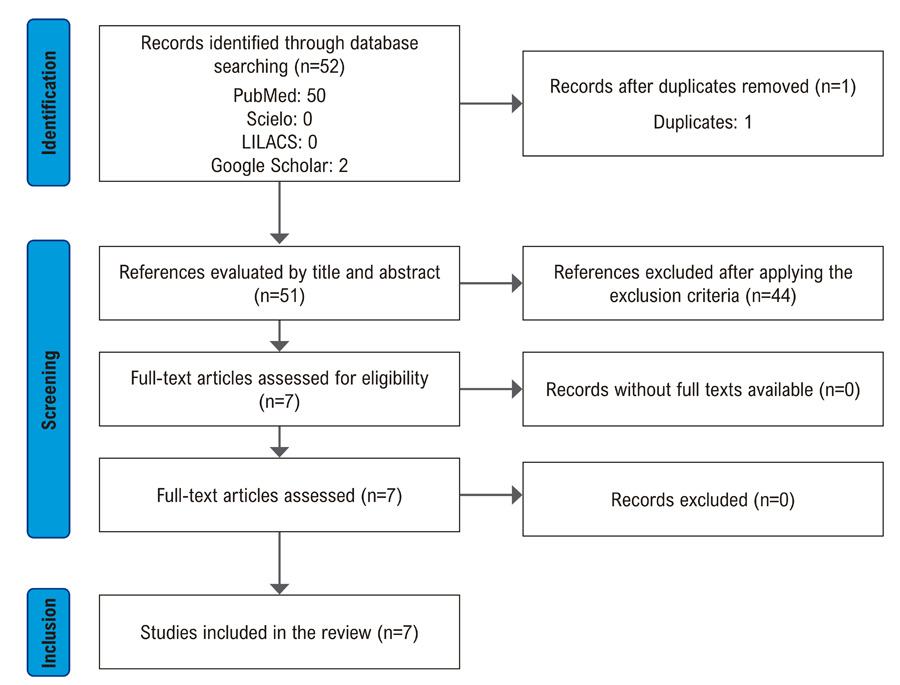
Systematic review using the descriptors “Ivabradine” and “Postural Orthostatic Tachycardia Syndrome” in the PubMed, Scielo, LILACS, and Google Scholar databases. Articles were grouped and assessed using the PICO strategy.
Results
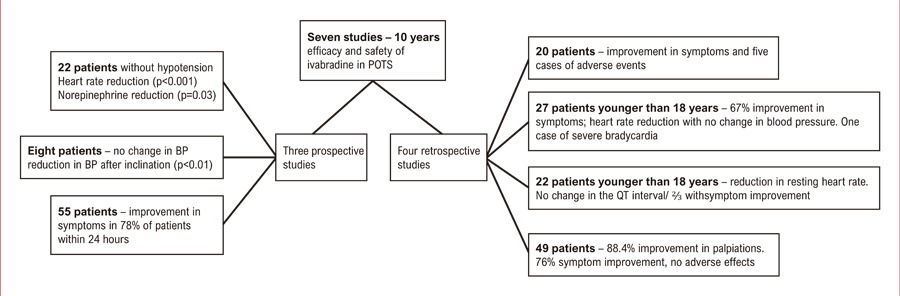
A total of 52 articles were identified, of which seven were included in the review – three prospective and four retrospective studies. In total, 203 patients were evaluated, the majority of whom were female. All studies reported a significant reduction in heart rate and improvement in symptoms of orthostatic intolerance, with most patients not reporting adverse effects, regardless of their POTS phenotype.
Conclusion
Ivabradine proved to be effective and safe in the treatment of patients with POTS.
Images
Image gallery fullscreen viewer
Comments are moderated by the editorial team before publication. Discussions should be evidence-based and use scientific language. Conflicts of interest should be declared.