Transcatheter bioprosthesis implantation for the treatment of aortic stenosis: three-year experience
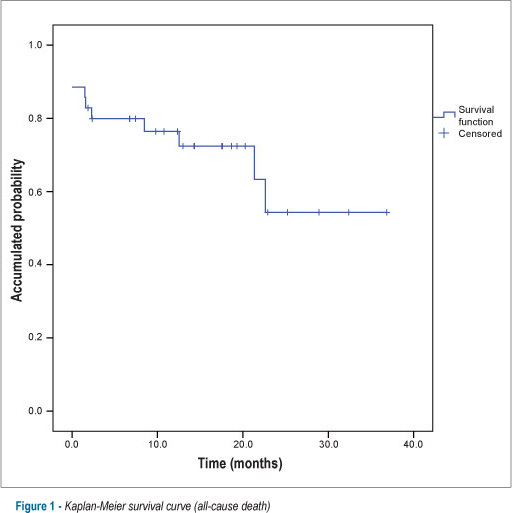
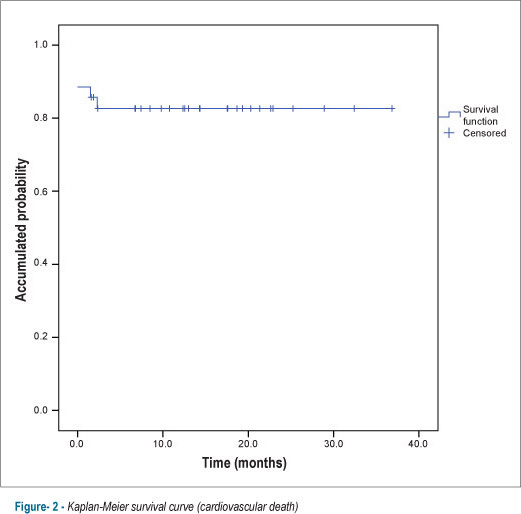
BACKGROUND: Transcatheter aortic bioprosthesis implantation is a new treatment modality for patients with aortic stenosis who are inoperable or at high surgical risk. OBJECTIVE: To report the three-year experience with transcatheter CoreValve® bioprosthesis implantation. METHODS: From January 2008 to January 2011, 35 patients with aortic stenosis (33) or aortic valve bioprosthesis dysfunction (two) at high surgical risk underwent transcatheter CoreValve® bioprosthesis implantation. RESULTS: The patients’ mean age was 81.5 ± 9 years, and 80% had heart failure functional class III or IV. The EuroScore was 18.4 ± 14.3% and the STS risk score was 14.5 ± 11.6%. Successful device implantation was achieved in 34 (97.1%) patients. After the intervention, a reduction in the transvalvular pressure gradient from 84.9 ± 22 to 22.5 ± 9.5 mm Hg was observed, and 87.1% of the patients progressed to functional class I or II. Thirty-day mortality and mortality in the follow-up of 400 ± 298 days were 11.4% and 31.4%, respectively. The occurrence of life-threatening hemorrhagic complications was the only independent predictor of cardiovascular mortality. Stroke occurred in 5.7% of the patients. Permanent pacemaker was required in 32.1% of the patients within the first month after the procedure. CONCLUSION: Transcatheter aortic bioprosthesis implantation is a safe and effective procedure to be used in patients with aortic stenosis at high surgical risk. The CoreValve® prosthesis proved to have mid-term efficacy in a three-year follow-up.
Images
Image gallery fullscreen viewer
Comments are moderated by the editorial team before publication. Discussions should be evidence-based and use scientific language. Conflicts of interest should be declared.