Safety and Complications of Pulsed Field Ablation for Atrial Fibrillation: Biophysics, Diagnosis, and Management
Abstract
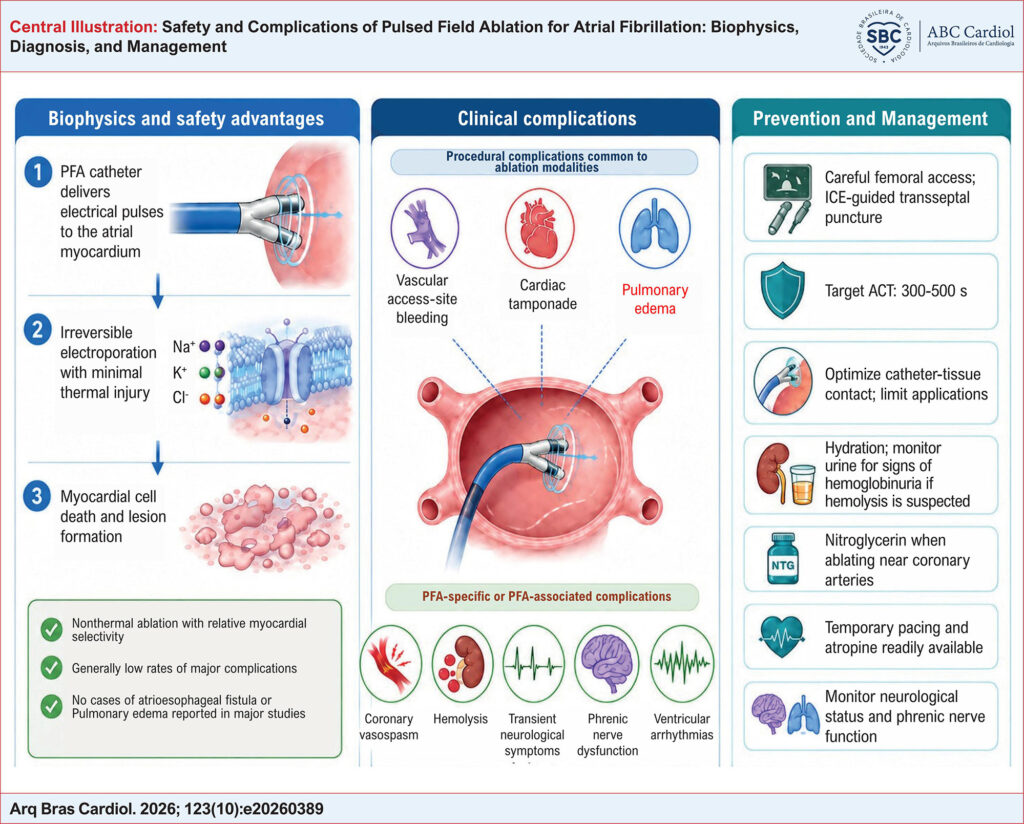
Pulsed field ablation (PFA) uses irreversible electroporation to preferentially target myocardial tissue during atrial fibrillation (AF) ablation while limiting collateral injury to adjacent structures. This narrative review summarizes complications associated with PFA, focusing on the mechanisms, incidence, diagnosis, prevention, and management of procedural and energy-specific adverse events. Evidence was drawn from 14 major trials, registries, and postapproval studies selected for the comprehensiveness of their safety data. Complications were classified as vascular, cardiac, pulmonary, hematologic, kidney, neurological, or gastrointestinal. Despite substantial heterogeneity in study design, reported complication rates were generally low. PFA appears to markedly reduce traditional thermal complications, with no cases of pulmonary vein stenosis or atrioesophageal fistula reported in the major studies reviewed. However, PFA-associated adverse events include intravascular hemolysis, hemoglobinuria-associated acute kidney injury, coronary vasospasm, arrhythmias, vasovagal responses, and transient phrenic nerve injury. Clinical neurological events, such as stroke and transient ischemic attack, remain uncommon, although silent cerebral lesions are detected on postprocedural magnetic resonance imaging. Preventive strategies include careful vascular access, intracardiac echocardiography-guided transseptal puncture, strict periprocedural anticoagulation, limiting the number of applications, adequate catheter-tissue contact, hydration, and nitroglycerin administration when ablating near coronary arteries. Management of vagal responses requires readiness for temporary pacing or anticholinergic therapy. PFA represents a major advance in the safety of AF ablation by reducing severe thermal injuries, although electroporation-related complications require specific attention. Safe adoption requires prevention and management strategies informed by complication mechanisms as real-world use expands.
Images
Image gallery fullscreen viewer
Comments are moderated by the editorial team before publication. Discussions should be evidence-based and use scientific language. Conflicts of interest should be declared.