Reduced Progression of Cardiac Allograft Vasculopathy with Routine Use of Induction Therapy with Basiliximab
Abstract
Introduction:
Cardiac allograft vasculopathy (CAV) is a major limitation for long-term survival of patients undergoing heart transplantation (HT). Some immunosuppressants can reduce the risk of CAV.
Objectives:
The primary objective was to evaluate the variation in the volumetric growth of the intimal layer measured by intracoronary ultrasound (IVUS) after 1 year in patients who received basiliximab compared with that in a control group.
Methods:
Thirteen patients treated at a single center between 2007 and 2009 were analyzed retrospectively. Evaluations were performed with IVUS, measuring the volume of a coronary segment within the first 30 days and 1 year after HT. Vasculopathy was characterized by the volume of the intima of the vessel.
Results:
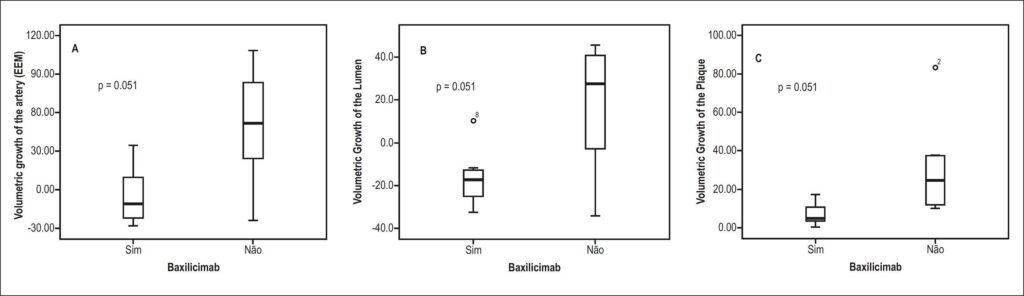
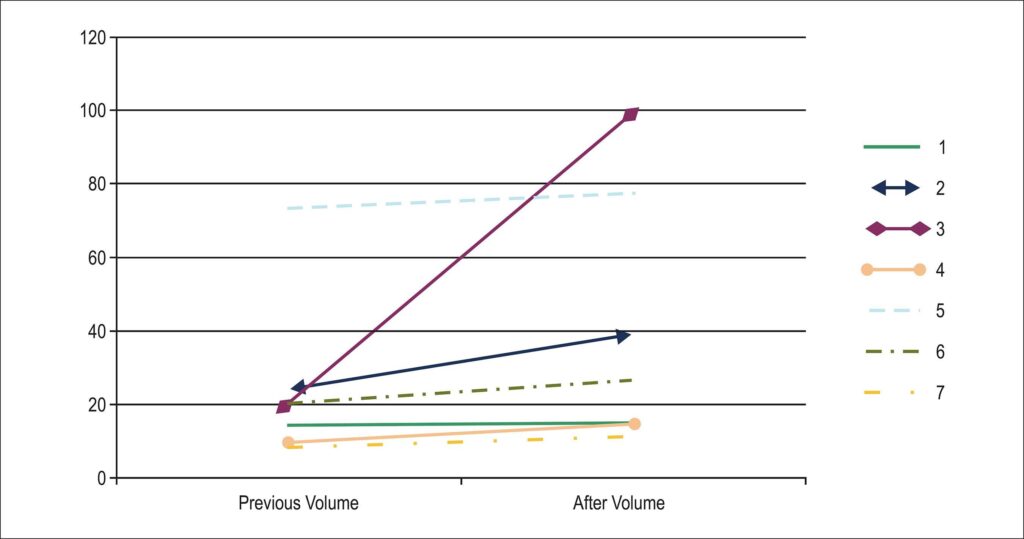
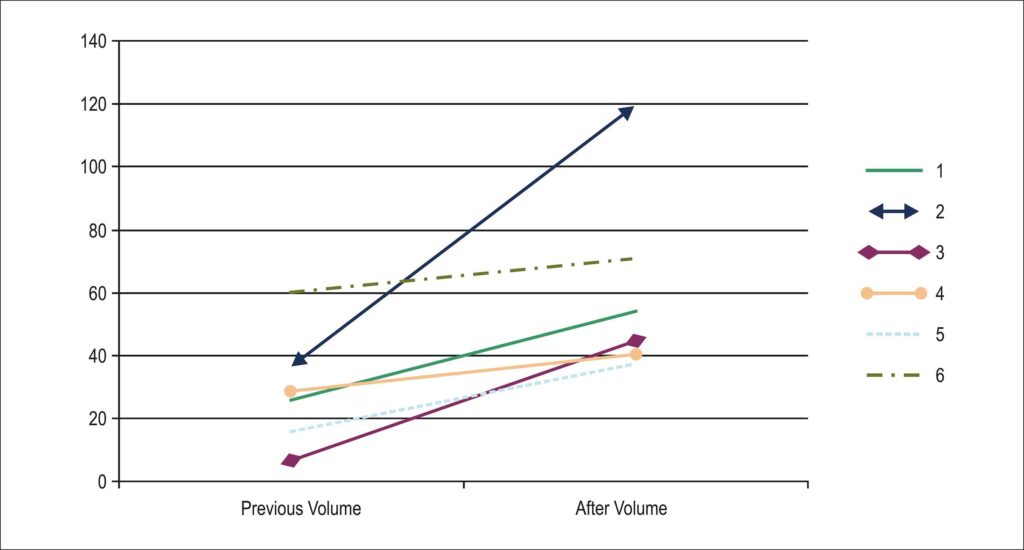
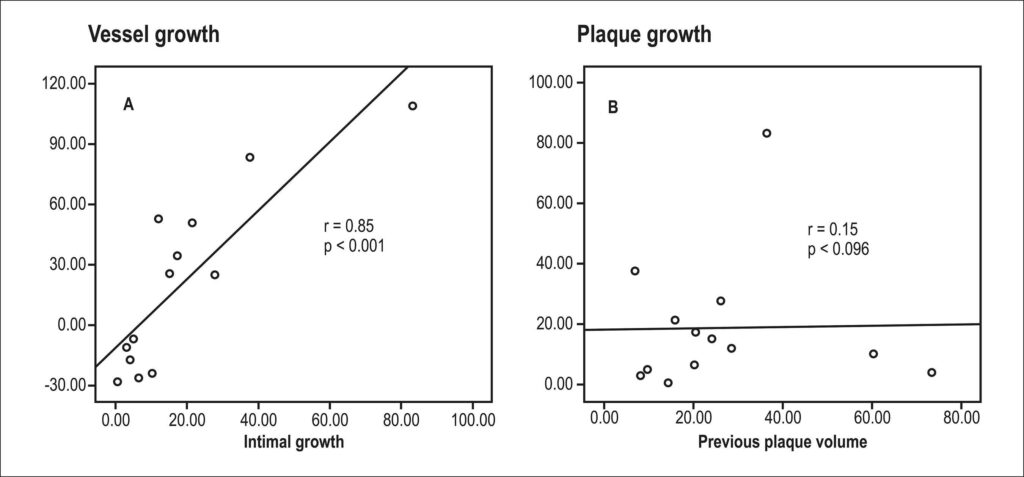
Thirteen patients included (7 in the basiliximab group and 6 in the control group). On IVUS assessment, the control group was found to have greater vessel volume (120–185.43 mm3 vs. 127.77–131.32 mm3; p = 0.051). Intimal layer growth (i.e., CAV) was also higher in the control group (27.30–49.15 mm3 [∆80%] vs. 20.23–26.69 mm3 [∆33%]; p = 0.015). Univariate regression analysis revealed that plaque volume and prior atherosclerosis of the donor were not related to intima growth (r = 0.15, p = 0.96), whereas positive remodeling was directly proportional to the volumetric growth of the intima (r = 0.85, p < 0.001).
Conclusion:
Routine induction therapy with basiliximab was associated with reduced growth of the intima of the vessel during the first year after HT.
Images
Image gallery fullscreen viewer
Comments are moderated by the editorial team before publication. Discussions should be evidence-based and use scientific language. Conflicts of interest should be declared.