Incidence of intracardiac thrombus and thromboembolism in the first three months after bioprosthetic valve implantation
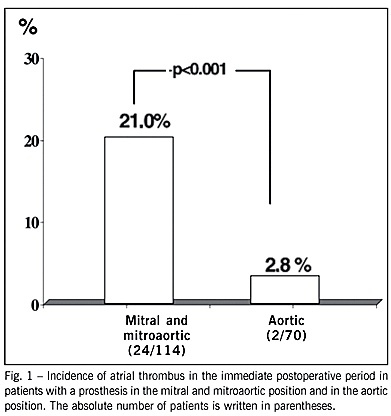
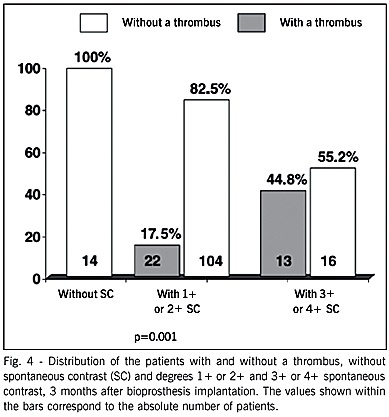
OBJECTIVE: To assess the incidence of intracardiac thrombus and thromboembolism in the first 3 months after bioprosthetic valve replacement and to identify the risk factors for thrombus formation. METHODS: The study comprised 184 patients, aged between 15 and 75 years, who underwent bioprosthetic valve implantation. Transthoracic and transesophageal (TEE) echocardiographies were performed in the in-hospital phase (mean, 8.4±3 days) and after 3 months (mean, 97.4±21.7 days). RESULTS: The incidence of thrombus was significantly greater in patients with a prosthesis in the mitral or mitroaortic position (21.0%) than in those with a prosthesis in the aortic position (2.8%), P<0.001. The multiple logistic regression identified the prosthesis in the mitral or mitroaortic position as the only independent variable for thrombus formation. On the 3-month follow-up, TEE showed a thrombus in 35 (20.7%) of the 169 patients on echocardiographic assessment, 31.7% in mitral patients and 3.1% in aortic patients, P<0.001. In the third month, the multiple logistic regression also identified the prosthesis in the mitral or mitroaortic position as the only independent variable for thrombus formation. During the 3-month follow-up, 3 (1.6%) patients died and 8 (4.3%) experienced embolic phenomena, all in the cerebral territory. CONCLUSION: The incidence of thrombi in the first 3 months after bioprosthetic valve implantation was 14.1% in the first 10 days and 20.7% in 3 months. A prosthesis in the mitral or mitroaortic position was identified as a risk factor for thrombus formation. The incidence of embolic phenomena clinically diagnosed was lower than the proportion of atrial thrombi documented on echocardiography.
Images
Image gallery fullscreen viewer
Comments are moderated by the editorial team before publication. Discussions should be evidence-based and use scientific language. Conflicts of interest should be declared.