Extracardiac Conduit versus Lateral Tunnel Fontan: Three Decades of Experience and Long-Term Patient Outcomes
Abstract
Background
The Fontan operation has undergone substantial evolution, with a global shift from the lateral tunnel (LT) technique to the extracardiac conduit (ECC) approach. However, long-term comparative outcomes between these techniques remain inconsistently reported.
Objective
To evaluate early and late outcomes of patients who underwent Fontan completion over a 33-year period, comparing ECC and LT techniques.
Methods
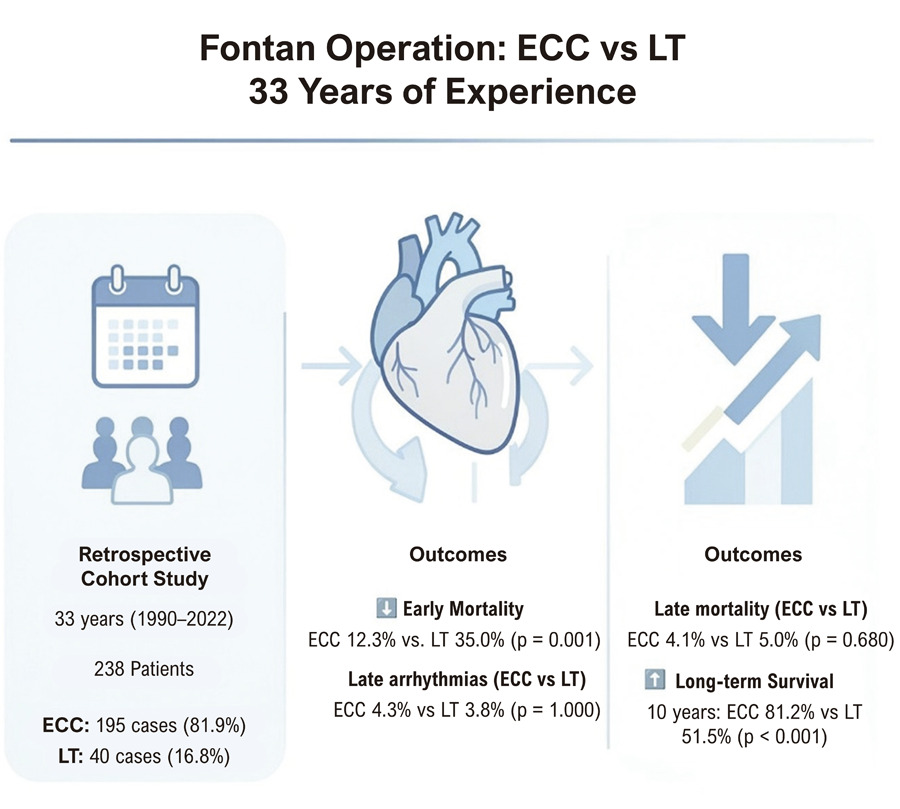
A retrospective cohort study including 238 consecutive patients who underwent Fontan completion at a single tertiary cardiovascular center between 1990 and 2022. Early and late mortality, postoperative complications, and long-term survival (Kaplan–Meier analysis) were assessed.
Results
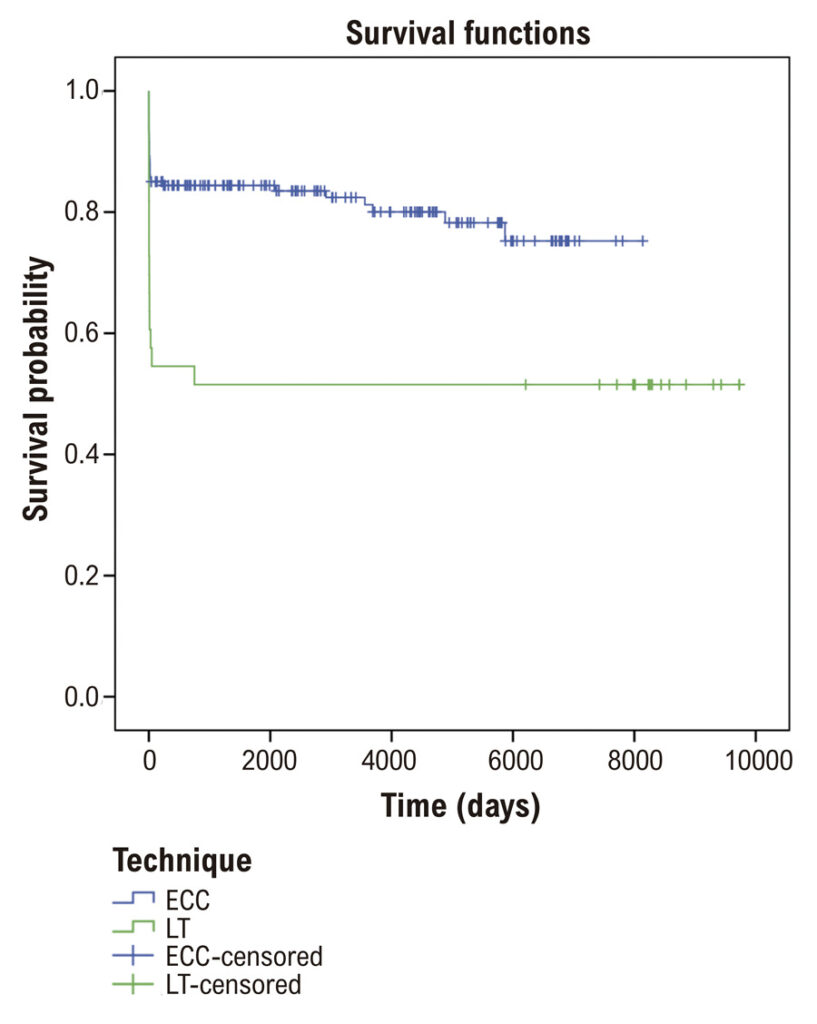
ECC was used in 81.9% of cases and LT in 16.8%. Early mortality was significantly higher in the LT group compared with ECC (35% vs. 12.3%; p = 0.001). Late mortality remained low and similar between groups. Overall mortality was 16.4% for ECC and 40% for LT. Long-term survival estimates consistently favored ECC at all evaluated time points (p < 0.001). Late complications – including heart failure and arrhythmias – were infrequent and showed no significant differences between techniques.
Conclusion
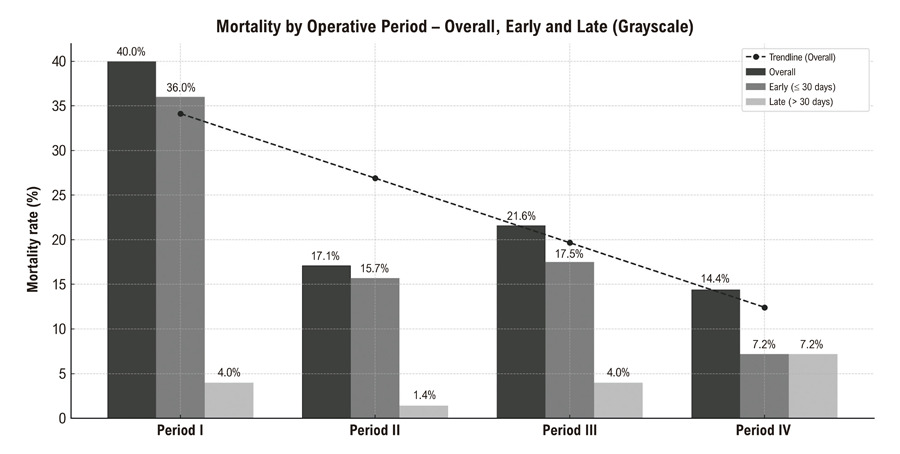
Over three decades, outcomes following the Fontan procedure have improved considerably. ECC was associated with superior long-term survival compared with LT, while early morbidity and late complication rates were comparable between groups.
Images
Image gallery fullscreen viewer
Comments are moderated by the editorial team before publication. Discussions should be evidence-based and use scientific language. Conflicts of interest should be declared.