An assessment of neutrophils/lymphocytes ratio in patients suspected of acute coronary syndrome
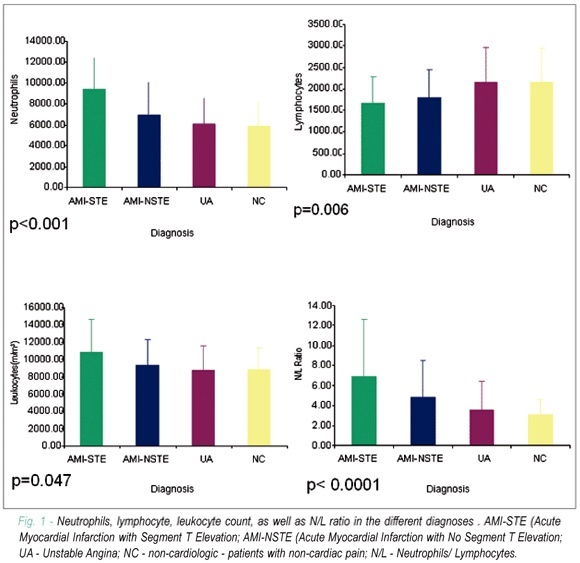
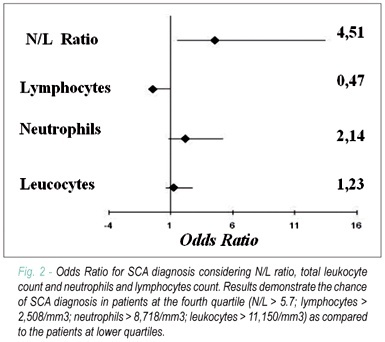
BACKGROUND: Leukocytes total count is an independent risk marker for cardiovascular events. The ratio between neutrophils and lymphocytes (N/L) count has been investigated as a new predictor for cardiovascular risk, although its diagnostic role when assessing patients suspected of an acute coronary syndrome (ACS) condition is not yet known. OBJECTIVE: To evaluate the diagnostic power of N/L ratio in patients who have been admitted at a Chest Pain Unit (CPU) with the suspicion of ACS. METHODS: Evaluation was conducted in 178 patients admitted with chest pain. Diagnostic flowchart including clinical, electrocardiographic, and laboratory data. Diagnosis obtained was: acute myocardial infarction (AMI) with (AMI-STE) and with no segment T elevation (AMI-NSTE), unstable angina (UA ) and non-cardiac pain (NC). Total and differential leukocyte count was conducted in peripheral blood sample collected at admission. RESULTS: Patients diagnosed with non-cardiac pain reported the lowest N/L ratio (n=45; 3.0 ± 1.6), followed by UA (n=65; 3.6 ± 2.9), AMI-NSTE (n=33; 4.8 ± 3.7) and AMI-STE (n=35; 6.9 ± 5.7); p < 0.0001. N/L ratio above 5.7 (highest quartile) reported 91.1% specificity, 4.51 odds ratio (CI 95% 1.51 to 13.45) for the final diagnosis of ACS when compared to the groups at lower quartiles. CONCLUSION: The N/L ratio presents correlation with final diagnosis of patients with suspicion of ACS at admission. Considering this is a low cost, good reproductibility test, new studies should ellucidate whether the ratio may be of relevance for diagnosis flowcharts currently in use.
Images
Image gallery fullscreen viewer
Comments are moderated by the editorial team before publication. Discussions should be evidence-based and use scientific language. Conflicts of interest should be declared.