Acute myocardial infarction in elderly patients: comparative analysis of the predictors of mortality. The elderly versus the young
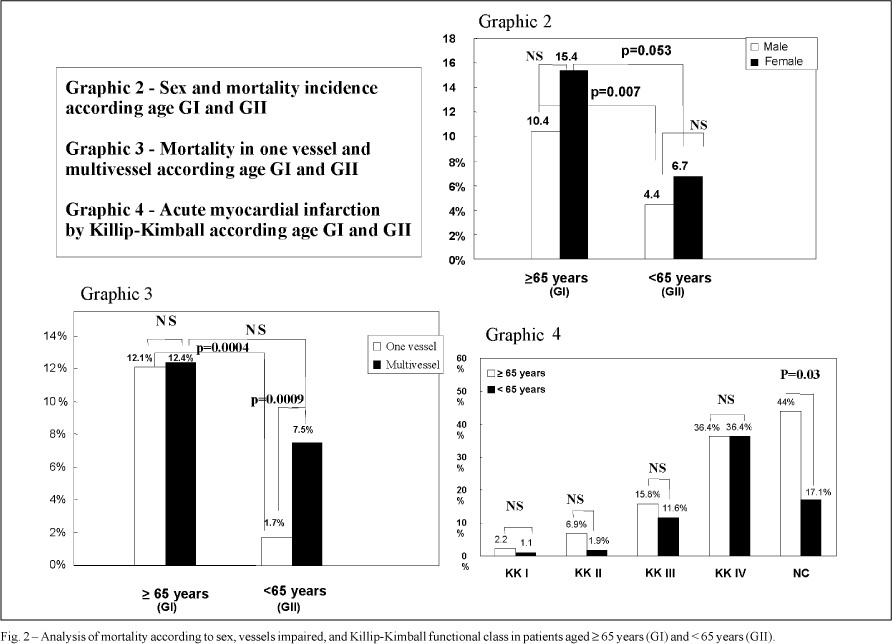
OBJECTIVE: To study the in-hospital evolution of patients aged 65 years and older, with acute myocardial infarction, who were treated by direct coronary angioplasty with no fibrinolytic therapy. METHODS: We studied 885 patients divided into 2 groups as follows: group I (GI) – 293 (33.4%) patients aged ³ 65 years (72±5 years), and group II (GII) – 592 patients aged < 65 years (57±9 years). Multivessel disease was more frequent in GI (63.5% x 49.7%; p=0.001). A greater number of GII patients were class I or II of the clinical Killip-Kimball classification (K) (80.2% x 67.2%; p=0.00002), while a significant number of GI patients were KIII and KIV (24.3% x 12.8%; p=0.00003). RESULTS: Group I had a lower index of success (84.6% x 94%; p=0.0002) and a greater in-hospital mortality (12.2% x 4.7%; p=0.00007). The predictors of mortality in GI were as follows: previous infarction (20.5% x 6.3%; p=0.02), anterior location (13.4% x 6.4%; p=0.03), and male sex (10.4% x 4.4%; p=0.007). CONCLUSION: Elderly patients had more severe acute myocardial infarction and more extensive disease, a lower index of success, and greater in-hospital mortality. Previous infarction, anterior location and male sex were identified as predictors of mortality in the elderly group (GI).
Images
Image gallery fullscreen viewer
Comments are moderated by the editorial team before publication. Discussions should be evidence-based and use scientific language. Conflicts of interest should be declared.