ABC Family Arquivos Brasileiros de Cardiologia International Journal of Cardiovascular Sciences ABC Heart Failure & Cardiomyopathy ABC Imagem Cardiovascular
Português English
ABC Family
Português English
  • About
    • About ABC Family
    • Internal Regulation
    • Editorial Board
    • Brazilian Society of Cardiology (SBC)
  • Issues
  • SBC Guidelines
  • Content
    • Videos
    • Podcasts
    • News
  • About
    • About ABC Family
    • Internal Regulation
    • Editorial Board
    • Brazilian Society of Cardiology (SBC)
  • Issues
  • SBC Guidelines
  • Content
    • Videos
    • Podcasts
    • News

ABC Family

  • ABC Family
  • Arquivos Brasileiros de Cardiologia
  • International Journal of Cardiovascular Sciences
  • ABC Heart Failure & Cardiomyopathy
  • ABC Imagem Cardiovascular
Search in

No content found.

Journals
Ordering
Article types
Others

  1. Home
  2. Keyword: Myocardial Reperfusion/radionuclide imaging
ABC
Editorial

Single Photon Computed Tomography-Myocardial Perfusion Scintigraphy. Diagnostic Tool Anticipating the Disease

Whady Hueb

Without making any value judgment, a large percentage of physicians who request tests to make diagnoses is observed in the contemporary clinical practice. On the other hand, a considerable percentage of physicians who make the diagnosis and possibly ask for tests to confirm the diagnosis is also observed. Both behaviors are considered valid when common good is achieved: The patients’ benefit. However, the request for tests without an appropriate criterion is not only harmful to the patient, but also to the system.

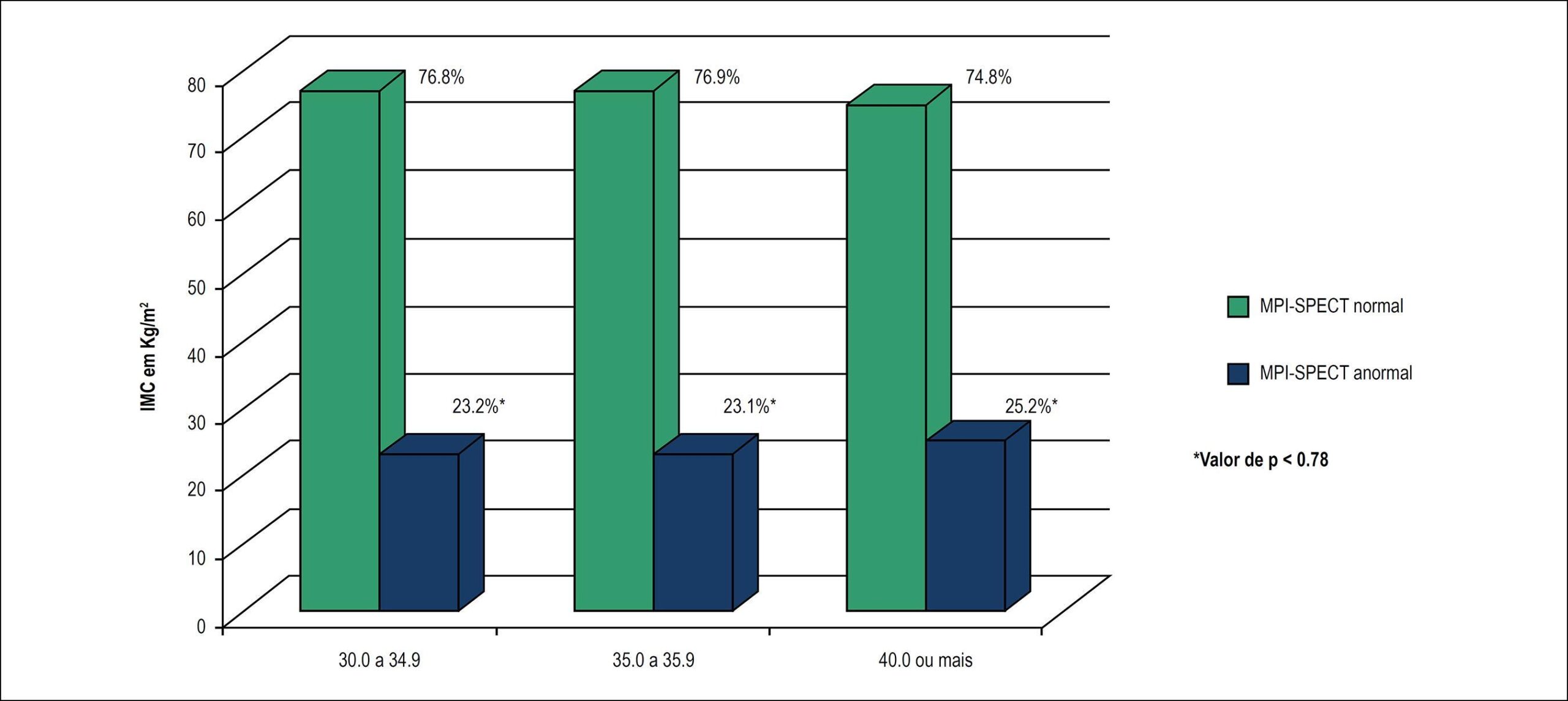
In present-day medicine, there is a large collection of tests considered normal throughout the medical knowledge area, including cardiology. In a publication by Dippe Jr et al. in this issue, the authors, in a retrospective analysis of a database, found this trend. Of 5,526 scans of myocardial perfusion scans performed on obese patients (grade 1), 77% were considered normal. Assuming that the exams were requested for investigation of myocardial ischemia, the authors related the presence of perfusion deficit with myocardial ischemia in only 23%. Based on these data, they found, after applying a “creative statistic”, a 245% risk-ratio for typical angina. It is known, in principle, that perfusion deficit is an expression of intrinsic myocardial abnormality.

[…]

  • Coronary Artery Disease/physiopathology
  • Diabetes Mellitus
  • Myocardial Reperfusion/radionuclide imaging
  • Obesity
Read Full Article
Creative Commons Attribution (CC BY) Creative Commons license
01/02/2019 DOI: 10.5935/abc.20180265 Views 2
Figure 1
ABC
Original Article

Study of Myocardial Perfusion in Obese Individuals without Known Ischemic Heart Disease

Tufi Dippe Jr. et al. Cláudio Leinig Pereira da Cunha Rodrigo Julio Cerci Arnaldo Lafitte Stier Jr. João Vicente Vítola

Abstract

Background:

Obesity is associated with an increased risk of type 2 diabetes mellitus (DM), ischemic heart disease (IHD) and cardiovascular mortality. Several studies have demonstrated the diagnostic and prognostic value of single photon computed tomography-myocardial perfusion scintigraphy (SPECT-MPI) in the evaluation of patients with suspected IHD, including in obese population. Data on clinical risk factors and their association with abnormal myocardial perfusion in obese patients are scarce in the Brazilian population.

Objective:

To determine the factors associated with abnormal myocardial perfusion in obese individuals without known IHD.

Methods:

We studied obese patients without known IHD who were referred for evaluation through SPECT-MPI between January 2011 and December 2016. Clinical variables and results of SPECT-MPI were obtained systematically. The distribution of continuous variables was assessed using the Shapiro-Wilk and Shapiro-Francia tests. We used the unpaired Student t test to compare the means of continuous variables with normal distribution and the Chi Square test for binomial variables analysis. A p value < 0.05 was considered statistically significant. The association of the clinical variables for the presence of factors associated with abnormal myocardial perfusion was determined by univariate and multivariate logistic regression analysis, and respective odds ratios (OR) and 95% confidence intervals (CI).

Results:

The study sample consisted of 5,526 obese patients. Mean body mass index (BMI) of our patients was 33.9 ± 3.7 kg/m2, 31% had DM, and myocardial perfusion abnormalities was observed in 23% of the total sample. The factors associated with abnormal myocardial perfusion on multivariate analysis were: age (OR: 1.02, 95% CI 1.01-1.03, p < 0.001), DM (OR: 1.57, 95% CI 1.31-1.88, p < 0.001), typical angina before the test (OR: 2.45, 95% CI: 1.82-3.31, p < 0.001), need for pharmacologic stress test (OR: 1.61, 95% CI: 1.26-2.07, p < 0.001), less physical effort evaluated in metabolic equivalents (METs) during the exercise treadmill test (OR: 0.89, 95% CI: 0.85-0.94, p < 0.001) and a lower post-stress left ventricular ejection fraction after stress (LVEF; OR: 0.989, 95% CI: 0.984-0.994, p < 0.001).

Conclusion:

The factors associated with abnormal myocardial perfusion in obese patients without known IHD were age, DM, presence of typical angina, ventricular dysfunction, and inability to undergo physical stress as clinical variables, in addition to functional capacity during physical stress.

  • Coronary Artery Disease/physiopathology
  • Diabetes Mellitus
  • Myocardial Reperfusion/radionuclide imaging
  • Obesity
Read Full Article
Creative Commons Attribution (CC BY) Creative Commons license
17/12/2018 DOI: 10.5935/abc.20180250 Views 2

How to cite this article

EndNote RIS

Electronic Document Format (Vancouver)

Hueb W. Single Photon Computed Tomography-Myocardial Perfusion Scintigraphy. Diagnostic Tool Anticipating the Disease. Arquivos Brasileiros de Cardiologia 2019;112(2):129.

Electronic Document Format (ABNT)

Hueb, Whady. Single Photon Computed Tomography-Myocardial Perfusion Scintigraphy. Diagnostic Tool Anticipating the Disease. Arquivos Brasileiros de Cardiologia, v. 112, n. 2, p. 129-129, Jan. 2019.

Electronic Document Format (APA)

Hueb, W. (2019). Single Photon Computed Tomography-Myocardial Perfusion Scintigraphy. Diagnostic Tool Anticipating the Disease. Arquivos Brasileiros de Cardiologia, 112(2), 129-129.

Electronic Document Format (ISO)

Hueb, Whady. Single Photon Computed Tomography-Myocardial Perfusion Scintigraphy. Diagnostic Tool Anticipating the Disease. Arquivos Brasileiros de Cardiologia [online]. 2019, vol. 112, n. 2, [cited 2026-10-14], pp. 129-129. Available from: <https://journals.cardiol.br/en/article/single-photon-computed-tomography-myocardial-perfusion-scintigraphy-diagnostic-tool-anticipating-the-disease/>. ISSN 0066-782X

EndNote RIS

Electronic Document Format (Vancouver)

Dippe Jr. T, Cunha CLP, Cerci RJ, Stier Jr. AL, Vítola JV. Study of Myocardial Perfusion in Obese Individuals without Known Ischemic Heart Disease. Arquivos Brasileiros de Cardiologia 2018;112(2):121-8.

Electronic Document Format (ABNT)

Dippe Jr., Tufi; Cunha, Cláudio Leinig Pereira da; Cerci, Rodrigo Julio; Stier Jr., Arnaldo Lafitte; Vítola, João Vicente. Study of Myocardial Perfusion in Obese Individuals without Known Ischemic Heart Disease. Arquivos Brasileiros de Cardiologia, v. 112, n. 2, p. 121-128, Dec. 2018.

Electronic Document Format (APA)

Dippe Jr., T., Cunha, C. L. P. , Cerci, R. J., Stier Jr., A. L., & Vítola, J. V. (2018). Study of Myocardial Perfusion in Obese Individuals without Known Ischemic Heart Disease. Arquivos Brasileiros de Cardiologia, 112(2), 121-128.

Electronic Document Format (ISO)

Dippe Jr., Tufi and Cunha, Cláudio Leinig Pereira da and Cerci, Rodrigo Julio and Stier Jr., Arnaldo Lafitte and Vítola, João Vicente. Study of Myocardial Perfusion in Obese Individuals without Known Ischemic Heart Disease. Arquivos Brasileiros de Cardiologia [online]. 2018, vol. 112, n. 2, [cited 2026-10-14], pp. 121-128. Available from: <https://journals.cardiol.br/en/article/study-of-myocardial-perfusion-in-obese-individuals-without-known-ischemic-heart-disease/>. ISSN 0066-782X

  • About ABC Family
  • Internal Regulation
  • Editorial Board
  • Brazilian Society of Cardiology (SBC)

Issues

SBC Guidelines

  • Videos
  • Podcasts
  • News