ABC Family Arquivos Brasileiros de Cardiologia International Journal of Cardiovascular Sciences ABC Heart Failure & Cardiomyopathy ABC Imagem Cardiovascular
Português English
  • ABC Family
  • Arquivos Brasileiros de Cardiologia
  • International Journal of Cardiovascular Sciences
  • ABC Heart Failure & Cardiomyopathy
  • ABC Imagem Cardiovascular
Português English
  • About
    • About ABC Family
    • Internal Regulation
    • Editorial Board
    • Brazilian Society of Cardiology (SBC)
  • Issues
  • SBC Guidelines
  • Content
    • Videos
    • Podcasts
    • News
  • About
    • About ABC Family
    • Internal Regulation
    • Editorial Board
    • Brazilian Society of Cardiology (SBC)
  • Issues
  • SBC Guidelines
  • Content
    • Videos
    • Podcasts
    • News
Search in

No content found.

Journals
Ordering
Article types
Others

  1. Home
  2. Dysbiosis
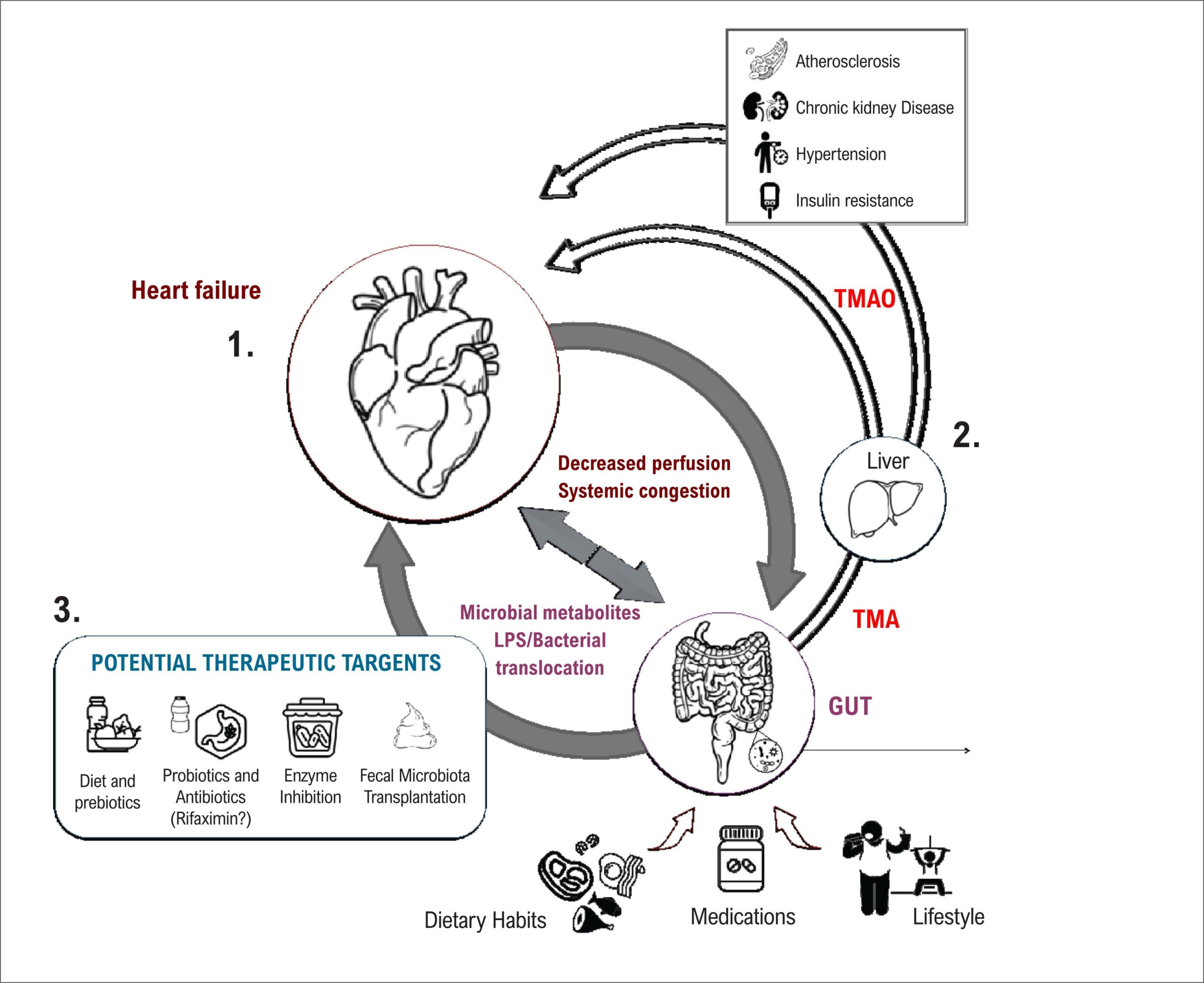
Figure 1
ABCHF
Research Letter

The Heart-Gut Microbiome Intersection in Heart Failure

Jefferson L. Vieira et al. Alessandra F.R.R. Sidrim Mandeep R. Mehra

The human body is co-inhabited by over a trillion microorganisms, including > 2000 species of bacteria, archaea, viruses, and single-celled eukaryotes that live symbiotically with their hosts. The gut microbiota is a dynamic and complex ecological community in the gastrointestinal tract, an essentially anaerobic environment with abundant nutrients and ideal conditions for colonization; it acts as a virtual endocrine system that communicates with organs through metabolism-dependent pathways, releasing de novo products and transforming external nutrients and host metabolites into hormone-like signals.

In addition to metabolic benefits, the gut microbiota provides essential capacities for regulating the intestinal epithelial barrier, immune homeostasis, optimal immune responses, and protection against pathogen colonization.– One of the most important roles of gut microbiota is to act in digestion and nutrient absorption, producing short-chain fatty acids that serve as energy substrate for intestinal epithelial cells. After short-chain fatty acids bind to their receptor, the enteroendocrine hormone peptide YY is released, which regulates host appetite and contributes to dietary energy availability. Intestinal flora act to convert various dietary nutrients into trimethylamine, which is rapidly absorbed and oxidized in the liver to produce trimethylamine N-oxide (TMAO). Some foods, like red meat, eggs, and fish, are rich in nutritional precursors that can be converted into trimethylamine through specific microbial enzymes; therefore, a change in microbiota composition can alter circulating TMAO levels.

[…]

  • Dysbiosis
  • Gastrointestinal Microbiome
  • Heart Failure
Read Full Article
Creative Commons Attribution (CC BY) Creative Commons license
29/06/2022 DOI: 10.36660/abchf.20220039 Views 13

How to cite this article

EndNote RIS

Electronic Document Format (Vancouver)

Vieira JL, Sidrim AF, Mehra MR. The Heart-Gut Microbiome Intersection in Heart Failure. ABC: Heart Failure & Cardiomyopathy 2022;2(2):222-5.

Electronic Document Format (ABNT)

Vieira, Jefferson L.; Sidrim, Alessandra F.R.R.; Mehra, Mandeep R.. The Heart-Gut Microbiome Intersection in Heart Failure. ABC: Heart Failure & Cardiomyopathy, v. 2, n. 2, p. 222-225, Jun. 2022.

Electronic Document Format (APA)

Vieira, J. L., Sidrim, A. F., & Mehra, M. R. (2022). The Heart-Gut Microbiome Intersection in Heart Failure. ABC: Heart Failure & Cardiomyopathy, 2(2), 222-225.

Electronic Document Format (ISO)

Vieira, Jefferson L. and Sidrim, Alessandra F.R.R. and Mehra, Mandeep R.. The Heart-Gut Microbiome Intersection in Heart Failure. ABC: Heart Failure & Cardiomyopathy [online]. 2022, vol. 2, n. 2, [cited 2026-11-28], pp. 222-225. Available from: <https://journals.cardiol.br/en/article/the-heart-gut-microbiome-intersection-in-heart-failure/>

  • About ABC Family
  • Internal Regulation
  • Editorial Board
  • Brazilian Society of Cardiology (SBC)

Issues

SBC Guidelines

  • Videos
  • Podcasts
  • News
Accessibility Adjustments

Powered by OneTap

How long do you want to hide the toolbar?
Hide Toolbar Duration
Select your accessibility profile
Vision Impaired Mode
Enhances website's visuals
Seizure Safe Profile
Clear flashes & reduces color
ADHD Friendly Mode
Focused browsing, distraction-free
Blindness Mode
Reduces distractions, improves focus
Epilepsy Safe Mode
Dims colors and stops blinking
Content Modules
Font Size

Default

Line Height

Default

Color Modules
Orientation Modules