Giulia de Miranda Taglialegna et al. Leila Katz Larissa Mayara Aristóteles de Albuquerque Milena Máximo de Freitas … Alexandre Jorge Gomes de Lucena Melania Maria Ramos de Amorim
Introduction
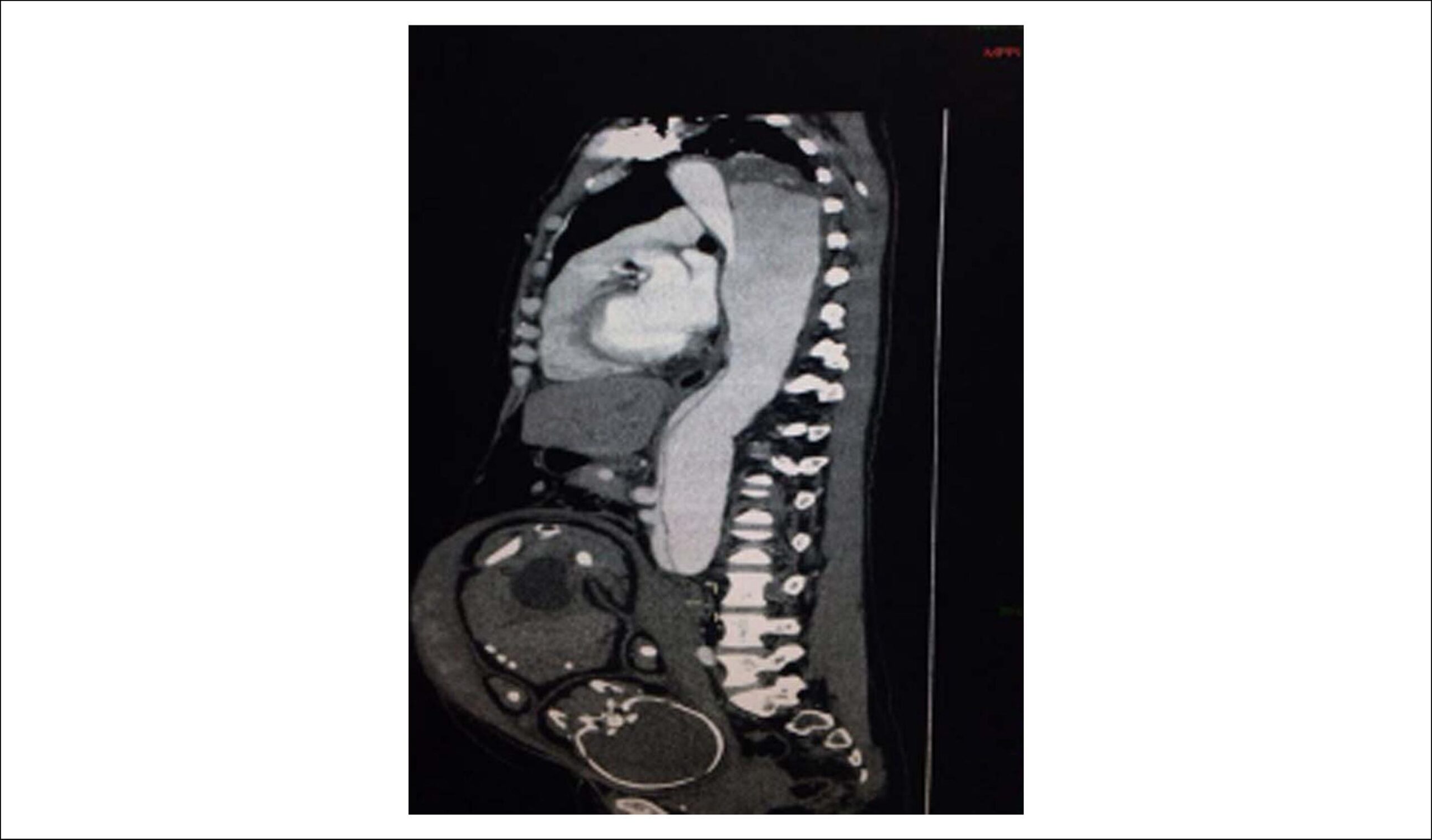
Aortic complications during pregnancy can occur in women without risk factors, but they are more often associated with collagen diseases (Marfan and Ehlers-Danlos syndromes) and structural cardiac malformations (aortic coarctation and bivalve aortic valve)., Approximately half of these events occur during pregnancy in women under 40 years of age, particularly in the third trimester, or in the postpartum period. It is an extremely rare event, accounting for 0.1% to 0.4% of all aortic dissections, affecting 5.5 (95% CI: 4.0 – 7.8) women per 1 million during pregnancy and puerperium.,, It is believed that the physiological hemodynamic changes during pregnancy, structural changes determined by compression of the gravid uterus and the hormonal action can aggravate this aortic pathology.,
The most commonly used classifications are based on the affected anatomical portion. The Stanford group considers: type A (dissection involving ascending aorta) and type B (descending aorta only). Depending on the duration of symptoms until the clinical presentation, aortic dissection can be classified as chronic, if it occurs two weeks or more after symptom onset.
[…]