| ABC
ABC Family Arquivos Brasileiros de Cardiologia International Journal of Cardiovascular Sciences ABC Heart Failure & Cardiomyopathy ABC Imagem Cardiovascular
Português English
ABC Family | ABC
Português English
  • About
    • About the Journal
    • Internal Regulation
    • Editors Section
    • Editorial Board
    • History
    • SBC Award
  • Instructions to Authors
    • Guidelines for Publication
    • Editorial Policy
    • Ethics Policy
    • Policy on the Use of Artificial Intelligence
    • Mandatory Publication Form
    • Publication Fee
  • Issues
  • SBC Guidelines
  • Abstracts
    • How to Publish an Abstract Supplement?
    • Supplements from the Brazilian Congress of Cardiology
  • About
    • About the Journal
    • Internal Regulation
    • Editors Section
    • Editorial Board
    • History
    • SBC Award
  • Instructions to Authors
    • Guidelines for Publication
    • Editorial Policy
    • Ethics Policy
    • Policy on the Use of Artificial Intelligence
    • Mandatory Publication Form
    • Publication Fee
  • Issues
  • SBC Guidelines
  • Abstracts
    • How to Publish an Abstract Supplement?
    • Supplements from the Brazilian Congress of Cardiology

ABC Family

  • ABC Family
  • Arquivos Brasileiros de Cardiologia
  • International Journal of Cardiovascular Sciences
  • ABC Heart Failure & Cardiomyopathy
  • ABC Imagem Cardiovascular
Search in

No content found.

Journals
Ordering
Article types
Others

  1. Home
  2. ABC
  3. Issues
  4. 1999, Volume 72, Number 3
Guideline

Preliminary sketch of medical residency in cardiology. Committee of medical residency and training in cardiology SBC/FUNCOR

Bráulio Luna Fº et al. Valter C. Lima Celso Ferreira Fº Carlos Gun … Orlando Campos Fº Rui Póvoa Ângelo A. V. de Paola Celso Ferreira

Guidelines

Preliminary Sketch of Medical Residency in Cardiology. Committee of Medical Residency and Training in Cardiology SBC/FUNCOR

[…]
Read Full Article
Creative Commons Attribution (CC BY) Creative Commons license
08/01/2002 DOI: 10.1590/S0066-782X1999000300011 Views 1
Cardiopulmonary resuscitation: update, controversies and new advances
Updated

Cardiopulmonary resuscitation: update, controversies and new advances

Alexandre C. Zago et al. Cristine E. Nunes Viviane R. da Cunha Euler Manenti Luís Carlos Bodanese

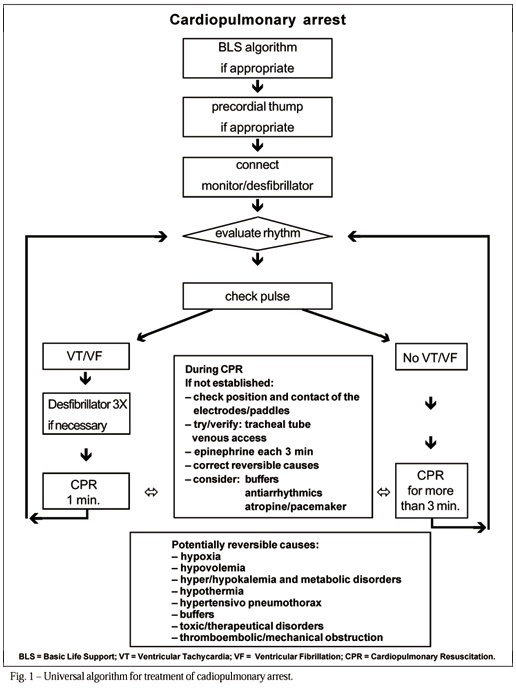
Cardiopulmonary arrest is a medical emergency in which the lapse of time between event onset and the initiation of measures of basic and advanced support, as well as the correct care based on specific protocols for each clinical situation, constitute decisive factors for a successful therapy. Cardiopulmonary arrest care cannot be restricted to the hospital setting because of its fulminant nature. This necessitates the creation of new concepts, strategies and structures, such as the concept of life chain, cardio-pulmonary resuscitation courses for professionals who work in emergency medical services, the automated external defibrillator, the implantable cardioverter-defibrillator, and mobile intensive care units, among others. New concepts, strategies and structures motivated by new advances have also modified the treatment and improved the results of cardiopulmonary resuscitation in the hospital setting. Among them, we can cite the concept of cerebral resuscitation, the application of the life chain, the creation of the universal life support algorithm, the adjustment of drug doses, new techniques – measure of the end-tidal carbon dioxide levels and of the coronary perfusion pressure – and new drugs under research.

Read Full Article
Creative Commons Attribution (CC BY) Creative Commons license
08/01/2002 DOI: 10.1590/S0066-782X1999000300009 Views 1
Updated

Prognostic factors in patients with congestive heart failure

Humberto Villacorta et al. Evandro Tinoco Mesquita

Update

Prognostic Factors in Patients with Congestive Heart Failure

[…]

Read Full Article
Creative Commons Attribution (CC BY) Creative Commons license
08/01/2002 DOI: 10.1590/S0066-782X1999000300008 Views 1
Cholinergic stimulation with pyridostigmine, hemodynamic and echocardiographic analysis in healthy subjects
Original Article

Cholinergic stimulation with pyridostigmine, hemodynamic and echocardiographic analysis in healthy subjects

Paulo Vasconcellos de Pontes et al. Bianca Gouveia Bastos Luiz José Martins Romêo F° Evandro Tinoco Mesquita Antonio Claudio Lucas da Nóbrega

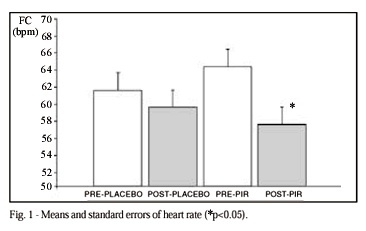
OBJECTIVE: Growing evidence suggests that sudden death after an acute myocardial infarction (AMI) correlates with autonomic nervous system imbalance. Parasympathomimetic drugs have been tested to reverse these changes. However, their effects on ventricular function need specific evaluation. Our objective was to analyze pyridostigmine’s (PYR) effect on hemodynamic and echocardiographic variables of ventricular function. METHODS: Twenty healthy volunteers underwent Doppler echocardiographic evaluations, blood pressure (BP), and heart rate (HR) assessment at rest, before and 120 min after ingestion of 30 mg PYR or placebo, according to a double-blind, placebo-controlled, crossed and randomized protocol, on different days. RESULTS: PYR was well tolerated and did not cause alterations in BP or in ventricular systolic function. A reduction in HR of 10.9±1.3% occurred (p<0,00001). There was an A wave reduction in the mitral flow (p<0.01) and an E/A ratio increase (p0.05). CONCLUSION: PYR reduces HR and increases E/A ratio, without hemodynamic impairment or ventricular function change.

  • Autonomic Nervous System
  • coronary arterial disease
  • pyridostigmine
Read Full Article
Creative Commons Attribution (CC BY) Creative Commons license
08/01/2002 DOI: 10.1590/S0066-782X1999000300003
Chagas' heart disease
State of the Art

Chagas' heart disease

José Antonio Marin-Neto et al. Marcus Vinícius Simões Álvaro V. Lima Sarabanda

State of the Art

Chagas’ Heart Disease

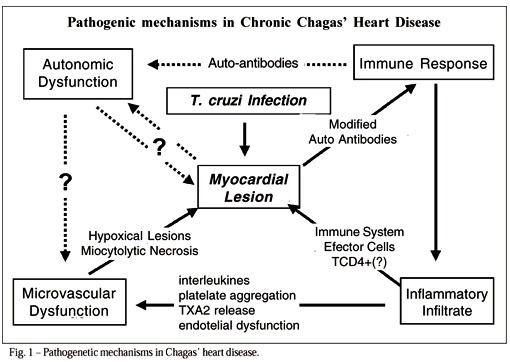
[…]

Read Full Article
Creative Commons Attribution (CC BY) Creative Commons license
08/01/2002 DOI: 10.1590/S0066-782X1999000300001 Views 2
Anomalous origin of the left coronary artery from the pulmonary trunk. Clinical features and midterm results after surgical treatment
Original Article

Anomalous origin of the left coronary artery from the pulmonary trunk. Clinical features and midterm results after surgical treatment

Fernando Amaral et al. Julene S. Carvalho João A. Granzotti Elliot A. Shinebourne

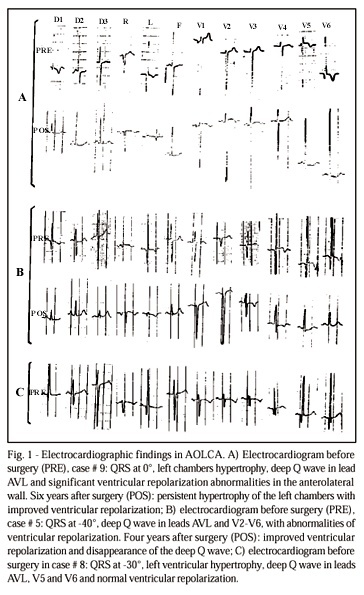
OBJECTIVE: To report the authors’ experience with the anomalous origin of the left coronary artery (AOLCA) from the pulmonary trunk, emphasizing preoperative data, surgical aspects and midterm results of the follow-up. METHODS: Retrospective analysis of 11 patients operated upon at the Royal Brompton Hospital from October, 84 to April, 97. RESULTS: Nine infants had heart failure (HF) and two other children presented with dyspnea and chest pain. All had ECG changes. The echocardiogram identified the anomalous origin of the coronary artery in 7 (64%) patients and hemodynamic studies were performed in 7 patients. All infants were operated upon between the 2nd and 10th month of life. Six patients were treated with aortic reimplantation of the left coronary artery, whereas five were operated upon according to the Takeuchi technique. All patients are alive, with clear improvement of the ECG changes and ventricular function, as evaluated by echocardiography. Two patients operated upon according to the Takeuchi technique required additional surgery due to severe supravalvular pulmonary stenosis. CONCLUSION: AOLCA is a rare disease. Most patients show early signs of severe HF associated with ECG findings. Surgical therapy must be instituted early in the disease, preferentially through aortic implantation of the anomalous coronary artery, with a high possibility of success. Shortly after surgery, clinical and ECG improvement, as well as normalization of left ventricular function, should be expected.

  • Anomalous Left Coronary Artery
  • Bland-White-Garland Syndrome
  • Left Ventricular Function
Read Full Article
Creative Commons Attribution (CC BY) Creative Commons license
08/01/2002 DOI: 10.1590/S0066-782X1999000300004 Views 1
Atrial infarction is a unique and often unrecognized clinical entity
Case Report

Atrial infarction is a unique and often unrecognized clinical entity

Rosana G. G. Mendes et al. Paulo Roberto B. Evora

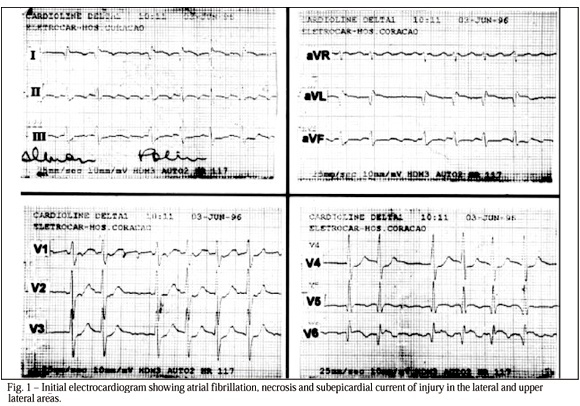
A patient with heart failure and acute atrial fibrillation received the final diagnosis of atrial infarction associated with ventricular infarction based on clinical findings of ischemia in association with atrial fibrillation and heart failure (mechanisms probably involved: contractile dysfunction and loss of atrial contribution). Although a transesophageal echocardiography, which could refine the diagnosis of anatomic abnormalities, was not performed, all evidence led to the diagnosis of atrial involvement. Electrocardiographic findings were consistent with Liu’s major criterion 3. Therapy with digitalis, quinidine and angiotensin-converting enzyme inhibitors was chosen, as the patient had acute pulmonary edema. The use of beta-blockers and verapamil was restricted. No other complications, such as thrombo-embolism or atrial rupture, were noted.

Read Full Article
Creative Commons Attribution (CC BY) Creative Commons license
08/01/2002 DOI: 10.1590/S0066-782X1999000300007 Views 1
Lecture

Why do we need randomized and epidemiological studies on cardiovascular disease? Evidence-based cardiology VII

Álvaro Avezum et al. João Manoel Rossi Neto Leopoldo Piegas

Over the last two decades the results of randomized clinical studies, which are powerful aids for correctly assessing therapeutical strategies, have consolidated cardiological practice. In addition, scientifically interesting hypotheses have been generated through the results of epidemiological studies. Properly conducted randomized studies without systematic errors and with statistical power adequate for demonstrating moderate and reasonable benefits in relevant clinical outcomes have provided reliable and strong results altering clinical practice, thus providing adequate treatment for patients with cardiovascular disease (CVD). The dissemination and use of evidence-based medicine in treating coronary artery disease (CAD), heart failure (HF), and in prevention will prevent hundreds of thousands of deaths annually in developed and developing countries. CVD is responsible for approximately 12 million deaths annually throughout the world, and approximately 60% of these deaths occur in developing countries. During recent years, an increase in mortality and morbidity rates due to CVD has occurred in developing countries. This increase is an indication that an epidemiological (demographic, economical, and health-related) transition is taking place in developing countries and this transition implies a global epidemic of CVD, which will require wide-ranging and globally effective strategies for prevention. The identification of conventional and emerging risk factors for CVD, as well as their management in high-risk individuals, has contributed to the decrease in the mortality rate due to CVD. Through a national collaboration, several multi-center and multinational randomized and epidemiological studies have been carried out throughout Brazil, thus contributing not only to a generalized scientific growth in different Brazilian hospitals but also to the consolidation of an increasingly evidence-based clinical practice.

Read Full Article
Creative Commons Attribution (CC BY) Creative Commons license
08/01/2002 DOI: 10.1590/S0066-782X1999000300002
Guideline

Continuing medical education in cardiology. Proposal for a national program. Committee of medical residency and training in cardiology – SBC/FUNCOR

Bráulio Luna Fº et al. Valter C. Lima Celso Ferreira Fº Carlos Gun … Orlando Campos Fº Rui Póvoa Ângelo A. V. de Paola Celso Ferreira

Guidelines

Continuing Medical Education in Cardiology. Proposal for a National Program. Committee of Medical Residency and Training in Cardiology – SBC/FUNCOR

[…]

Read Full Article
Creative Commons Attribution (CC BY) Creative Commons license
08/01/2002 DOI: 10.1590/S0066-782X1999000300010
Mitral valve disease with rheumatic appearance in the presence of left ventricular endomyocardial fibrosis
Case Report

Mitral valve disease with rheumatic appearance in the presence of left ventricular endomyocardial fibrosis

Lurildo R. Saraiva et al. Regina W. Carneiro Mauro B. Arruda Djair Brindeiro F° Vital Lira

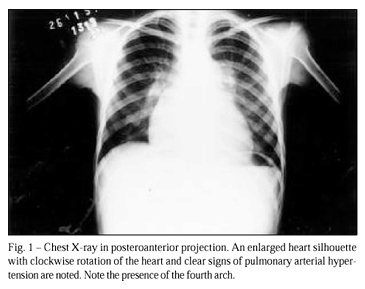
This is a report of a nine-year-old boy with both mitral stenosis and regurgitation and extensive endomyocardial fibrosis of the left ventricle. Focus is given to the singularity of the fibrotic process, with an emphasis on the etiopathogenic aspects.

Read Full Article
Creative Commons Attribution (CC BY) Creative Commons license
08/01/2002 DOI: 10.1590/S0066-782X1999000300006 Views 1
Therapeutic approach to patients complaining of high blood pressure in a cardiological emergency room
Original Article

Therapeutic approach to patients complaining of high blood pressure in a cardiological emergency room

Miguel Gus et al. André G. Andrighetto Vanessa R. Balle Marco B. Pilla

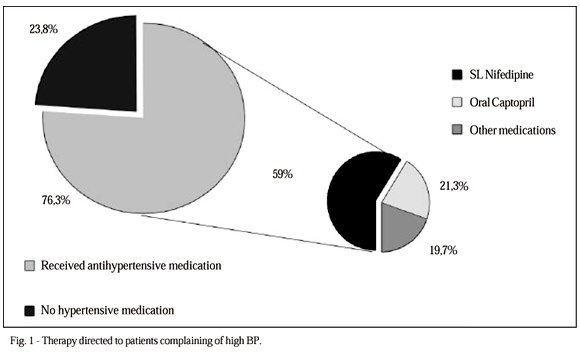
OBJECTIVE: To evaluate the management of patients complaining of high blood pressure (BP) in a cardiological emergency room. METHODS: Patients referred to the cardiological emergency room with the main complaint of high blood pressure were consecutively selected. The prescriptions and the choice of antihypertensive drugs were assessed. The classification of these patients as hypertensive emergencies or pseudoemergencies, according to the physician who provided initial care, was recorded. RESULTS: From a total of 858 patients presenting to the emergency room, 80 (9.3%) complained of high BP, and 61 (76.3%) received antihypertensive drugs. Sublingual nifedipine was the most commonly used drug (59%). One patient received intravenous medication, one patient was hospitalized and 6 patients (7.5%) were classified as hypertensive emergencies or pseudoemergencies. CONCLUSION: High BP could seldom be classified as a hypertensive emergency or pseudoemergency, even though it was a frequent complaint (9.3% of visits). Currently, the therapeutic approach is not recommended, even in specialized clinics.

  • hypertensive emergency and pseudoemergency
  • nifedipine
Read Full Article
Creative Commons Attribution (CC BY) Creative Commons license
08/01/2002 DOI: 10.1590/S0066-782X1999000300005 Views 1

How to cite this article

EndNote RIS

Electronic Document Format (Vancouver)

Fº BL, Lima VC, Fº CF, Gun C, Fº OC, Póvoa R, Paola AV, et al. Preliminary sketch of medical residency in cardiology. Committee of medical residency and training in cardiology SBC/FUNCOR. Arquivos Brasileiros de Cardiologia 2002;72(3):393-8.

Electronic Document Format (ABNT)

Fº, Bráulio Luna; Lima, Valter C.; Fº, Celso Ferreira; Gun, Carlos; Fº, Orlando Campos; Póvoa, Rui; Paola, Ângelo A. V. de; Ferreira, Celso. Preliminary sketch of medical residency in cardiology. Committee of medical residency and training in cardiology SBC/FUNCOR. Arquivos Brasileiros de Cardiologia, v. 72, n. 3, p. 393-398, Jan. 2002.

Electronic Document Format (APA)

Fº, B. L., Lima, V. C., Fº, C. F., Gun, C., Fº, O. C., Póvoa, R., Paola, A. V. , & Ferreira, C. (2002). Preliminary sketch of medical residency in cardiology. Committee of medical residency and training in cardiology SBC/FUNCOR. Arquivos Brasileiros de Cardiologia, 72(3), 393-398.

Electronic Document Format (ISO)

Fº, Bráulio Luna and Lima, Valter C. and Fº, Celso Ferreira and Gun, Carlos and Fº, Orlando Campos and Póvoa, Rui and Paola, Ângelo A. V. de and Ferreira, Celso. Preliminary sketch of medical residency in cardiology. Committee of medical residency and training in cardiology SBC/FUNCOR. Arquivos Brasileiros de Cardiologia [online]. 2002, vol. 72, n. 3, [cited 2026-10-14], pp. 393-398. Available from: <https://journals.cardiol.br/en/article/preliminary-sketch-of-medical-residency-in-cardiology-committee-of-medical-residency-and-training-in-cardiology-sbc-funcor/>. ISSN 0066-782X

EndNote RIS

Electronic Document Format (Vancouver)

Zago AC, Nunes CE, Cunha VR, Manenti E, Bodanese LC. Cardiopulmonary resuscitation: update, controversies and new advances. Arquivos Brasileiros de Cardiologia 2002;72(3):363-86.

Electronic Document Format (ABNT)

Zago, Alexandre C.; Nunes, Cristine E.; Cunha, Viviane R. da; Manenti, Euler; Bodanese, Luís Carlos. Cardiopulmonary resuscitation: update, controversies and new advances. Arquivos Brasileiros de Cardiologia, v. 72, n. 3, p. 363-386, Jan. 2002.

Electronic Document Format (APA)

Zago, A. C., Nunes, C. E., Cunha, V. R. , Manenti, E., & Bodanese, L. C. (2002). Cardiopulmonary resuscitation: update, controversies and new advances. Arquivos Brasileiros de Cardiologia, 72(3), 363-386.

Electronic Document Format (ISO)

Zago, Alexandre C. and Nunes, Cristine E. and Cunha, Viviane R. da and Manenti, Euler and Bodanese, Luís Carlos. Cardiopulmonary resuscitation: update, controversies and new advances. Arquivos Brasileiros de Cardiologia [online]. 2002, vol. 72, n. 3, [cited 2026-10-14], pp. 363-386. Available from: <https://journals.cardiol.br/en/article/cardiopulmonary-resuscitation-update-controversies-and-new-advances/>. ISSN 0066-782X

EndNote RIS

Electronic Document Format (Vancouver)

Villacorta H, Mesquita ET. Prognostic factors in patients with congestive heart failure. Arquivos Brasileiros de Cardiologia 2002;72(3):343-62.

Electronic Document Format (ABNT)

Villacorta, Humberto; Mesquita, Evandro Tinoco. Prognostic factors in patients with congestive heart failure. Arquivos Brasileiros de Cardiologia, v. 72, n. 3, p. 343-362, Jan. 2002.

Electronic Document Format (APA)

Villacorta, H., & Mesquita, E. T. (2002). Prognostic factors in patients with congestive heart failure. Arquivos Brasileiros de Cardiologia, 72(3), 343-362.

Electronic Document Format (ISO)

Villacorta, Humberto and Mesquita, Evandro Tinoco. Prognostic factors in patients with congestive heart failure. Arquivos Brasileiros de Cardiologia [online]. 2002, vol. 72, n. 3, [cited 2026-10-14], pp. 343-362. Available from: <https://journals.cardiol.br/en/article/prognostic-factors-in-patients-with-congestive-heart-failure/>. ISSN 0066-782X

EndNote RIS

Electronic Document Format (Vancouver)

Pontes PV, Bastos BG, F° LJMR, Mesquita ET, Nóbrega ACL. Cholinergic stimulation with pyridostigmine, hemodynamic and echocardiographic analysis in healthy subjects. Arquivos Brasileiros de Cardiologia 2002;72(3):297-306.

Electronic Document Format (ABNT)

Pontes, Paulo Vasconcellos de; Bastos, Bianca Gouveia; F°, Luiz José Martins Romêo; Mesquita, Evandro Tinoco; Nóbrega, Antonio Claudio Lucas da. Cholinergic stimulation with pyridostigmine, hemodynamic and echocardiographic analysis in healthy subjects. Arquivos Brasileiros de Cardiologia, v. 72, n. 3, p. 297-306, Jan. 2002.

Electronic Document Format (APA)

Pontes, P. V. , Bastos, B. G., F°, L. J. M. R., Mesquita, E. T., & Nóbrega, A. C. L. (2002). Cholinergic stimulation with pyridostigmine, hemodynamic and echocardiographic analysis in healthy subjects. Arquivos Brasileiros de Cardiologia, 72(3), 297-306.

Electronic Document Format (ISO)

Pontes, Paulo Vasconcellos de and Bastos, Bianca Gouveia and F°, Luiz José Martins Romêo and Mesquita, Evandro Tinoco and Nóbrega, Antonio Claudio Lucas da. Cholinergic stimulation with pyridostigmine, hemodynamic and echocardiographic analysis in healthy subjects. Arquivos Brasileiros de Cardiologia [online]. 2002, vol. 72, n. 3, [cited 2026-10-14], pp. 297-306. Available from: <https://journals.cardiol.br/en/article/cholinergic-stimulation-with-pyridostigmine-hemodynamic-and-echocardiographic-analysis-in-healthy-subjects/>. ISSN 0066-782X

EndNote RIS

Electronic Document Format (Vancouver)

Marin-Neto JA, Simões MV, Sarabanda VL. Chagas’ heart disease. Arquivos Brasileiros de Cardiologia 2002;72(3):247-80.

Electronic Document Format (ABNT)

Marin-Neto, José Antonio; Simões, Marcus Vinícius; Sarabanda, Álvaro V. Lima. Chagas’ heart disease. Arquivos Brasileiros de Cardiologia, v. 72, n. 3, p. 247-280, Jan. 2002.

Electronic Document Format (APA)

Marin-Neto, J. A., Simões, M. V., & Sarabanda, V. L. (2002). Chagas’ heart disease. Arquivos Brasileiros de Cardiologia, 72(3), 247-280.

Electronic Document Format (ISO)

Marin-Neto, José Antonio and Simões, Marcus Vinícius and Sarabanda, Álvaro V. Lima. Chagas’ heart disease. Arquivos Brasileiros de Cardiologia [online]. 2002, vol. 72, n. 3, [cited 2026-10-14], pp. 247-280. Available from: <https://journals.cardiol.br/en/article/chagas-heart-disease/>. ISSN 0066-782X

EndNote RIS

Electronic Document Format (Vancouver)

Amaral F, Carvalho JS, Granzotti JA, Shinebourne EA. Anomalous origin of the left coronary artery from the pulmonary trunk. Clinical features and midterm results after surgical treatment. Arquivos Brasileiros de Cardiologia 2002;72(3):307-20.

Electronic Document Format (ABNT)

Amaral, Fernando; Carvalho, Julene S.; Granzotti, João A.; Shinebourne, Elliot A.. Anomalous origin of the left coronary artery from the pulmonary trunk. Clinical features and midterm results after surgical treatment. Arquivos Brasileiros de Cardiologia, v. 72, n. 3, p. 307-320, Jan. 2002.

Electronic Document Format (APA)

Amaral, F., Carvalho, J. S., Granzotti, J. A., & Shinebourne, E. A. (2002). Anomalous origin of the left coronary artery from the pulmonary trunk. Clinical features and midterm results after surgical treatment. Arquivos Brasileiros de Cardiologia, 72(3), 307-320.

Electronic Document Format (ISO)

Amaral, Fernando and Carvalho, Julene S. and Granzotti, João A. and Shinebourne, Elliot A.. Anomalous origin of the left coronary artery from the pulmonary trunk. Clinical features and midterm results after surgical treatment. Arquivos Brasileiros de Cardiologia [online]. 2002, vol. 72, n. 3, [cited 2026-10-14], pp. 307-320. Available from: <https://journals.cardiol.br/en/article/anomalous-origin-of-the-left-coronary-artery-from-the-pulmonary-trunk-clinical-features-and-midterm-results-after-surgical-treatment/>. ISSN 0066-782X

EndNote RIS

Electronic Document Format (Vancouver)

Mendes RGG, Evora PRB. Atrial infarction is a unique and often unrecognized clinical entity. Arquivos Brasileiros de Cardiologia 2002;72(3):333-42.

Electronic Document Format (ABNT)

Mendes, Rosana G. G.; Evora, Paulo Roberto B.. Atrial infarction is a unique and often unrecognized clinical entity. Arquivos Brasileiros de Cardiologia, v. 72, n. 3, p. 333-342, Jan. 2002.

Electronic Document Format (APA)

Mendes, R. G. G., & Evora, P. R. B. (2002). Atrial infarction is a unique and often unrecognized clinical entity. Arquivos Brasileiros de Cardiologia, 72(3), 333-342.

Electronic Document Format (ISO)

Mendes, Rosana G. G. and Evora, Paulo Roberto B.. Atrial infarction is a unique and often unrecognized clinical entity. Arquivos Brasileiros de Cardiologia [online]. 2002, vol. 72, n. 3, [cited 2026-10-14], pp. 333-342. Available from: <https://journals.cardiol.br/en/article/atrial-infarction-is-a-unique-and-often-unrecognized-clinical-entity/>. ISSN 0066-782X

EndNote RIS

Electronic Document Format (Vancouver)

Avezum , Rossi Neto JM, Piegas L. Why do we need randomized and epidemiological studies on cardiovascular disease? Evidence-based cardiology VII. Arquivos Brasileiros de Cardiologia 2002;72(3):281-96.

Electronic Document Format (ABNT)

Avezum, Álvaro; Rossi Neto, João Manoel; Piegas, Leopoldo. Why do we need randomized and epidemiological studies on cardiovascular disease? Evidence-based cardiology VII. Arquivos Brasileiros de Cardiologia, v. 72, n. 3, p. 281-296, Jan. 2002.

Electronic Document Format (APA)

Avezum, , Rossi Neto, J. M., & Piegas, L. (2002). Why do we need randomized and epidemiological studies on cardiovascular disease? Evidence-based cardiology VII. Arquivos Brasileiros de Cardiologia, 72(3), 281-296.

Electronic Document Format (ISO)

Avezum, Álvaro and Rossi Neto, João Manoel and Piegas, Leopoldo. Why do we need randomized and epidemiological studies on cardiovascular disease? Evidence-based cardiology VII. Arquivos Brasileiros de Cardiologia [online]. 2002, vol. 72, n. 3, [cited 2026-10-14], pp. 281-296. Available from: <https://journals.cardiol.br/en/article/why-do-we-need-randomized-and-epidemiological-studies-on-cardiovascular-disease-evidence-based-cardiology-vii/>. ISSN 0066-782X

EndNote RIS

Electronic Document Format (Vancouver)

Fº BL, Lima VC, Fº CF, Gun C, Fº OC, Póvoa R, Paola AV, et al. Continuing medical education in cardiology. Proposal for a national program. Committee of medical residency and training in cardiology – SBC/FUNCOR. Arquivos Brasileiros de Cardiologia 2002;72(3):387-92.

Electronic Document Format (ABNT)

Fº, Bráulio Luna; Lima, Valter C.; Fº, Celso Ferreira; Gun, Carlos; Fº, Orlando Campos; Póvoa, Rui; Paola, Ângelo A. V. de; Ferreira, Celso. Continuing medical education in cardiology. Proposal for a national program. Committee of medical residency and training in cardiology – SBC/FUNCOR. Arquivos Brasileiros de Cardiologia, v. 72, n. 3, p. 387-392, Jan. 2002.

Electronic Document Format (APA)

Fº, B. L., Lima, V. C., Fº, C. F., Gun, C., Fº, O. C., Póvoa, R., Paola, A. V. , & Ferreira, C. (2002). Continuing medical education in cardiology. Proposal for a national program. Committee of medical residency and training in cardiology – SBC/FUNCOR. Arquivos Brasileiros de Cardiologia, 72(3), 387-392.

Electronic Document Format (ISO)

Fº, Bráulio Luna and Lima, Valter C. and Fº, Celso Ferreira and Gun, Carlos and Fº, Orlando Campos and Póvoa, Rui and Paola, Ângelo A. V. de and Ferreira, Celso. Continuing medical education in cardiology. Proposal for a national program. Committee of medical residency and training in cardiology – SBC/FUNCOR. Arquivos Brasileiros de Cardiologia [online]. 2002, vol. 72, n. 3, [cited 2026-10-14], pp. 387-392. Available from: <https://journals.cardiol.br/en/article/continuing-medical-education-in-cardiology-proposal-for-a-national-program-committee-of-medical-residency-and-training-in-cardiology-sbc-funcor/>. ISSN 0066-782X

EndNote RIS

Electronic Document Format (Vancouver)

Saraiva LR, Carneiro RW, Arruda MB, F° DB, Lira V. Mitral valve disease with rheumatic appearance in the presence of left ventricular endomyocardial fibrosis. Arquivos Brasileiros de Cardiologia 2002;72(3):327-32.

Electronic Document Format (ABNT)

Saraiva, Lurildo R.; Carneiro, Regina W.; Arruda, Mauro B.; F°, Djair Brindeiro; Lira, Vital. Mitral valve disease with rheumatic appearance in the presence of left ventricular endomyocardial fibrosis. Arquivos Brasileiros de Cardiologia, v. 72, n. 3, p. 327-332, Jan. 2002.

Electronic Document Format (APA)

Saraiva, L. R., Carneiro, R. W., Arruda, M. B., F°, D. B., & Lira, V. (2002). Mitral valve disease with rheumatic appearance in the presence of left ventricular endomyocardial fibrosis. Arquivos Brasileiros de Cardiologia, 72(3), 327-332.

Electronic Document Format (ISO)

Saraiva, Lurildo R. and Carneiro, Regina W. and Arruda, Mauro B. and F°, Djair Brindeiro and Lira, Vital. Mitral valve disease with rheumatic appearance in the presence of left ventricular endomyocardial fibrosis. Arquivos Brasileiros de Cardiologia [online]. 2002, vol. 72, n. 3, [cited 2026-10-14], pp. 327-332. Available from: <https://journals.cardiol.br/en/article/mitral-valve-disease-with-rheumatic-appearance-in-the-presence-of-left-ventricular-endomyocardial-fibrosis/>. ISSN 0066-782X

EndNote RIS

Electronic Document Format (Vancouver)

Gus M, Andrighetto AG, Balle VR, Pilla MB. Therapeutic approach to patients complaining of high blood pressure in a cardiological emergency room. Arquivos Brasileiros de Cardiologia 2002;72(3):321-6.

Electronic Document Format (ABNT)

Gus, Miguel; Andrighetto, André G.; Balle, Vanessa R.; Pilla, Marco B.. Therapeutic approach to patients complaining of high blood pressure in a cardiological emergency room. Arquivos Brasileiros de Cardiologia, v. 72, n. 3, p. 321-326, Jan. 2002.

Electronic Document Format (APA)

Gus, M., Andrighetto, A. G., Balle, V. R., & Pilla, M. B. (2002). Therapeutic approach to patients complaining of high blood pressure in a cardiological emergency room. Arquivos Brasileiros de Cardiologia, 72(3), 321-326.

Electronic Document Format (ISO)

Gus, Miguel and Andrighetto, André G. and Balle, Vanessa R. and Pilla, Marco B.. Therapeutic approach to patients complaining of high blood pressure in a cardiological emergency room. Arquivos Brasileiros de Cardiologia [online]. 2002, vol. 72, n. 3, [cited 2026-10-14], pp. 321-326. Available from: <https://journals.cardiol.br/en/article/therapeutic-approach-to-patients-complaining-of-high-blood-pressure-in-a-cardiological-emergency-room/>. ISSN 0066-782X

Sede – Rio de Janeiro
Av. Marechal Câmara, 160
3º andar – Sala: 330 – Centro
Rio de Janeiro – CEP: 20020-907
Tel.: (55 +21) 3478-2700
ou (21) 99386-3961
E-mail: revista@cardiol.br

Sede – São Paulo
Alameda Santos, 705 – 11º andar
Cerqueira César | São Paulo
CEP: 01419-001
Tel.: (55 +11) 3411-5500
E-mail: revista@cardiol.br

  • About the Journal
  • Internal Regulation
  • Editors Section
  • Editorial Board
  • History
  • SBC Award

  • Guidelines for Publication
  • Editorial Policy
  • Ethics Policy
  • Policy on the Use of Artificial Intelligence
  • Mandatory Publication Form
  • Publication Fee

Issues

SBC Guidelines

  • How to Publish an Abstract Supplement?
  • Supplements from the Brazilian Congress of Cardiology