G-Proteins Agonists and NO/cGMP Blockers: Unexplored Frontiers in the Pharmaceutical Industry
G-proteins: potential therapeutic role
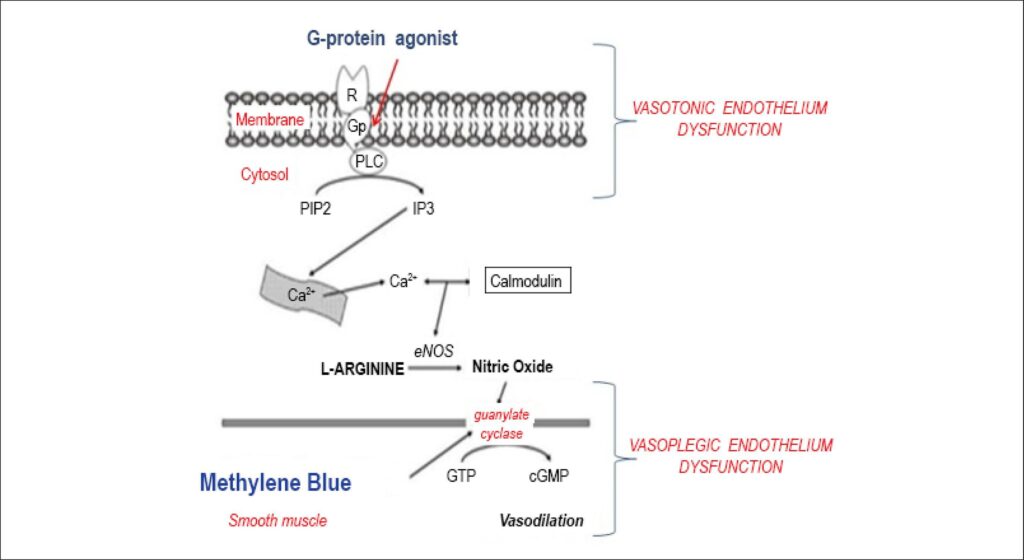
The release of nitric oxide (NO) can occur by different pathways involving G-proteins. The Gi-protein is responsible for the mediation of inhibitory effects of receptors in the adenylate cyclase and guanylate cyclase pathways. An early stage of the majority of the responses mediated by receptors is the activation of G-proteins in the cell membrane, which is the target of the modulation of a variety of intracellular events. The role of G-proteins in the pathophysiology of vasospasm after global ischemia and reperfusion is still a matter of investigations. Their participation was documented in a comparative study of vascular relaxation induced by sodium fluoride, which produces biphasic responses in human, bovine, and porcine coronary arteries, causing an endothelium-dependent relaxation and an endothelium-independent contraction. G-protein dysfunction in the endothelium has also been postulated as responsible for the endothelial dysfunction in conditions of endothelial cell regeneration after injury, atherosclerosis, and coronary vasospasm. Myocardial ischemia and reperfusion selectively impair receptor-mediated NO release. However, the ability of the endothelial cell to produce NO or generate endothelium-dependent relaxation to nonnitric oxide-dependent agonists remains intact.,
In summary: 1. Endothelial cells maintain their capacity to release NO based on their ability in receiving the transduction signal through the membrane; 2. G-proteins have a fundamental role in the signal transduction; 3. This paradigm is extended to all vasotonic cardiovascular diseases that coexist with platelet dysfunction. These data would be highly relevant in the research of G-protein-targeting drugs.
[…]
Images
Image gallery fullscreen viewer
Comments are moderated by the editorial team before publication. Discussions should be evidence-based and use scientific language. Conflicts of interest should be declared.