Factors Associated with Functional Capacity in Heart Failure Patients
Abstract
Background
Heart failure (HF) is a prevalent clinical condition that significantly impacts patient survival and represents one of the leading causes of hospitalization and mortality.
Objective
To analyze the association between functional capacity and clinical, socioeconomic, behavioral, and cognitive factors in individuals with HF.
Methods
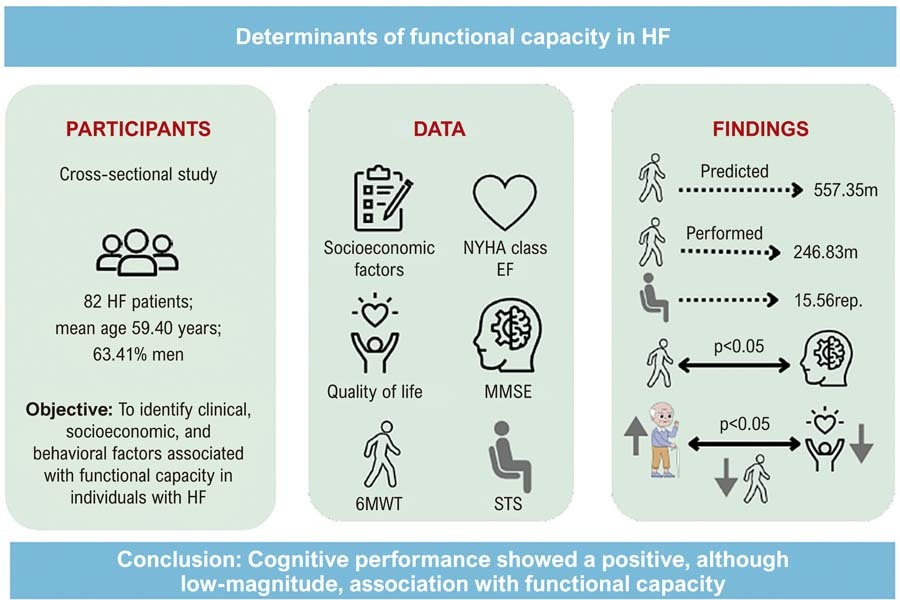
A cross-sectional study was conducted with 82 patients with HF undergoing outpatient follow-up. Functional capacity was assessed using the six-minute walk test (6MWT) and the sit-to-stand test (STS). Cognitive performance was measured using the mini-mental state examination (MMSE). Sociodemographic and clinical data were obtained from medical records and structured interviews.
Results
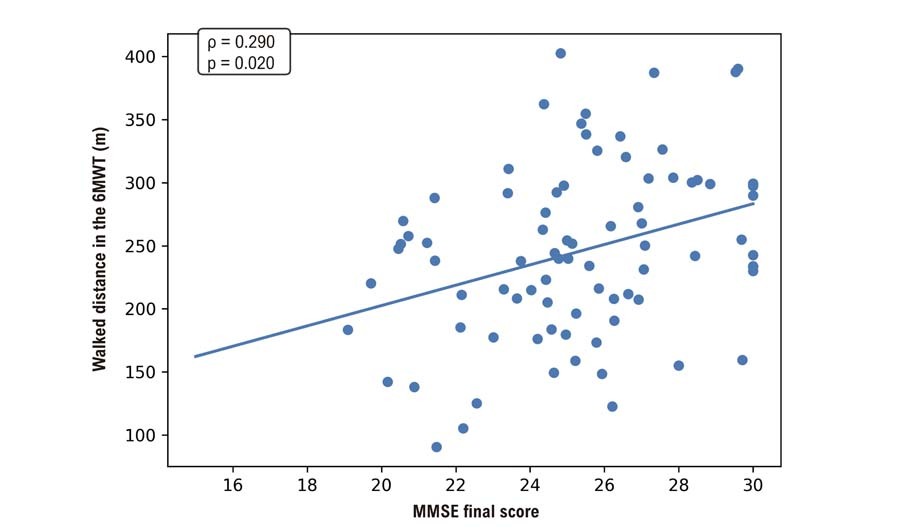
The sample consisted of 82 patients (63.4% male), with a mean age of 59.4 ± 12.9 years. In the 6MWT, the mean distance walked was significantly lower than the predicted distance (246.8 ± 86.5 m vs. 557.3 ± 47.5 m; p < 0.001). In the STS, participants performed an average of 15.6 ± 4.8 repetitions (p < 0.001). A positive and statistically significant correlation was observed between MMSE scores and functional capacity assessed by the 6MWT (ρ = 0.290; p = 0.020). Lower functional performance was also associated with older age, male sex, and poorer self-rated quality of life (p < 0.05).
Conclusion
In the sample studied, cognitive performance and clinical and sociodemographic factors were associated with functional capacity in individuals with HF.
Images
Image gallery fullscreen viewer
Comments are moderated by the editorial team before publication. Discussions should be evidence-based and use scientific language. Conflicts of interest should be declared.