Association of Germanic Cultural Preservation with Cardiovascular Risk and Subclinical Atherosclerosis in Adults from Southern Brazil
Abstract
Background
Migration involves cultural and lifestyle transitions that may influence cardiovascular disease (CVD) risk. Cultural preservation and adaptation may affect cardiovascular health through behavioral and social mechanisms.
Objective
To assess the association of Germanic cultural preservation with CVD risk and subclinical atherosclerosis among residents of Pomerode, southern Brazil, stratified by age group and sex.
Methods
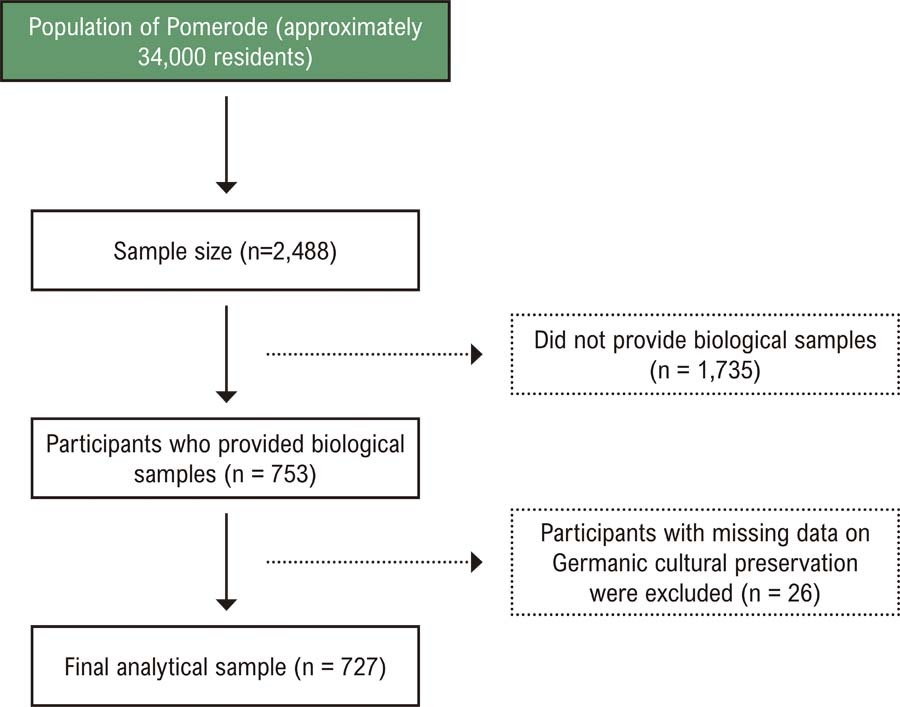
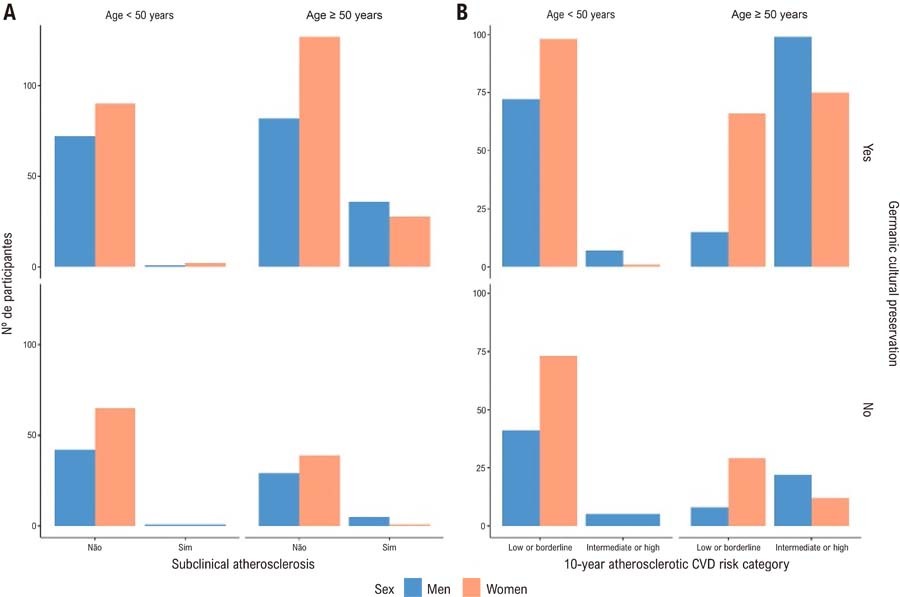
This cross-sectional study used baseline data collected from 2014 to 2018 from the Study of Health in Pomerode cohort and included 727 individuals aged 20-79 years with complete data. Germanic cultural preservation was defined as regularly speaking German at home and participating in German cultural associations. Subclinical atherosclerosis was defined as the presence of three or more carotid plaques. 10-year atherosclerotic CVD risk was estimated using the American College of Cardiology/American Heart Association Pooled Cohort Equations. Statistical significance was set at p < 0.05.
Results
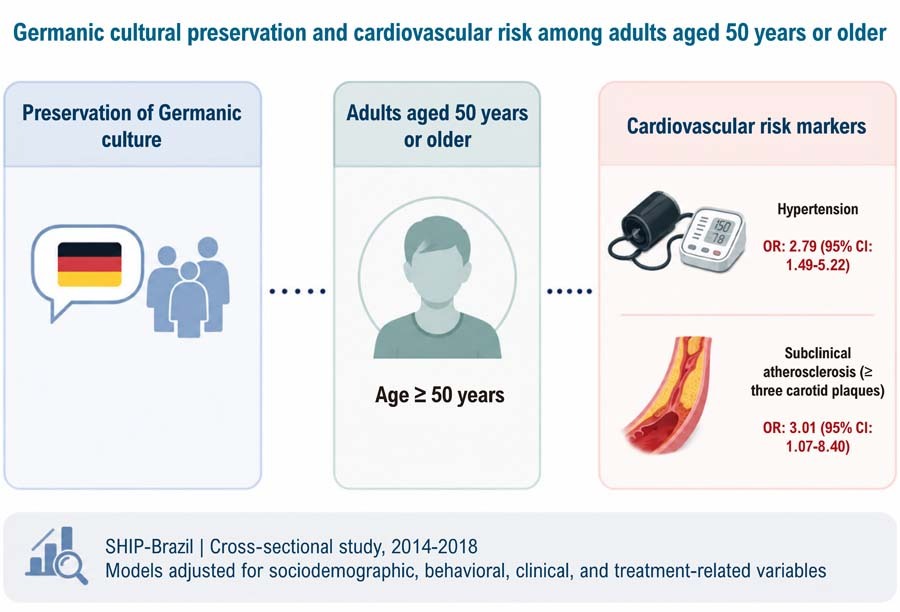
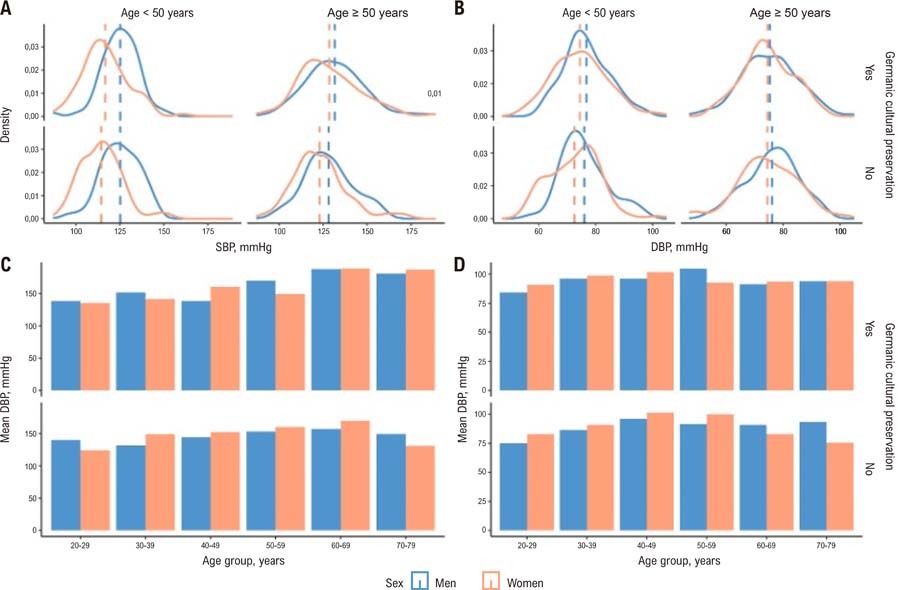
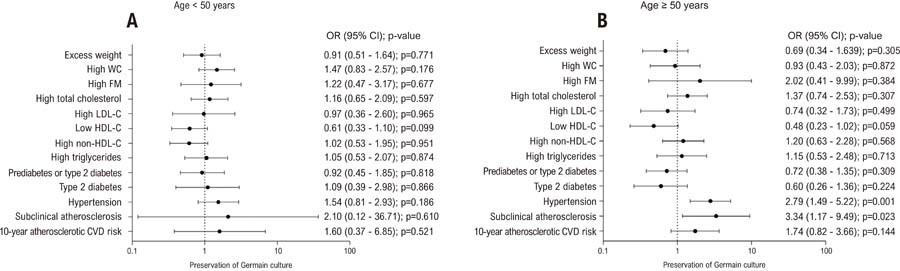
Mean age was 43.7 years, and 51.9% of participants were women. Germanic cultural preservation was reported by 65.61% of participants and was more common among older adults, White individuals, Protestants, and individuals of middle socioeconomic status (p < 0.05). Participants reporting Germanic cultural preservation also had less sedentary behavior, greater use of antihypertensive medications, and a less favorable cardiometabolic profile. In adjusted age-stratified models, Germanic cultural preservation was associated with hypertension (odds ratio [OR]: 2.79; 95% CI: 1.49-5.22) and subclinical atherosclerosis (OR: 3.01; 95% CI: 1.07-8.40) among individuals aged 50 years or older. After adjustment for hypertension, the association with subclinical atherosclerosis was attenuated and was no longer statistically significant.
Conclusions
Germanic cultural preservation was associated with hypertension and subclinical atherosclerosis among adults aged 50 years or older, highlighting the importance of considering cultural context when characterizing cardiovascular risk in aging populations.
Images
Image gallery fullscreen viewer
Comments are moderated by the editorial team before publication. Discussions should be evidence-based and use scientific language. Conflicts of interest should be declared.