Percutaneous Axillary Intra-Aortic Balloon Pump Implantation in Patients Hospitalized with Heart Failure: Initial Brazilian Experience
Abstract
Background
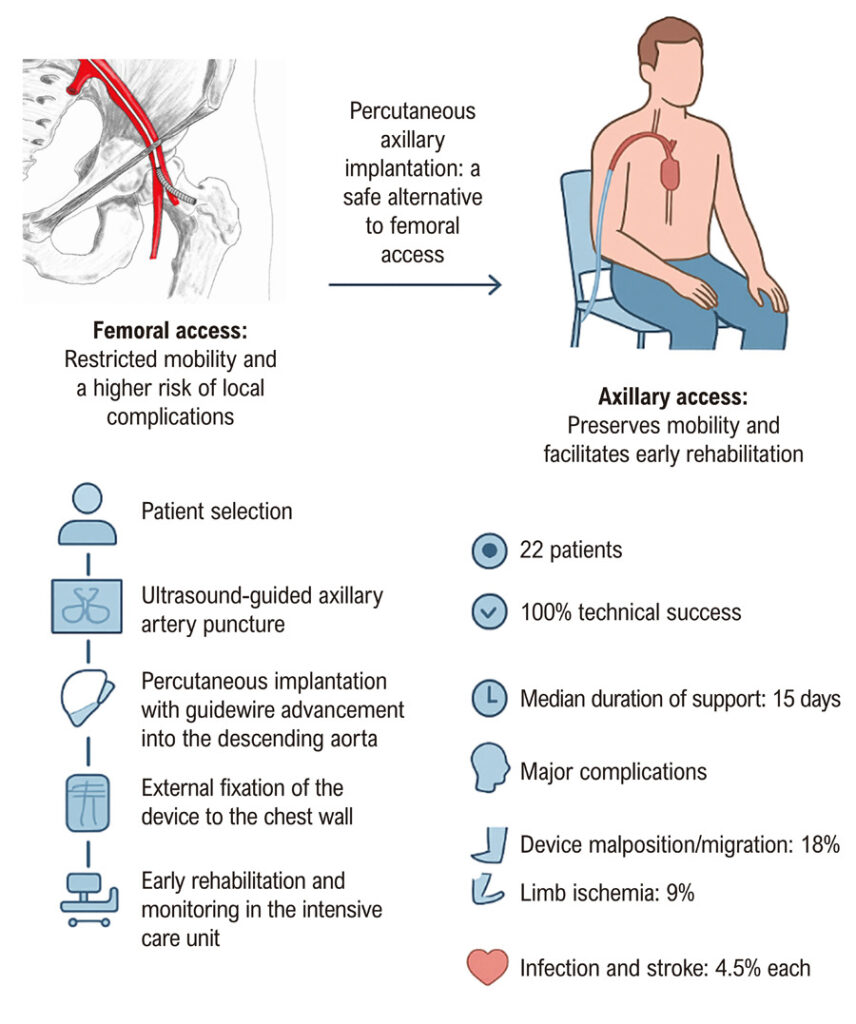
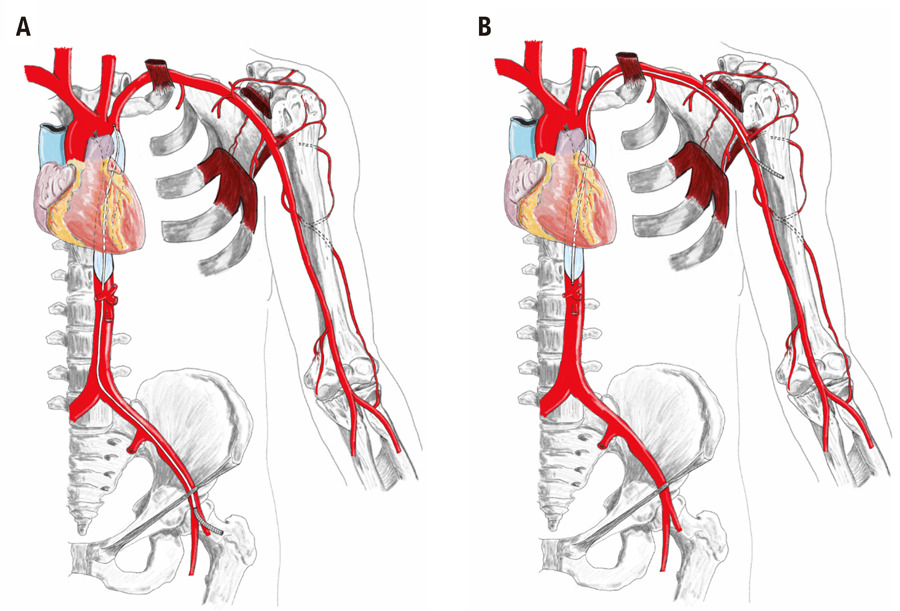
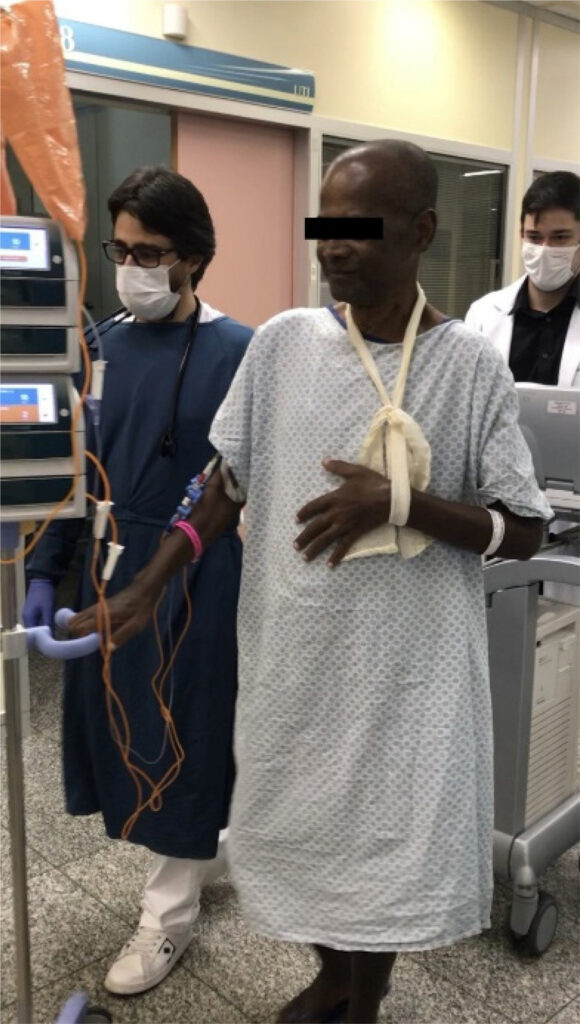
The intra-aortic balloon pump (IABP) is the most widely used mechanical circulatory support device for patients with advanced heart failure (HF) in our setting. However, femoral implantation restricts patient mobility during support.
Objective
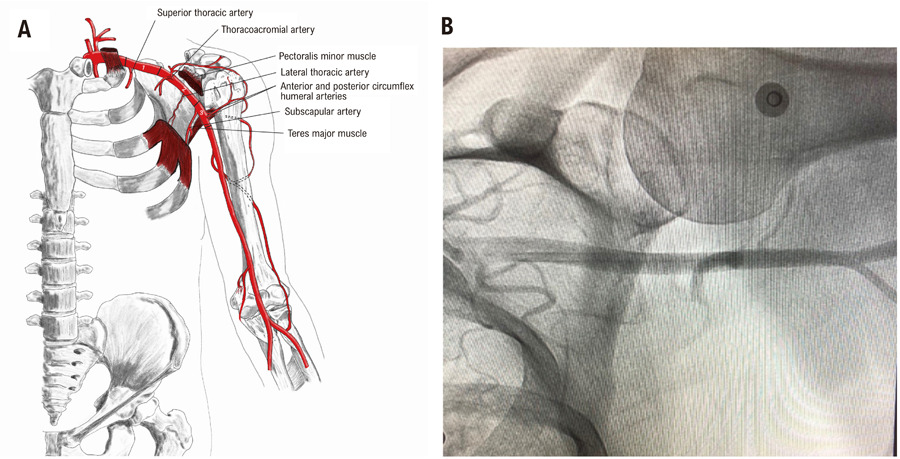
To report the initial experience of a Brazilian advanced HF referral center with percutaneous axillary IABP implantation.
Methods
Consecutive patients hospitalized for HF who underwent percutaneous axillary IABP implantation at a tertiary cardiology referral center were included. A p-value < 0.05 was considered statistically significant.
Results
Between December 2020 and December 2023, 22 patients underwent percutaneous axillary IABP implantation. The mean age was 53 ± 10.7 years. All patients were hospitalized with refractory HF and were listed for heart transplantation. The procedure was successfully performed in all patients selected for the axillary approach. The median duration of support was 15 days (interquartile range: 7–28 days). Observed complications included device migration (18.2%), limb ischemia (9.1%), and isolated infectious and neurological events. Half of the patients either underwent heart transplantation or were successfully weaned from mechanical support.
Conclusion
The initial experience with percutaneous axillary IABP implantation demonstrated that the technique is feasible, safe, and reproducible. Further studies are needed to establish the role of this strategy within the continuum of care for patients hospitalized with advanced HF while awaiting heart transplantation.
Images
Image gallery fullscreen viewer
Comments are moderated by the editorial team before publication. Discussions should be evidence-based and use scientific language. Conflicts of interest should be declared.