Sleep Duration and the Risk of Atherosclerosis: A Mendelian Randomization Study
Abstract
Background:
The association between the length of sleep and atherosclerosis has been reported in many observational studies. However, little is known about its significance as a risk factor for atherosclerosis or as a negative consequence of atherosclerosis.
Objective:
This study aimed to assess the causal association between sleep duration and the risk of atherosclerosis using publicly available genome-wide association studies (GWAS) summary statistics.
Methods:
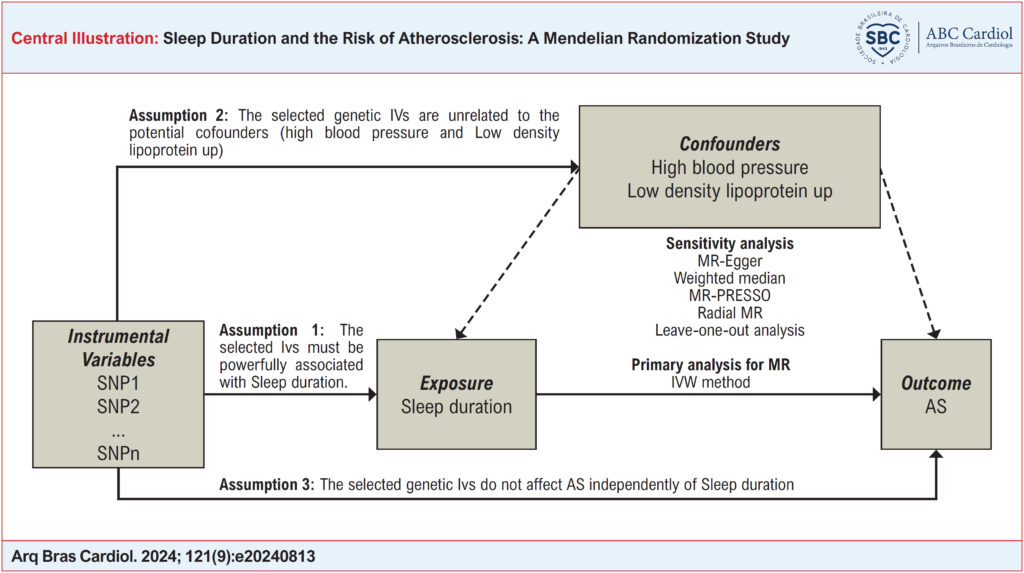
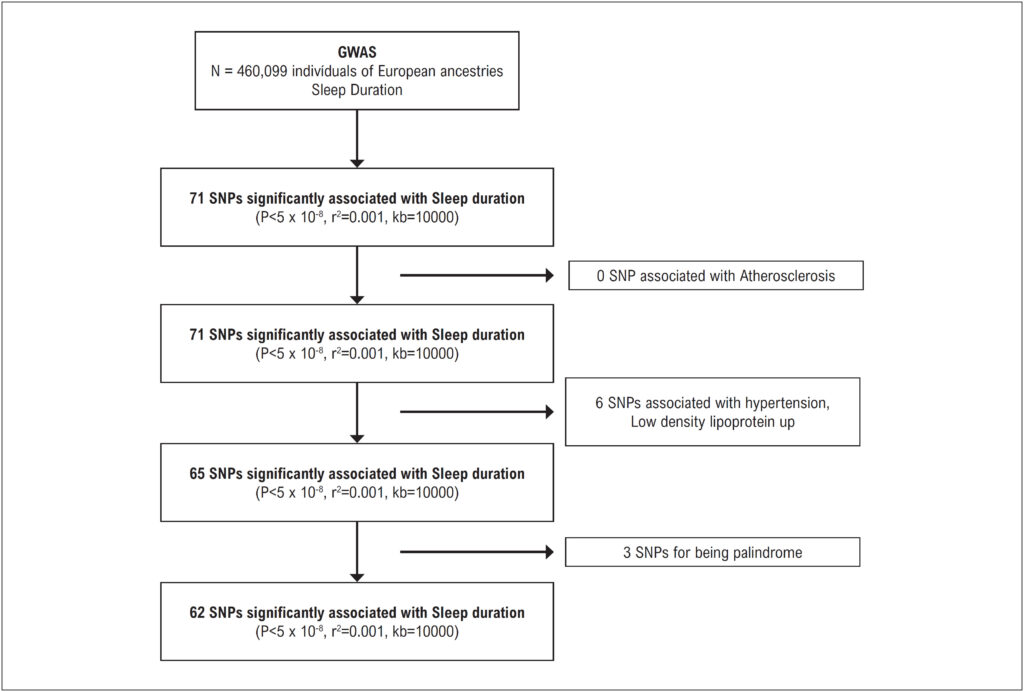
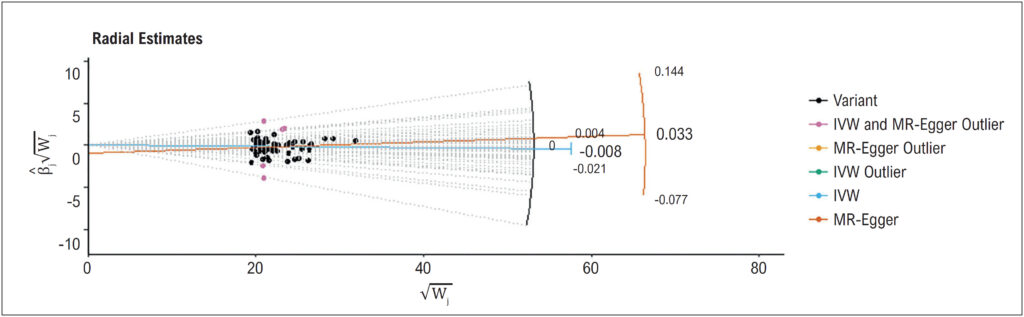
We employed a two-sample Mendelian randomization (MR) method with 2 cohorts from MRC-IEU (n=460,099) and UK Biobank (n=361,194) to investigate the causal association between sleep duration and the risk of atherosclerosis. Three methods including the inverse-variance weighted (IVW) technique, Robust adjusted profile score (RAPS), and simple-and weighted-median approach were used to obtain reliable results, and an odds ratio with a 95% confidence interval (CI) was calculated. P<0.05 was considered as a statistical difference. In addition, MR-Egger regression, Radial MR, MR-PRESSO, and leave-one-out analyses were used to assess the possible pleiotropy effects.
Results:
No causal association of sleep duration with atherosclerosis was found [OR (95%CI): 0.90 (0.98-1.00), p = 0.186]. Leave-one-out, MR-Egger, and MR-PRESSO analyses failed to detect horizontal pleiotropy.
Conclusions:
This MR analysis indicated no causal association between genetically predicted sleep duration and atherosclerosis across European populations.
Images
Image gallery fullscreen viewer
Comments are moderated by the editorial team before publication. Discussions should be evidence-based and use scientific language. Conflicts of interest should be declared.