Predictive Factors for Bleeding Risk in Patients Undergoing Valvular Surgery
Abstract
Background:
The postoperative period of heart valve surgery is challenging due to the risk of bleeding, leading to complications and increased morbidity and mortality.
Objective:
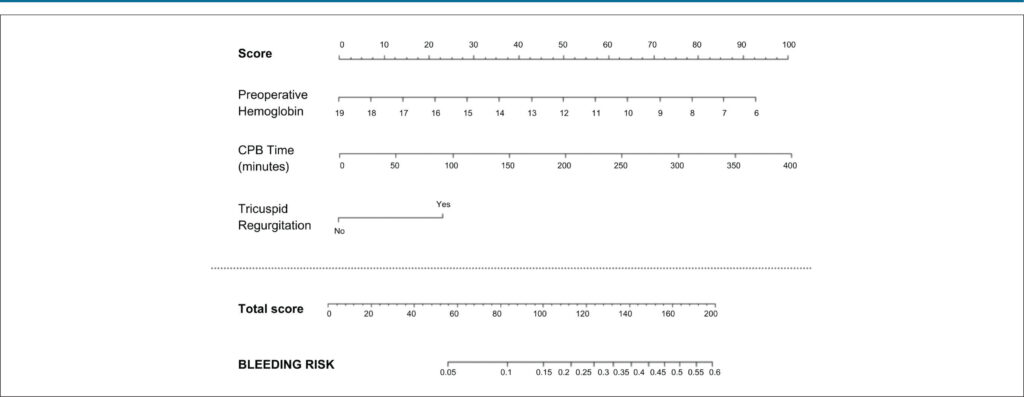
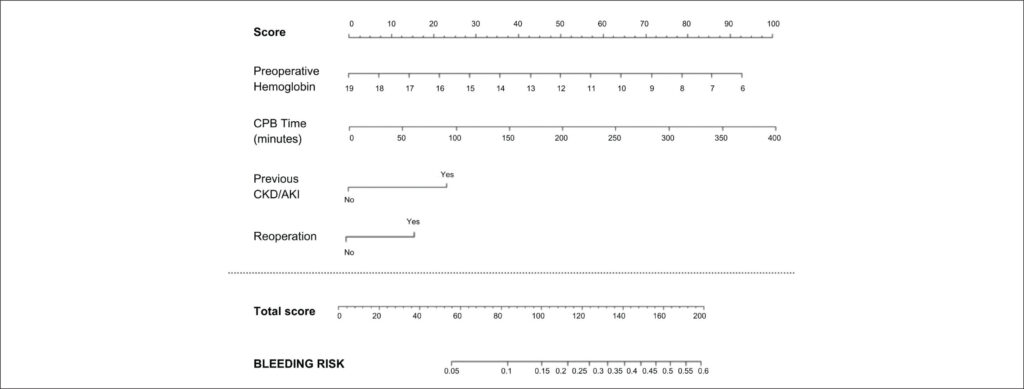
To develop a risk score to predict bleeding in patients after valve surgery.
Methods:
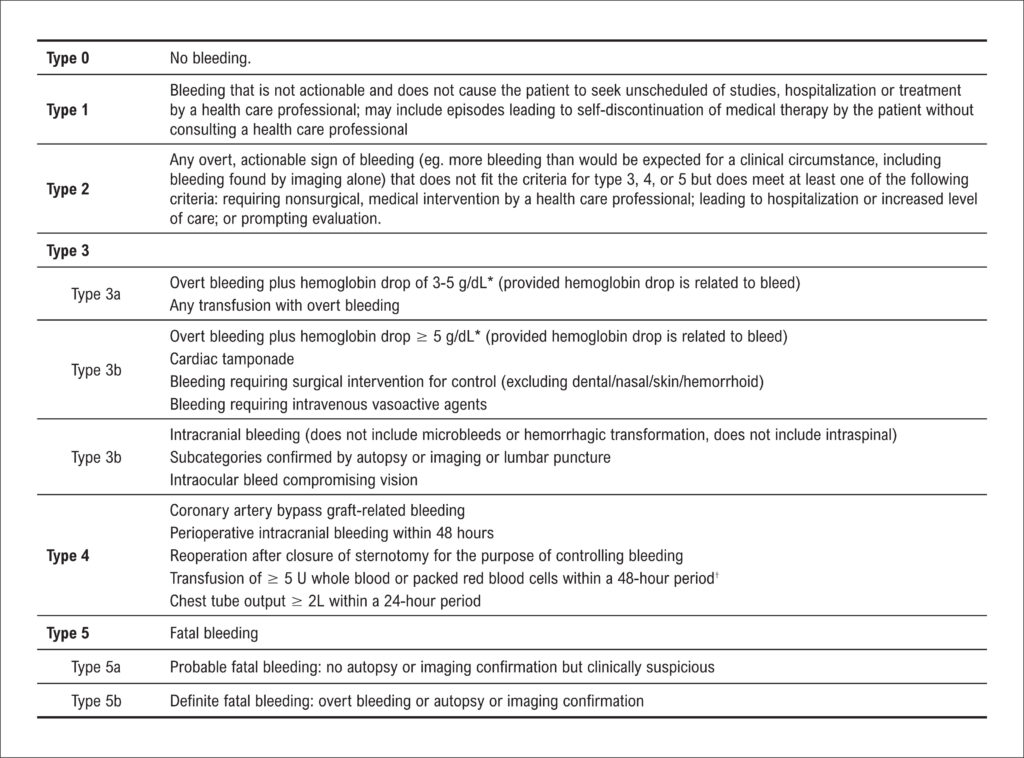
Retrospective study of patients operated on between 2021 and 2022. Patients with major bleeding were selected based on the BARC and Bojar criteria. A logistic regression analysis was performed for factors related to bleeding and a nomogram of scores was created. For statistical significance, p<0.05 and a 95% confidence interval were considered. The study was approved by the CEP.
Results:
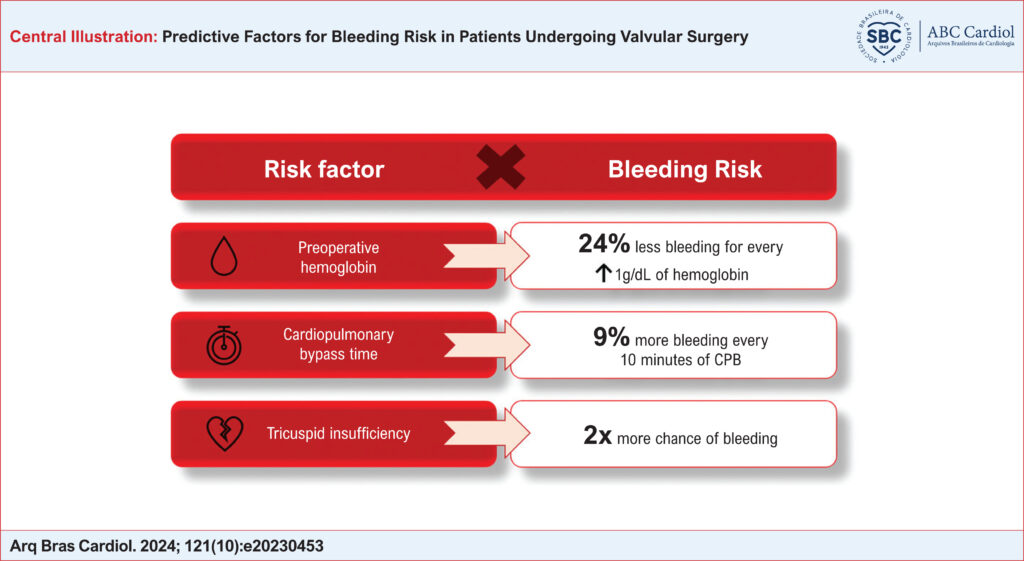
525 patients were analyzed, with a mean age of 56 years and a predominance of females. The most common valve disease was mitral insufficiency, 8.8% had increased bleeding and 4.3% had surgical reoperations. The variables with statistical significance were tricuspid insufficiency (OR 3.31, p < 0.001), chronic kidney disease/acute kidney injury (OR 2.97, p = 0.006), preoperative hemoglobin (OR 0.73, p < 0.001), reoperations (OR 2, 5, p = 0.003), cardiopulmonary bypass (CPB) time (OR 1.12, p < 0.001), 2-valve approach OR of 2.23 (p = 0.013), use of packed red blood cells OR of 2.8 (p = 0.001). In the multiple model, tricuspid insufficiency, CPB time and preoperative hemoglobin reached statistical significance.
Conclusion:
CPB time, preoperative hemoglobin and tricuspid insufficiency were independently associated with postoperative bleeding. The proposed scale is plausible and can help predict the risk of bleeding.
Images
Image gallery fullscreen viewer
Comments are moderated by the editorial team before publication. Discussions should be evidence-based and use scientific language. Conflicts of interest should be declared.