Association between Self-Care Behaviors and Inadequate Glycemic Control in ELSA-Brasil Participants with Type 2 Diabetes
Abstract
Background
Type 2 diabetes is a prevalent chronic condition, often associated with metabolic and cardiovascular complications.
Objective
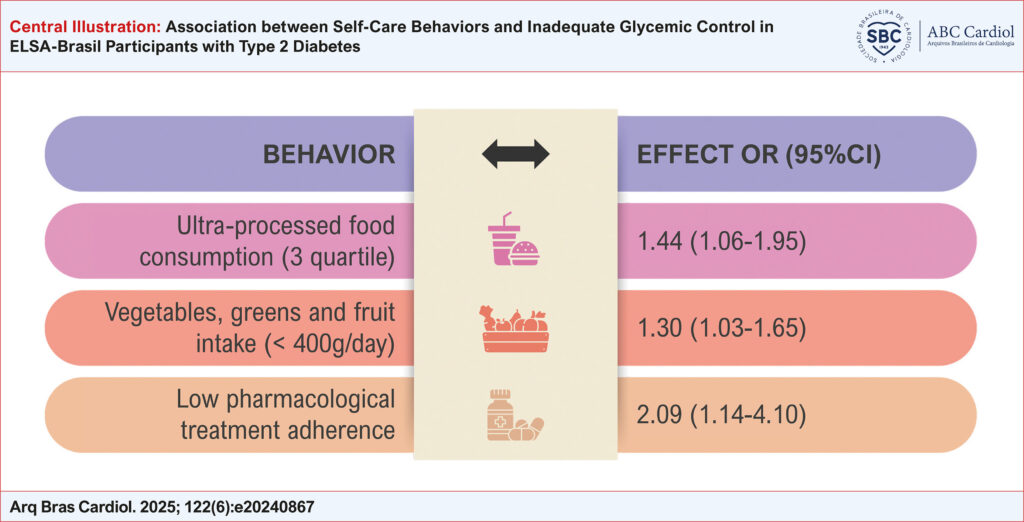
This study aimed to evaluate the association between self-care behaviors, such as consumption of ultra-processed foods, vegetables, greens and fruits, physical activity, adherence to pharmacological treatment and smoking, and inadequate glycemic control in ELSA-Brasil participants with type 2 diabetes.
Methods
This is a cross-sectional study with 2,567 individuals, in which the associations between the variables of interest were analyzed by multiple logistic regression (p<0.05).
Results
Adherence to pharmacological treatment was the only behavior consistently associated with inadequate glycemic control. Participants with low adherence were more than twice as likely to have inadequate levels of glycated hemoglobin (OR: 2.09; 95%CI 1.14–4.10). Consumption of ultra-processed foods and insufficient intake of leafy vegetables showed initial associations that did not remain significant after adjustments, suggesting the influence of additional factors, such as socioeconomic conditions.
Conclusion
These results reinforce the need for interventions that combine health education, self-care support and public policies aimed at equality of treatment access, contributing to glycemic control and the reduction of complications associated with type 2 diabetes.
Images
Image gallery fullscreen viewer
Comments are moderated by the editorial team before publication. Discussions should be evidence-based and use scientific language. Conflicts of interest should be declared.