Primary Percutaneous Coronary Intervention during Off-Hours: One-Decade Experience from a High-Volume Cardiovascular Center
Abstract
Background
The impact of performing a primary percutaneous coronary intervention (pPCI) off-hours on clinical outcomes is not well established.
Objective
Compare characteristics and major adverse cardiovascular events (MACE) of pPCI off-hours versus on-hours in a high-volume cardiology center.
Methods
Prospective cohort of patients who underwent pPCI for ST elevation myocardial infarction (STEMI) from 2009 to 2019. We defined off-hours pPCI as workdays from 8pm to 7:59 am as well as weekends and holidays. We compared patients treated on- and off-hours as to baseline characteristics and 1-year events.
Results
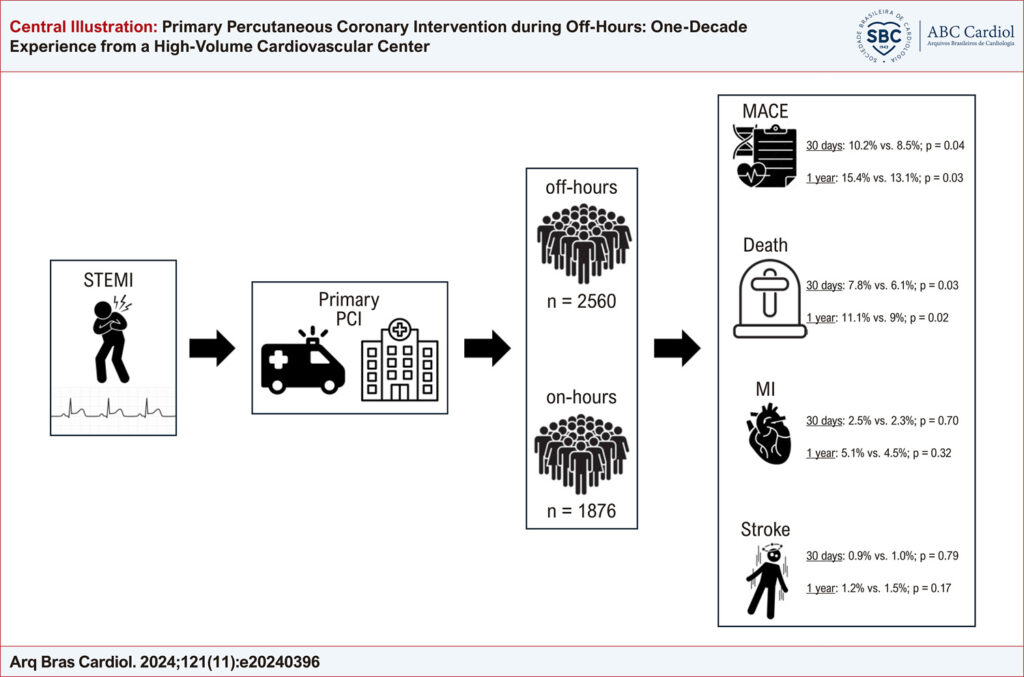
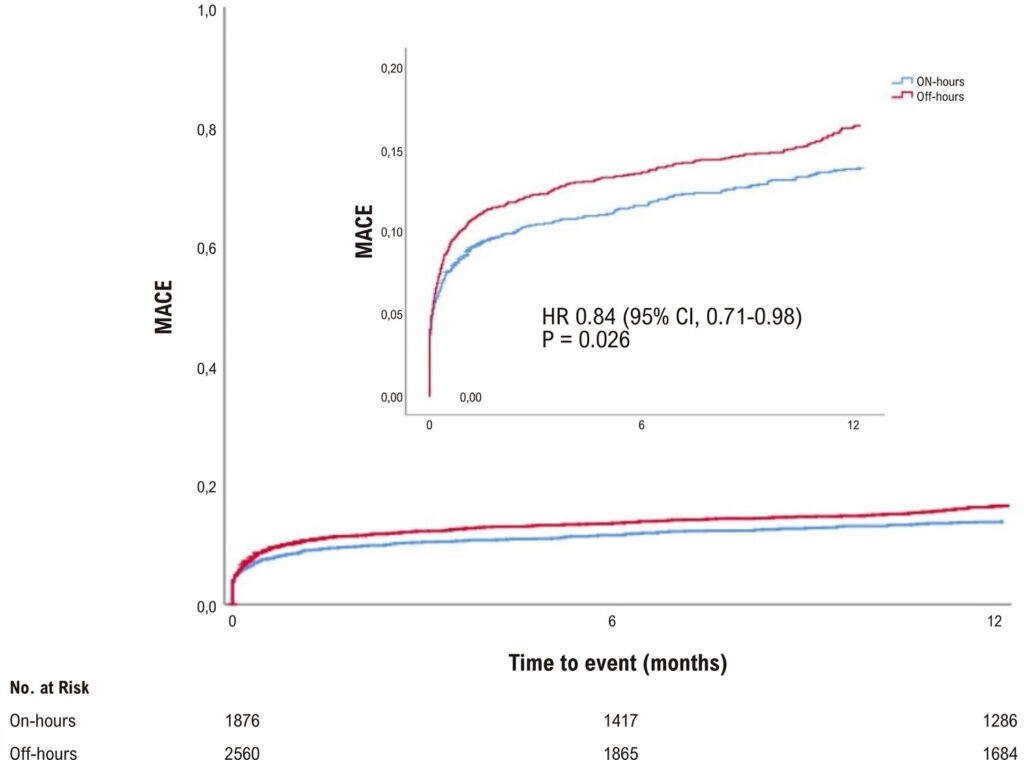
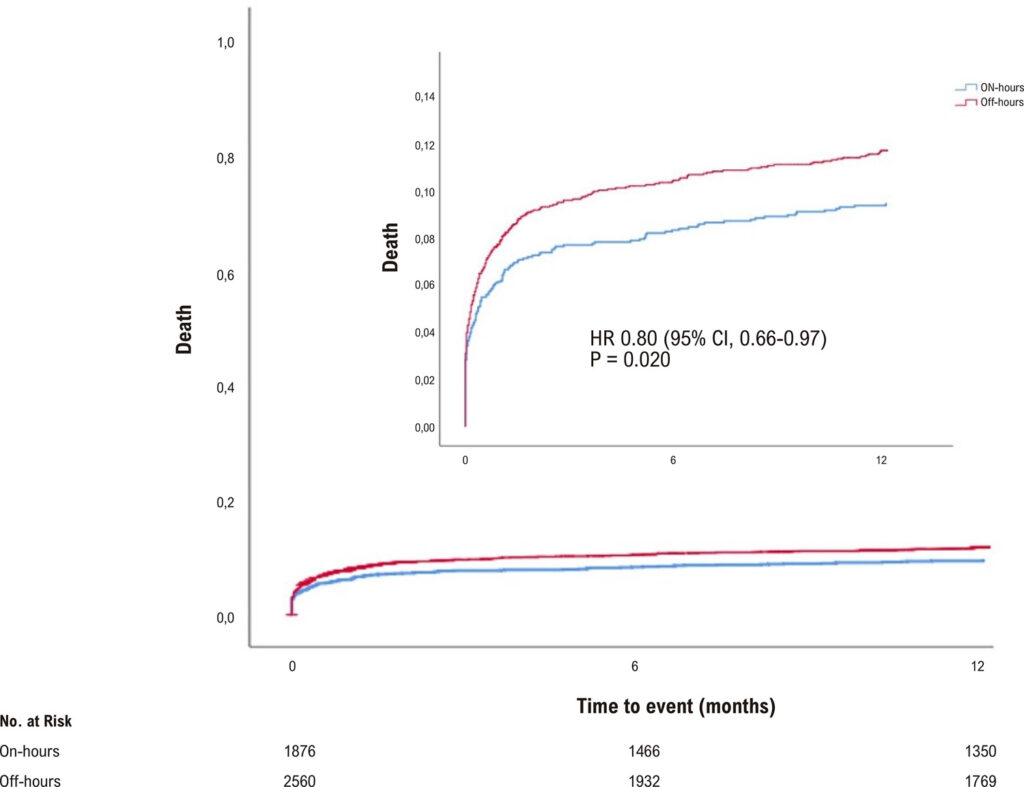
A total of 2,560 patients were treated off-hours and 1,876 patients treated on-hours. The groups were similar for most of the baseline characteristics. A higher thrombus burden was seen in patients treated off-hours (50% x 45%; p < 0.01), and in this group the radial access was more frequently used (62% x 58%; p = 0.01). Procedural success was not statistically different between the groups (95.7% x 96.4%; p = 0.21). MACE rates were higher in patients treated off-hours at 30 days (10.2% x 8.5%; p = 0.04) and at one year of follow-up (15.4% x 13.1%; p = 0.03), driven by higher death rates at 30 days (7.8% x 6.1%; p = 0.03) and at 1 year follow-up (11.1% x 9.0%; p = 0.02).
Conclusion
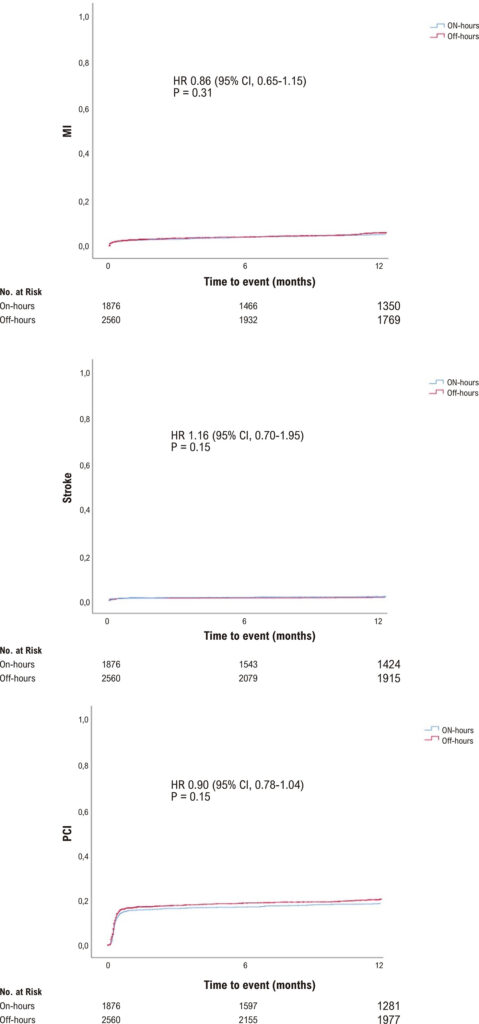
In a high-volume cardiology center, clinical characteristics, door-to-balloon times, procedural pPCI success and complication rates of STEMI patients treated on and off-hours were similar. However, patients treated off-hours presented higher MACE and mortality rates, in spite of similar MI and stroke rates.
Images
Image gallery fullscreen viewer
Comments are moderated by the editorial team before publication. Discussions should be evidence-based and use scientific language. Conflicts of interest should be declared.