Vasculitides and eosinophils in emdomyocardial biopsies as rejection predictors in heart transplantation
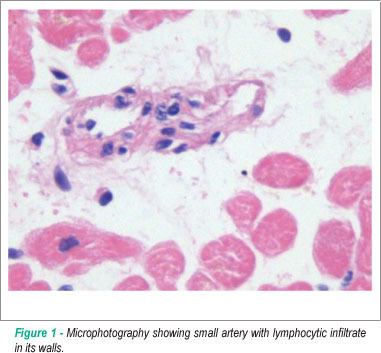
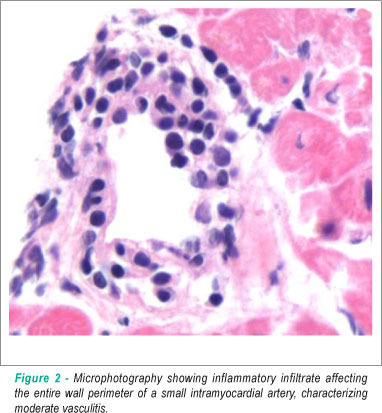
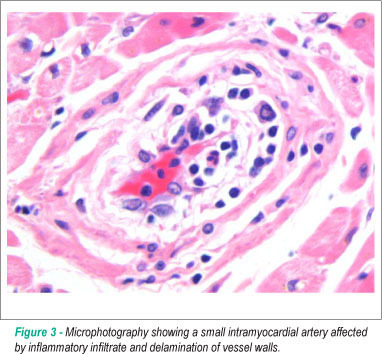
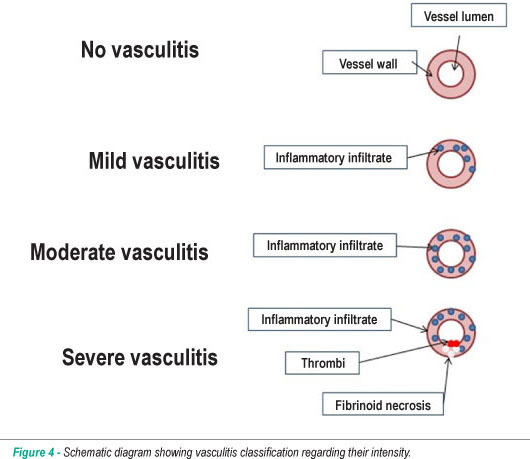
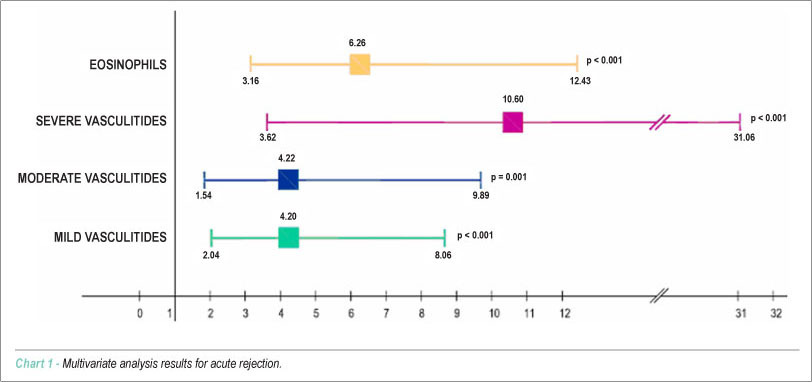
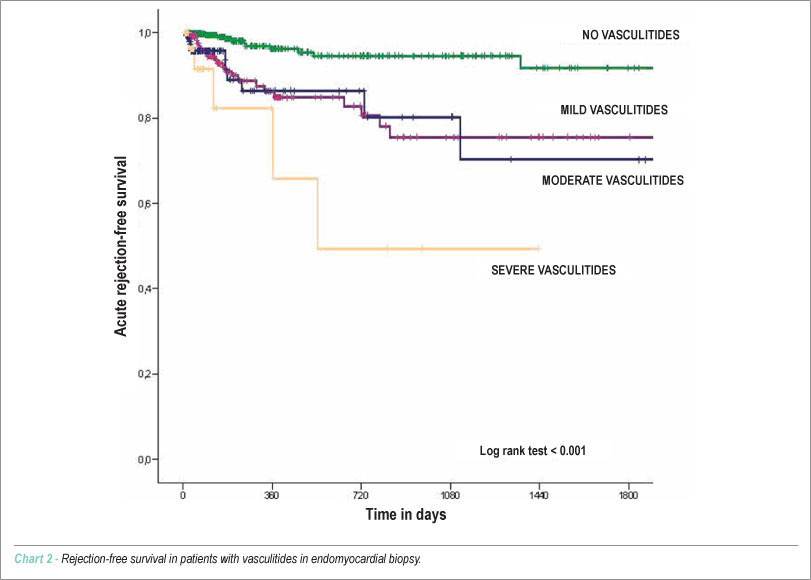
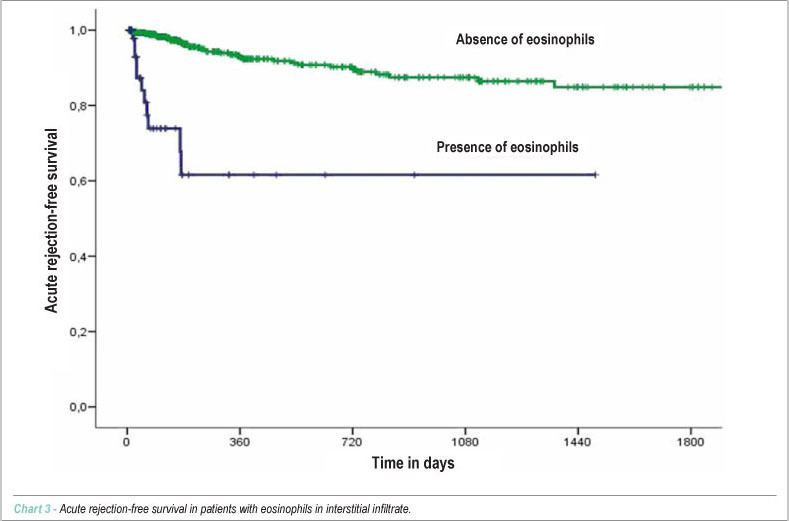
BACKGROUND: The clinical significance of vasculitides, ischemic lesions, Quilty effect and the presence of eosinophils in endomyocardial biopsies of heart transplantation recipients with mild rejection has yet to be established. OBJECTIVE: To verify whether these histological findings observed in endomyocardial biopsies (eosinophils, vasculitides, Quilty effect and ischemic lesions) are capable of predicting acute graft rejection. METHODS: A total of 1,012 consecutive endomyocardial biopsies were reevaluated; of these, 939 were classified as OR or 1R according to the Nomenclature of the International Society of Heart and Lung Transplantation of 2005 and divided in two groups: (1) Predictive biopsies: those that preceded acute rejection; and (2) Nonpredictive biopsies: those that did not precede acute rejection. We compared the occurrence of the following histological findings: vasculitides, ischemic lesions, Quilty effect and eosinophils between the groups by uni- and multivariate analyses. RESULTS: The statistical analysis showed that the presence of severe vasculitides and eosinophils were the best predictors for future acute rejection, with the following odds ratios: 10.60 (95%CI: 3.62 – 31.06. p < 0.001) and 6.26 (95%CI: 3.16 – 12.43, p < 0.001). CONCLUSION: Severe vasculitides and eosinophils in myocardial biopsies are the main predictive factors of acute graft rejection post-heart transplantation.
Images
Image gallery fullscreen viewer
Comments are moderated by the editorial team before publication. Discussions should be evidence-based and use scientific language. Conflicts of interest should be declared.