Clinical efficacy of percutaneous renal revascularization with stent placement in atherosclerotic renovascular disease
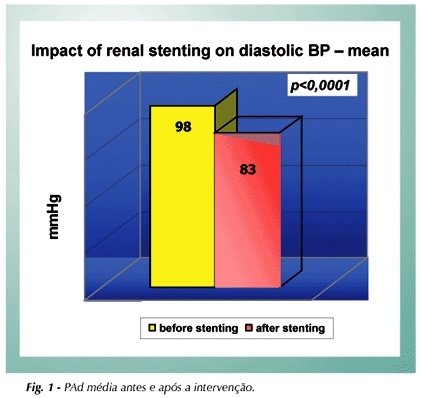
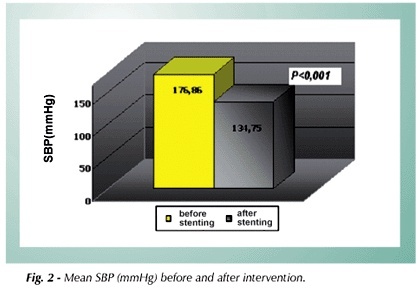
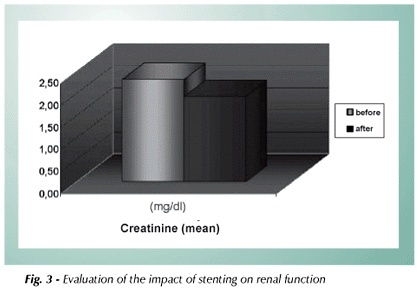
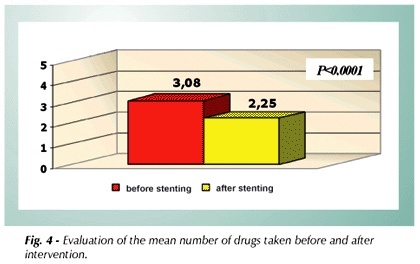
OBJECTIVE: To evaluate the clinical efficacy of percutaneous renal revascularization with stenting to control hypertension and preserve/restore renal function in patients with atherosclerotic renovascular disease. METHODS: From May/1999 to October/2003, 46 patients with atherosclerotic renal artery stenosis (ARAS) underwent revascularization with stenting. The indication for the procedure was hypertension control and/or renal function preservation/restoration. Clinical characteristics: age range: 33-84 years (median = 58.5 ±10.7), males: 26 (56.5%), 4 (10%) patients with dia betes mellitus, 21 (46%) patients with coronary artery disease, creatinine <2.0mg/dl: 39 (64%), 6 patients (14%) with congestive heart failure, 20 (43%) patients with ostial stenosis and 15 (33%) patients with bilateral stenosis. Hypertension control was evaluated by the number of drugs used before the procedure and at follow-up (FU) and by blood pressure (BP) measurement. RESULTS: The minimum follow-up was 7 months (range of 7-52, median: 23, mean: 24.2 ± 15.2). There were no major complications. No patient experience any cardiovascular event. There was only one non-cadiac death (2%) and one technical failure in the treatment(2%). There was no serious complication in the procedure. None of the patients presented cardiovascular events. The renal function improved or stabilized in 32 patients (82%) and worsened in 4 (10%). The BP control improved in 19/44 (43,8%) patients and worsened / stabilized in 6 patients (14%). CONCLUSION: Angioplasty with renal artery stenting for ARAS showed to be an effective treatment strategy to restore and preserve renal function and to control blood pressure.
Images
Image gallery fullscreen viewer
Comments are moderated by the editorial team before publication. Discussions should be evidence-based and use scientific language. Conflicts of interest should be declared.