Impact of hypertension on ventricular remodeling in patients with aortic stenosis
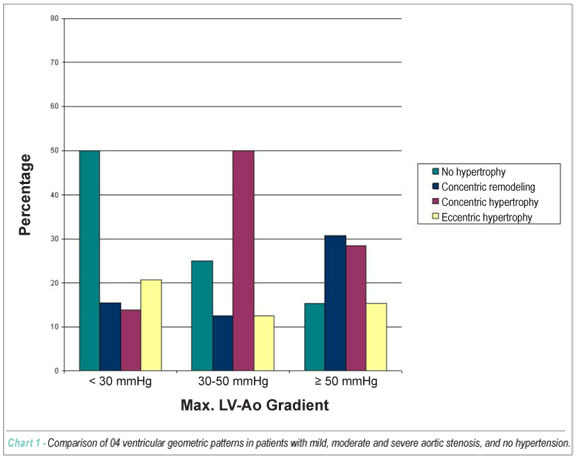
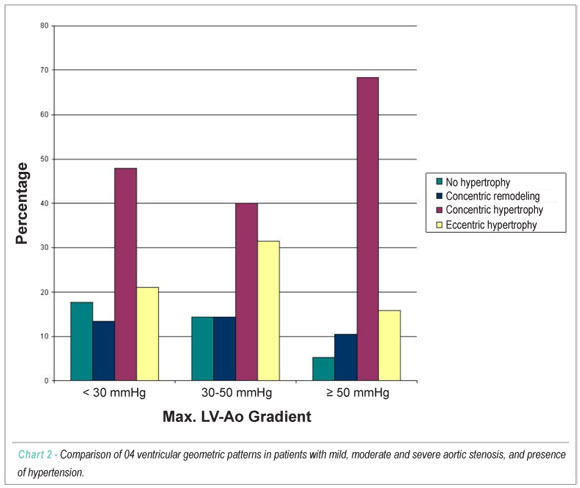
BACKGROUND: Left ventricular hypertrophy (LVH) is a marker of increased cardiovascular risk and is frequently associated with both arterial hypertension (AH) and aortic stenosis (AoS). Also, these two maladies may co-exit in a same patient. However, in these cases, it is not clear the impact of each one in LVH. OBJECTIVE: To evaluate LVH and ventricular geometry in patients with AS associated or not with arterial hypertension. METHODS: This was a retrospective, observational and transversal study, including 298 consecutive patients with echocardiographic diagnosis of AoS. LVH was defined as myocardial mass > 224g for men and > 162g for women. Patients were classified as having mild (peak gradient 50 mmHg) AoS and separated into two subgroups: with and without hypertension. RESULTS: AH was associated with increased ventricular mass in all three levels of aortic stenosis (mild AS: 172 ± 45g vs 223 ± 73g, p < 0.0001 moderate AoS: 189 ± 77 g vs 245 ± 81g, p = 0.0313 severe AoS: 200 ± 62g vs 252 ± 88g, p = 0.0372), and increased risk of LVH (OR = 2.1 CI95%:1.2-3.6 p = 0.012). Regarding to geometric remodeling, hypertensive patients with severe AS presented a significant increase in frequency of concentric hypertrophy, when compared with those without hypertension (p = 0.013). CONCLUSION: Hypertension is an additional factor of increased left ventricular mass in patients with AS. Also, hypertension was influential in ventricular geometry.
Images
Image gallery fullscreen viewer
Comments are moderated by the editorial team before publication. Discussions should be evidence-based and use scientific language. Conflicts of interest should be declared.