Aortic Counterpulsation Therapy in Patients with Advanced Heart Failure: Analysis of the TBRIDGE Registry
Abstract
Background:
The use of aortic counterpulsation therapy in advanced heart failure is controversial.
Objectives:
To evaluate the hemodynamic and metabolic effects of intra-aortic balloon pump (IABP) and its impact on 30-day mortality in patients with heart failure.
Methods:
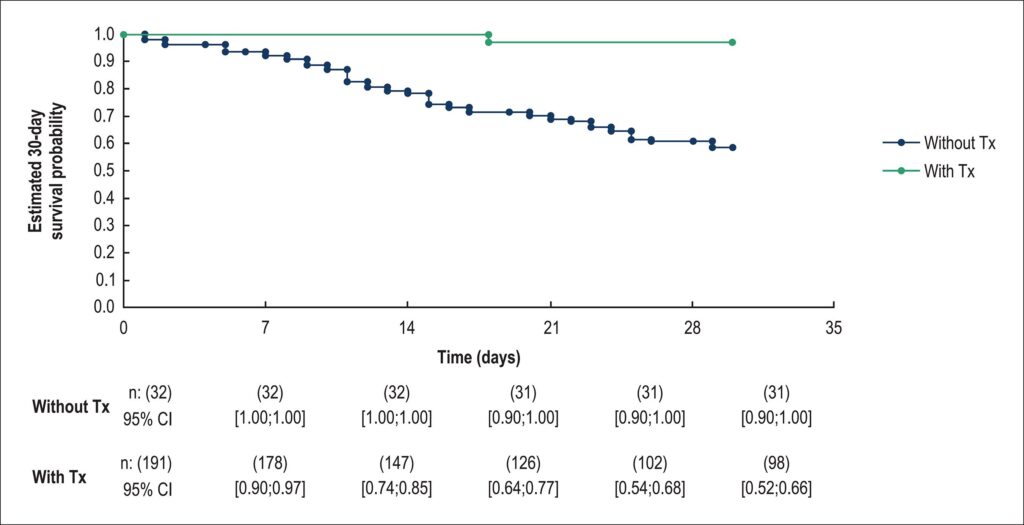
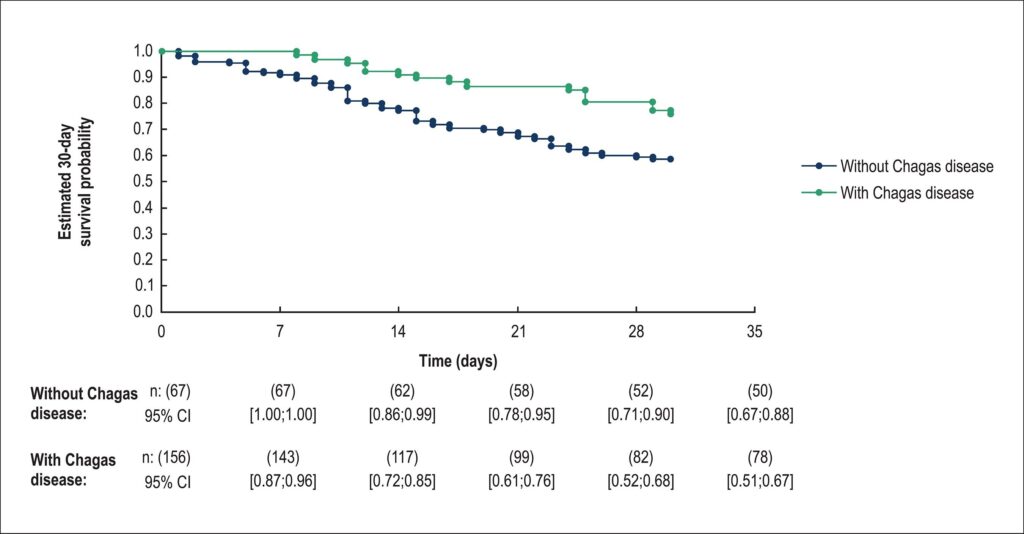
Historical prospective, unicentric study to evaluate all patients treated with IABP betwen August/2008 and July/2013, included in an institutional registry named TBRIDGE (The Brazilian Registry of Intra-aortic balloon pump in Decompensated heart failure – Global Evaluation). We analyzed changes in oxygen central venous saturation (ScvO2), arterial lactate, and use of vasoactive drugs at 48 hours after IABP insertion. The 30-day mortality was estimated by the Kaplan-Meier method and diferences in subgroups were evaluated by the Log-rank test.
Results:
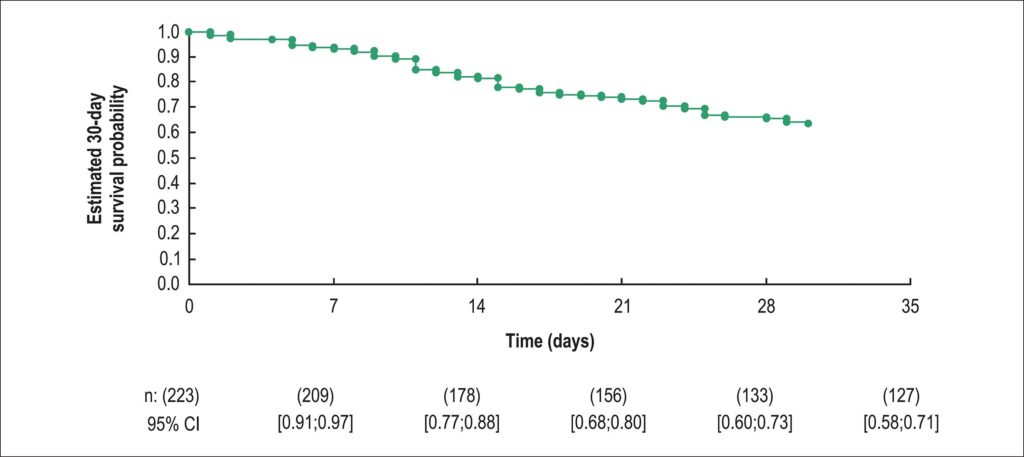
A total of 223 patients (mean age 49 ± 14 years) were included. Mean left ventricle ejection fraction was 24 ± 10%, and 30% of patients had Chagas disease. Compared with pre-IABP insertion, we observed an increase in ScvO2 (50.5% vs. 65.5%, p < 0.001) and use of nitroprusside (33.6% vs. 47.5%, p < 0.001), and a decrease in lactate levels (31.4 vs. 16.7 mg/dL, p < 0.001) and use of vasopressors (36.3% vs. 25.6%, p = 0.003) after IABP insertion. Thirty-day survival was 69%, with lower mortality in Chagas disease patients compared without the disease (p = 0.008).
Conclusion:
After 48 hours of use, IABP promoted changes in the use of vasoactive drugs, improved tissue perfusion. Chagas etiology was associated with lower 30-day mortality. Aortic counterpulsation therapy is an effective method of circulatory support for patients waiting for heart transplantation.
Images
Image gallery fullscreen viewer
Comments are moderated by the editorial team before publication. Discussions should be evidence-based and use scientific language. Conflicts of interest should be declared.