Myotonic dystrophy and heart disease: behavior of arrhythmic events and conduction disturbances
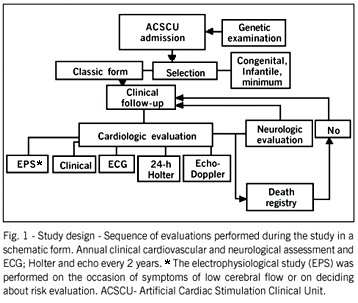
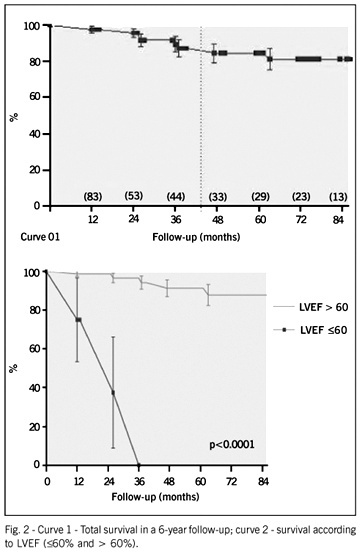
OBJECTIVE: To study the prevalence and natural evolution of arrhythmic events and conduction disturbances in myotonic dystrophy; to correlate the genetic defect with cardiovascular findings; to assess cardiac mortality, frequency, and predictive factors of sudden death; to correlate the severity of the neuromuscular and cardiac involvement; and to define the role of the electrophysiological study (EPS), in myotonic dystrophy. METHODS: Periodic clinical assessment and the following tests were performed in 83 consecutive patients with a mean follow-up of 42±30.63 months: complementary examinations, genetic tests, electrocardiography, echocardiography, and Holter; electrophysiological study was performed in 59 cases. RESULTS: Atrial tachyarrhythmia was observed in 10 (12%) patients, NSVT in 14 (17%), first-degree AVB in 24 (29%), LBBB in 19 (23%), and RBBB in 13 (16%). Symptoms, an increase in the PR interval, QRS enlargement, LVEF 70 ms in 34% and > 100 ms in 11% (postprocainamide). CONCLUSION: The prevalence of arrhythmic events and conduction disturbances ranged from 50% to 80% after 6 years, and did not correlate with the genetic defect. Atrial flutter was the most common sustained arrhythmia. Cardiac involvement increased as the neuromuscular disease became aggravated, but progression of the cardiac involvement was more rapid than that of the neuromuscular disease. Overall mortality was low (11%) and sudden death occurred in half of the cases. The EPS identified a group at risk for pacemaker implantation.
Images
Image gallery fullscreen viewer
Comments are moderated by the editorial team before publication. Discussions should be evidence-based and use scientific language. Conflicts of interest should be declared.