Late heart evaluation of children with rheumatic mitral regurgitation submitted to reconstructive surgery with implantation of Gregori’s ring
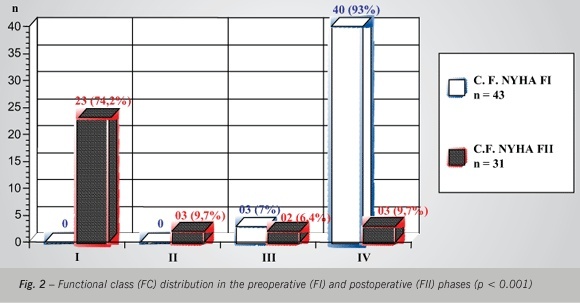
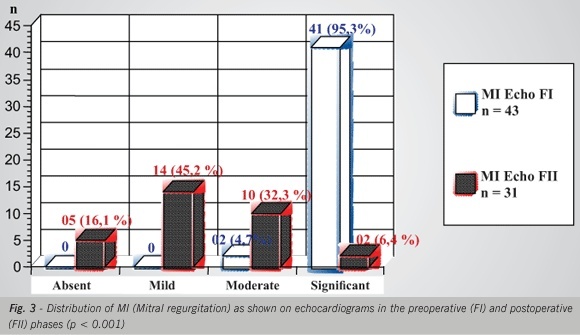
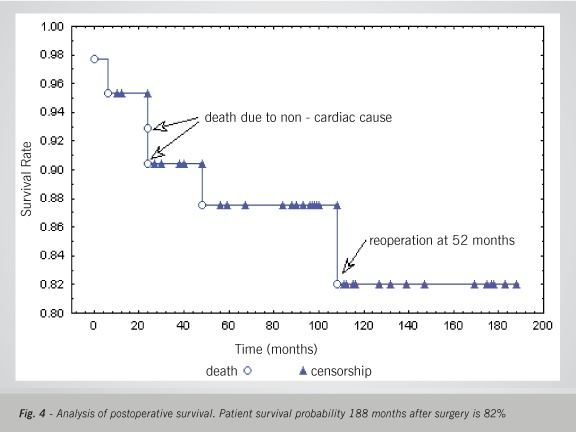
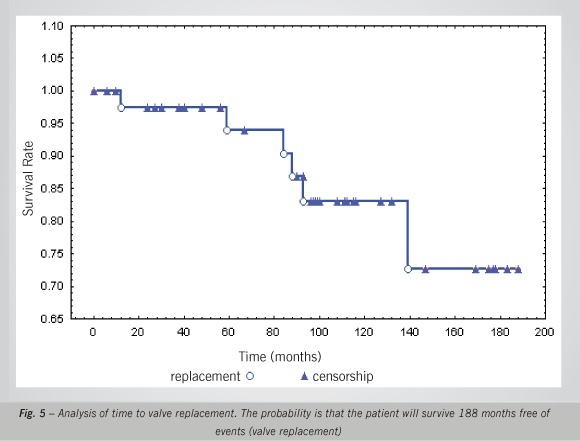
OBJECTIVE: Assess late cardiological evolution of children with rheumatic mitral regurgitation (RMR) who underwent mitral valve reconstructive surgery with implantation of Gregori’s ring (MVR), from 1987 to 2003. METHODS: A study was conducted to analyze a series of cases of 43 children with RMR who underwent MVR with ages ranged from five to twelve years (mean age 9.7 ± 2.2 years); 25 of the patients were females (58.1%). Patients were evaluated as per the following clinical parameters: functional class of heart failure, heart auscultation, electrocardiogram, chest X-ray and echocardiographic findings. RESULTS: Forty-three patients underwent preoperative evaluation during the postoperative period, the number of patients evaluated decreased to 31 due to the fact that 6 patients had died and 6 others underwent valve replacement surgery. Follow-up was carried out for 100% of the patients. A significant reduction of heart failure functional class was observed. Mitral systolic murmur became lesss intense during the postoperative period. The cardiac area on chest X-ray and the presence of left ventricular overload on electrocardiogram were reduced, as well as the mitral regurgitation level on echocardiographic study. After 188 months, the survival rate was 82%, and the annual mortality rate, 0.38%. Thirty-one (72.6%) patients did not require reoperation and the annual rate of patients who required further surgery was 0.51%. CONCLUSION: MVR is an effective procedure for treating RMR in children, resulting in a significant improvement of functional class, mitral systolic murmur and level of mitral regurgitation, as shown on Doppler echocardiogram.
Images
Image gallery fullscreen viewer
Comments are moderated by the editorial team before publication. Discussions should be evidence-based and use scientific language. Conflicts of interest should be declared.