Early Detection and Monitoring of Cancer Chemotherapy-Related Left Ventricular Dysfunction by Imaging Methods
Introduction
Cancer has been the second leading cause of death in Brazil since 2006, and it is predicted to surpass cardiovascular disease (CVD) as the leading cause of death between 2020 and 2025. Cancer and CVD have risk factors in common, such as obesity, sedentarism, arterial hypertension, tobacco use, diabetes mellitus, advanced age, and dietary pattern. The co-prevalence of cancer and CVD is therefore elevated. The diagnosis and prevention of both diseases may be carried out in an integrated manner. Oncological treatment with chemotherapy (CT) has led to an increase in survival, but it has also led to the risk of cardiotoxicity (CTX), the incidence of asymptomatic ventricular dysfunction or even cardiomyopathy. Early diagnosis of CTX is important, given that the sooner this myocardial event is diagnosed, the higher the chances of recovering systolic function.
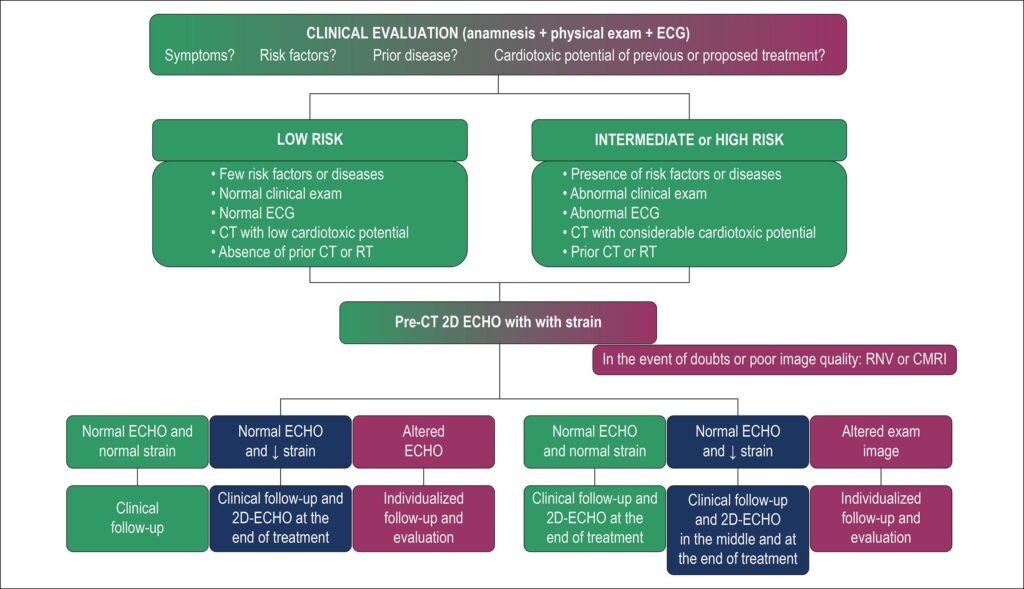
The objective of monitoring left ventricular (LV) function during cancer treatment is to detect cardiac dysfunction during the subclinical phase, rather than when a symptomatic patient already has reduced ejection fraction. The groups of chemotherapeutic medications that most frequently cause myocardial aggression are anthracyclines (ANT), widely used in the treatment of solid tumors and hematological malignancies, and monoclonal antibodies, the typical example of which is trastuzumab (TZU)., The CTX of ANT was initially described as dose-cumulative, irreversible, and caused by mitochondrial injury. In contrast, TZU-related CTX, which is not dose dependent, is irreversible and does not cause mitochondrial injury. In both aggressions, however, the possibility of reverse remodeling and recovery of ventricular function has been reported. Case series of patients undergoing treatment with ANT reported an incidence of 15% to 17% of some degree of decrease in LV ejection fraction (LVEF), calculated by Simpson’s method, and 2% to 3% of severe heart failure (HF). More recent case series, however, have related lower incidences.
[…]
Images
Image gallery fullscreen viewer
Comments are moderated by the editorial team before publication. Discussions should be evidence-based and use scientific language. Conflicts of interest should be declared.