Clinical predictors of preserved left ventricular ejection fraction in decompensated heart failure
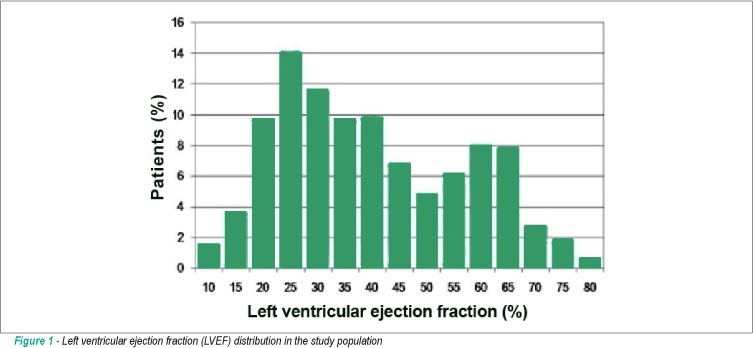
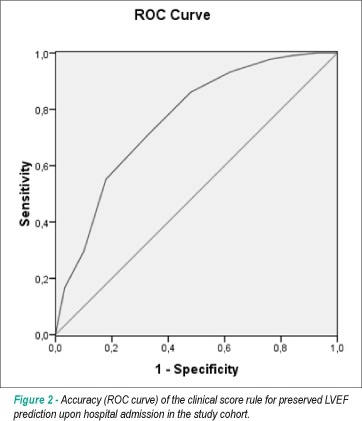
BACKGROUND: Identification and clinical impact of preserved left ventricular ejection fraction (LVEF) on in-hospital outcomes in patients with acute decompensated heart failure (HF) remain poorly defined. OBJECTIVE: To describe clinical predictors and in-hospital outcomes of acute decompensated HF patients and preserved LVEF, and to develop a clinically-based predictive rule based on data acquired on admission. METHODS: Consecutive admissions for HF (n=721) at a tertiary care hospital were followed up to discharge or death. More than 80 clinical variables were evaluated to identify predictors of preserved LVEF upon admission. RESULTS: Preserved LVEF (>50%) was identified in 224 (31%) hospitalizations. Clinical predictors of preserved LVEF were age > 70 years old (p=0.04), female gender (p<0.001), non-ischemic etiology (p 45 mmHg (p<0.01) and absence of EKG conduction abnormalities (p<0.001). A clinical score based on these variables was accurate to predict preserved LVEF upon hospital admission (area under ROC curve of 0.76). No significant differences were observed on in-hospital mortality or clinical complications according to quintiles of LVEF. CONCLUSION: Preserved LVEF is a prevalent and morbid condition among hospitalized HF patients. Simple clinical data obtained on admission might be useful for predicting preserved LVEF.
Images
Image gallery fullscreen viewer
Comments are moderated by the editorial team before publication. Discussions should be evidence-based and use scientific language. Conflicts of interest should be declared.