Association between the Inflammatory Atherosclerosis Index and Non-Alcoholic Fatty Liver Disease: NHANES 2017–2020
Abstract
Background
The Non-alcoholic fatty liver disease (NAFLD) prevalence is increasing globally and is closely associated with dysregulated lipid metabolism and inflammation. However, the relationship between NAFLD and the inflammatory atherosclerosis index (IAI), which reflects these processes, is unclear.
Objectives
To investigate the association between IAI and NAFLD in a representative sample of U.S. adults.
Methods
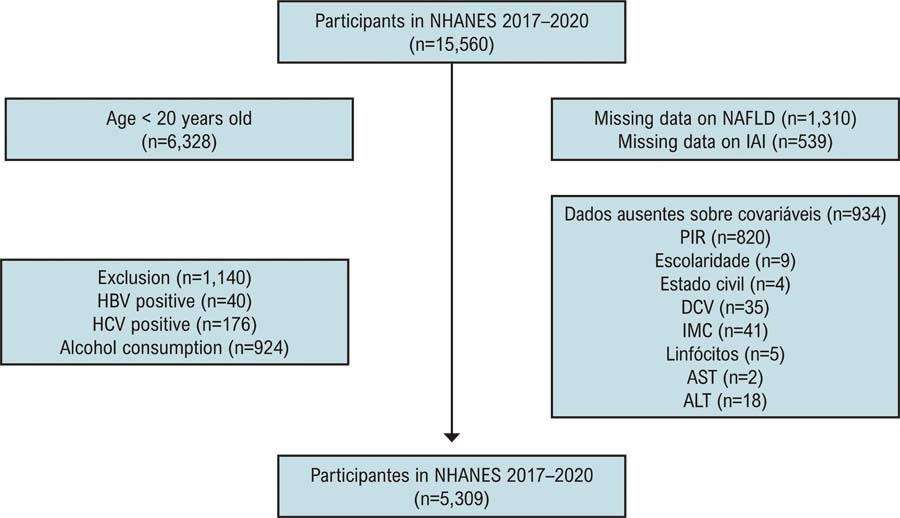
This cross-sectional study included 5,309 adults from the U.S. NHANES database. Multivariate weighted logistic regression was used to assess the association between IAI and NAFLD. Restricted cubic splines explored nonlinear relationships, and ROC analysis evaluated diagnostic performance.
Results
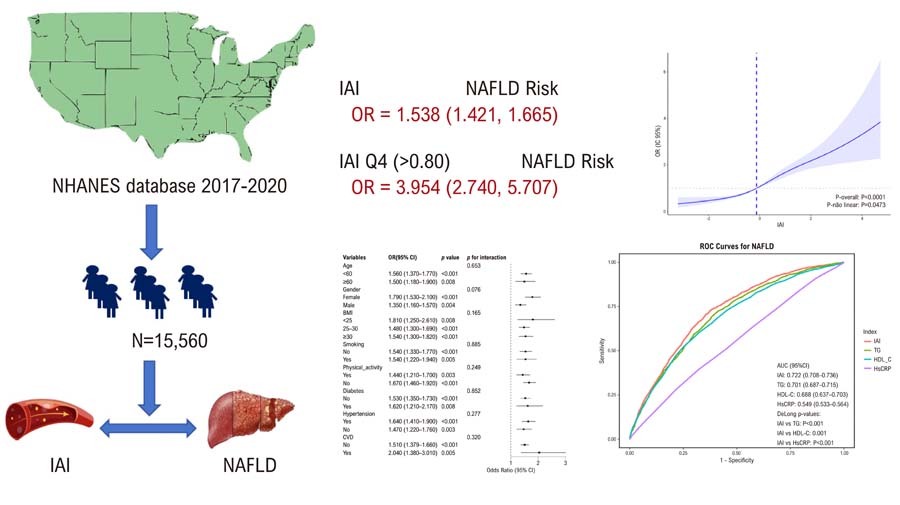
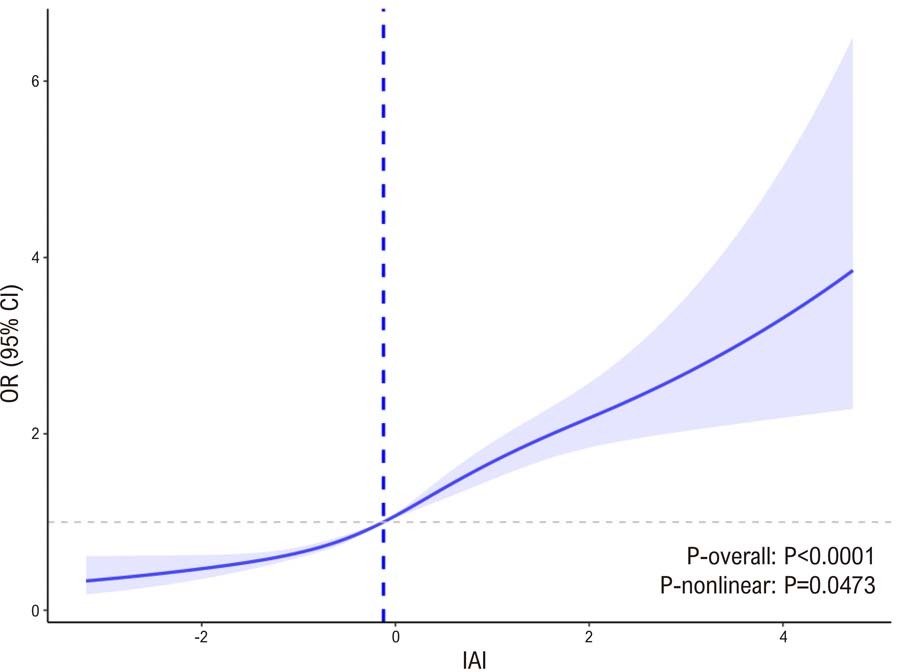
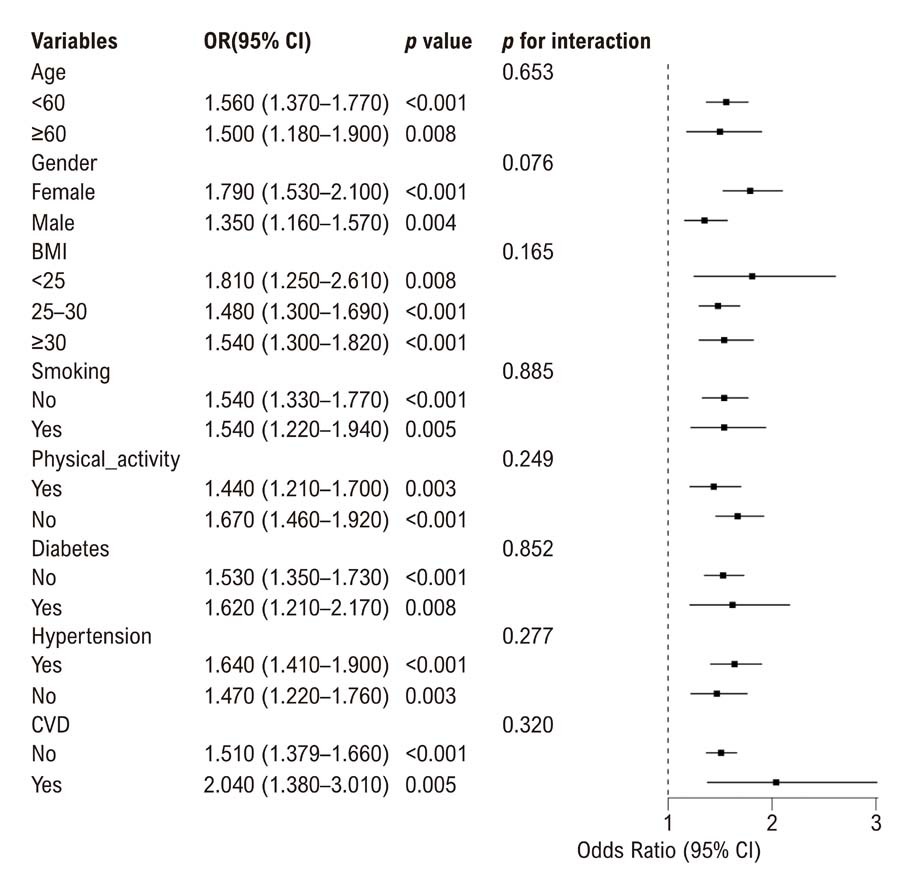
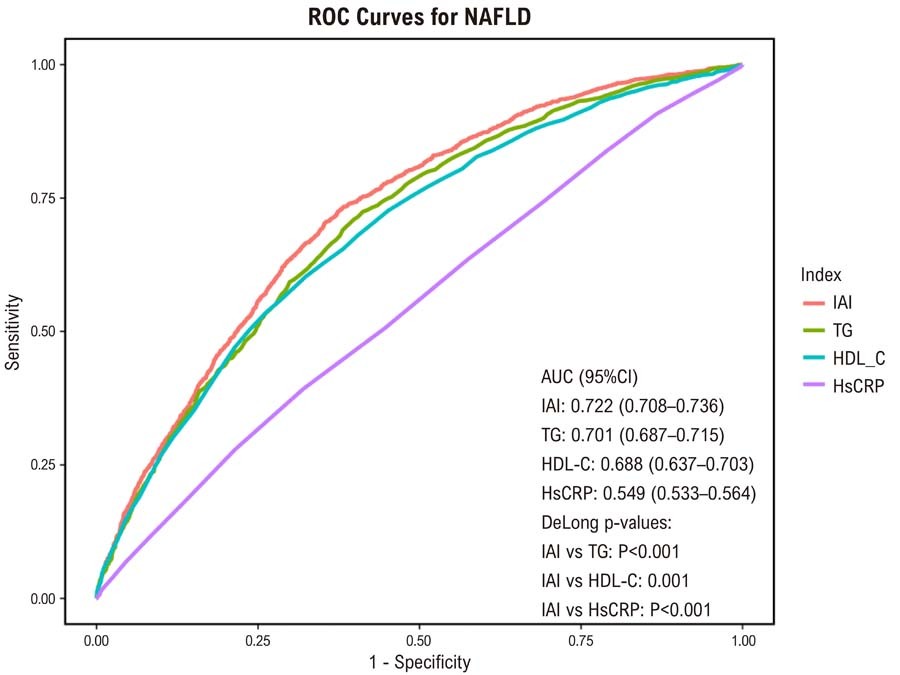
A total of 5,309 participants were included, of whom 37.6% had NAFLD. Obesity and metabolic abnormalities were more pronounced in the NAFLD group, and IAI levels were significantly higher (P < 0.001). Multivariate analysis demonstrated that IAI was independently and positively associated with NAFLD (OR = 1.538, 95% CI: 1.421–1.665). RCS analysis indicated a nonlinear relationship (P for nonlinearity = 0.0473), with an inflection point at IAI = 0.145. When IAI < 0.145, the risk increased steeply (OR = 2.341, 95% CI: 2.037–2.690), whereas when IAI ≥ 0.145, the increase was attenuated (OR = 1.399, 95% CI: 1.263–1.548). Subgroup analyses showed consistent results, with no significant interactions across subgroups. ROC analysis showed that IAI exhibited the best diagnostic performance (AUC = 0.722), significantly outperforming other indicators (all P < 0.001).
Conclusions
Among U.S. adults, IAI demonstrates a strong, positive, and nonlinear association with NAFLD. These findings suggest IAI is a promising population-level marker for NAFLD, though prospective studies are required for validation.
Images
Image gallery fullscreen viewer
Comments are moderated by the editorial team before publication. Discussions should be evidence-based and use scientific language. Conflicts of interest should be declared.