7th Brazilian Guideline of Arterial Hypertension: Chapter 4 – Cardiovascular Risk Stratification
Introduction
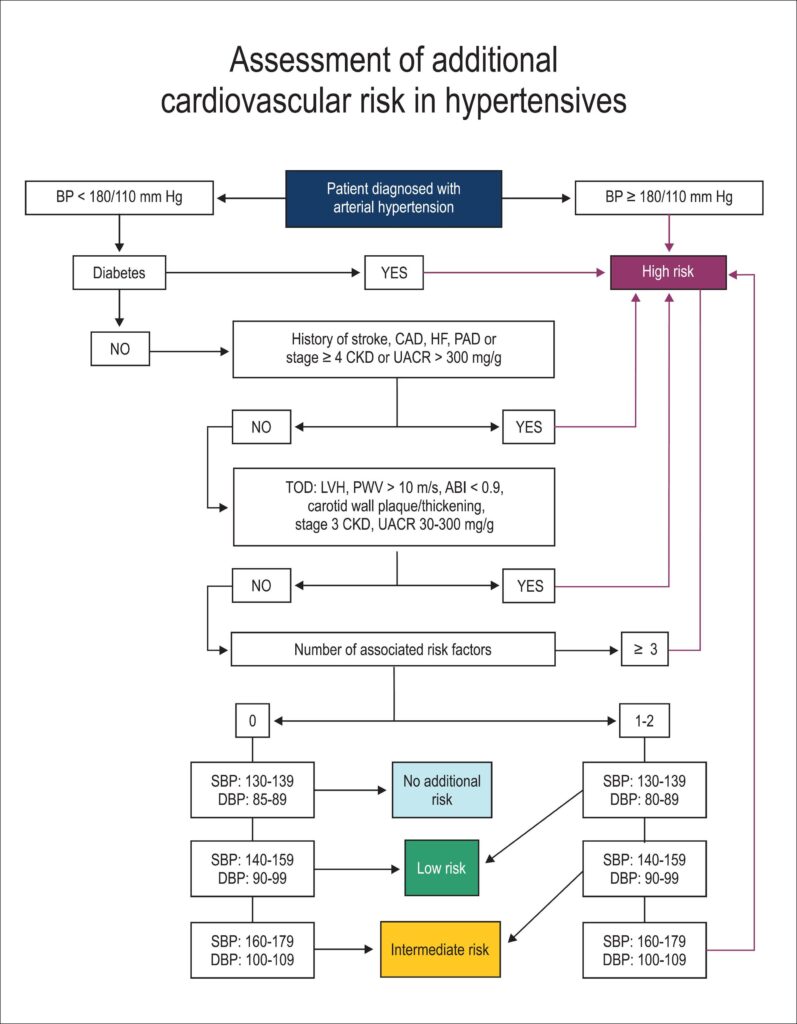
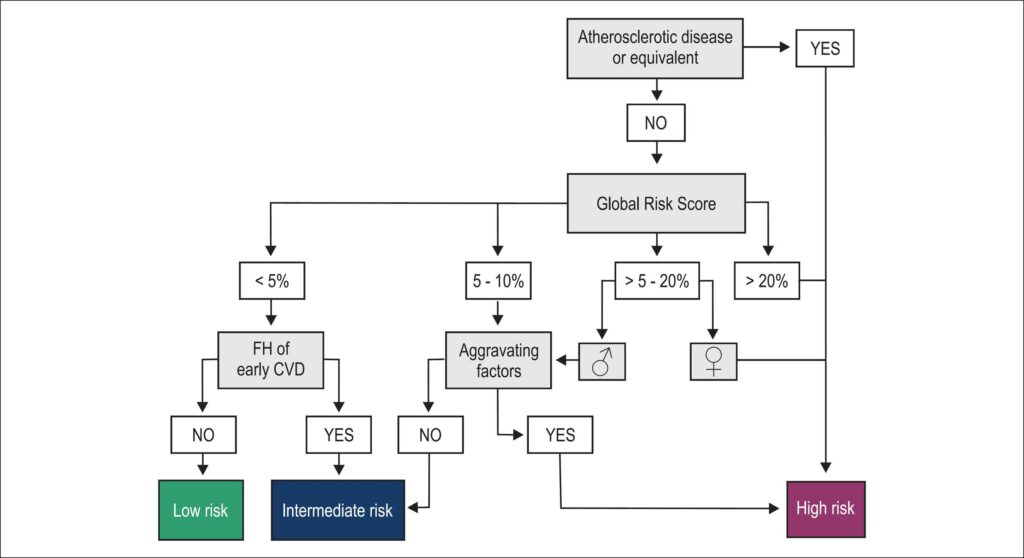
The global CV risk should be assessed in each hypertensive individual, because it aids the professionals in therapeutic decision-making and allows prognostic analysis. The identification of hypertensive individuals prone to CV complications, especially myocardial infarction (MI) and stroke, is fundamental to a more aggressive therapy. Several algorithms and risk scores based on population studies were created in past decades, but, considering the lack of Brazilian data for a more accurate assessment of CV risk in the Brazilian population, the use of one single risk score should be avoided to support therapeutic decisions. Multifactorial models of risk stratification can be used for a more accurate individual risk classification.
Informing patients about their RF can improve the efficacy of pharmacological and non-pharmacological measures to reduce global risk. In addition, estimating indicators and using aging-related terms, such as “vascular age” or “cardiometabolic age”, can aid in the strategy to change the RF., See below some electronic addresses to estimate the vascular or cardiometabolic age recommended by American, Canadian and British societies.–
[…]
Images
Image gallery fullscreen viewer
Comments are moderated by the editorial team before publication. Discussions should be evidence-based and use scientific language. Conflicts of interest should be declared.