Kevin Domingues et al. Liliana Marta Marisa Peres Isabel Monteiro Margarida Leal
Thromboembolic events are a major cause of morbidity in patients with polycythemia vera (PV), accounting for a third of the deaths in this population. PV is a clonal disorder in which disturbed hematopoiesis leads to increased erythropoiesis, myelopoiesis, and/or megakaryopoiesis, characterizing this disorder as a prothrombotic state.
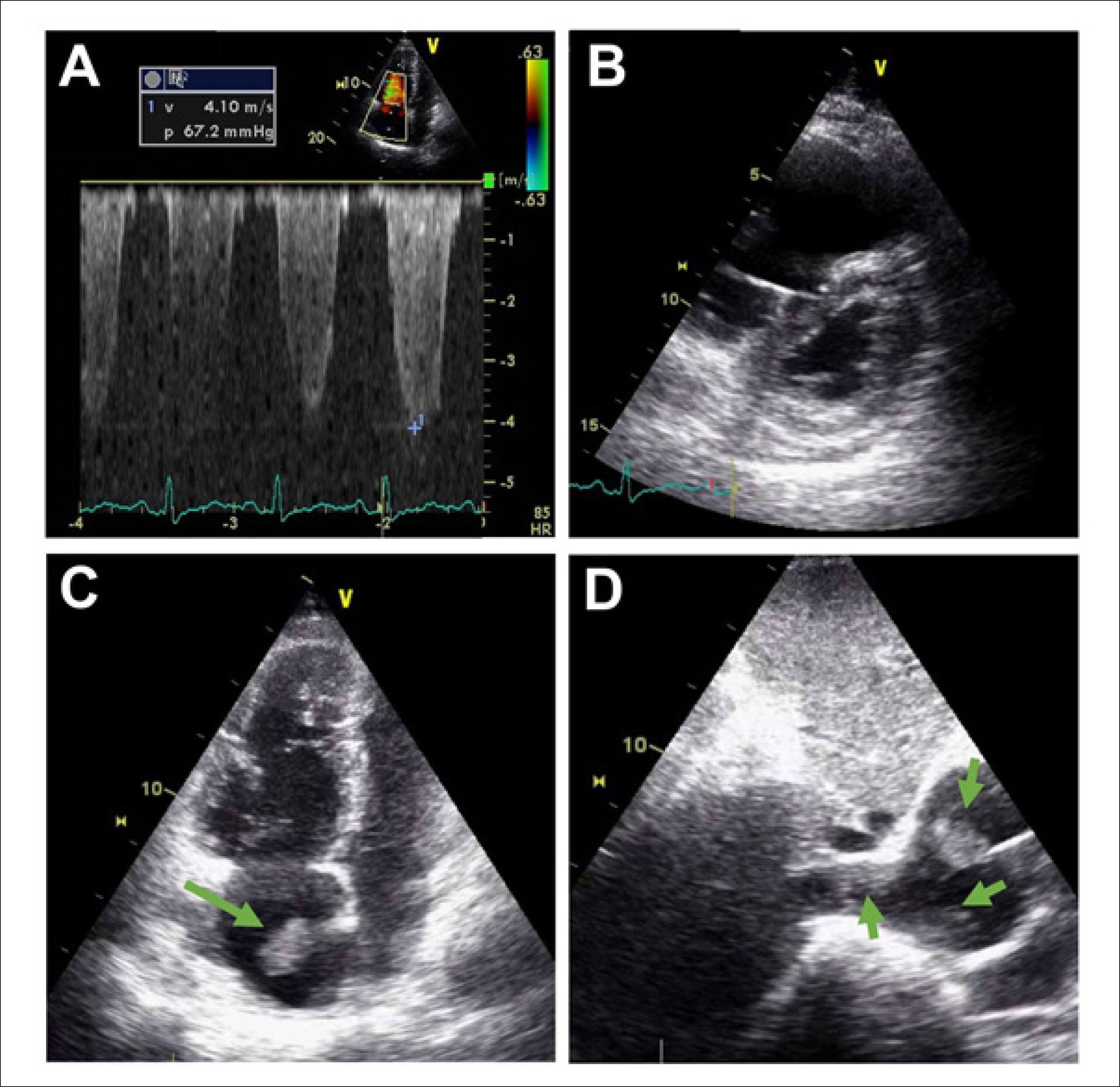
We report here the case of a 72-year-old man with a history of hypertension, type 2 diabetes mellitus, and implantation of a DDDR pacemaker 6 years before due to sick sinus syndrome. He also had an unclear, recent history of high hemoglobin levels and leukocytosis. He had been admitted three times in less than 1 year for acute pulmonary thromboembolism (PTE), despite being on anticoagulation therapy (one time on rivaroxaban, another on warfarin with adequate INR). A computed tomography scan revealed occlusive bilateral thrombi in the lower lobe arteries. Echocardiography was performed and showed enlargement of the right cavities, D-shaped left ventricle, severe pulmonary hypertension, and right ventricular dysfunction (tissue Doppler imaging = 8 cm/s). Multiple thrombi were present in the right atrium (some attached to the pacemaker lead) and in the inferior vena cava. Nevertheless, the patient was hemodynamically stable and comfortable with an oxygen mask.
[…]