Margarida Oliveira et al. Olga Azevedo Lucy Calvo Bebiana Faria … Sílvia Ribeiro António Lourenço
Introduction
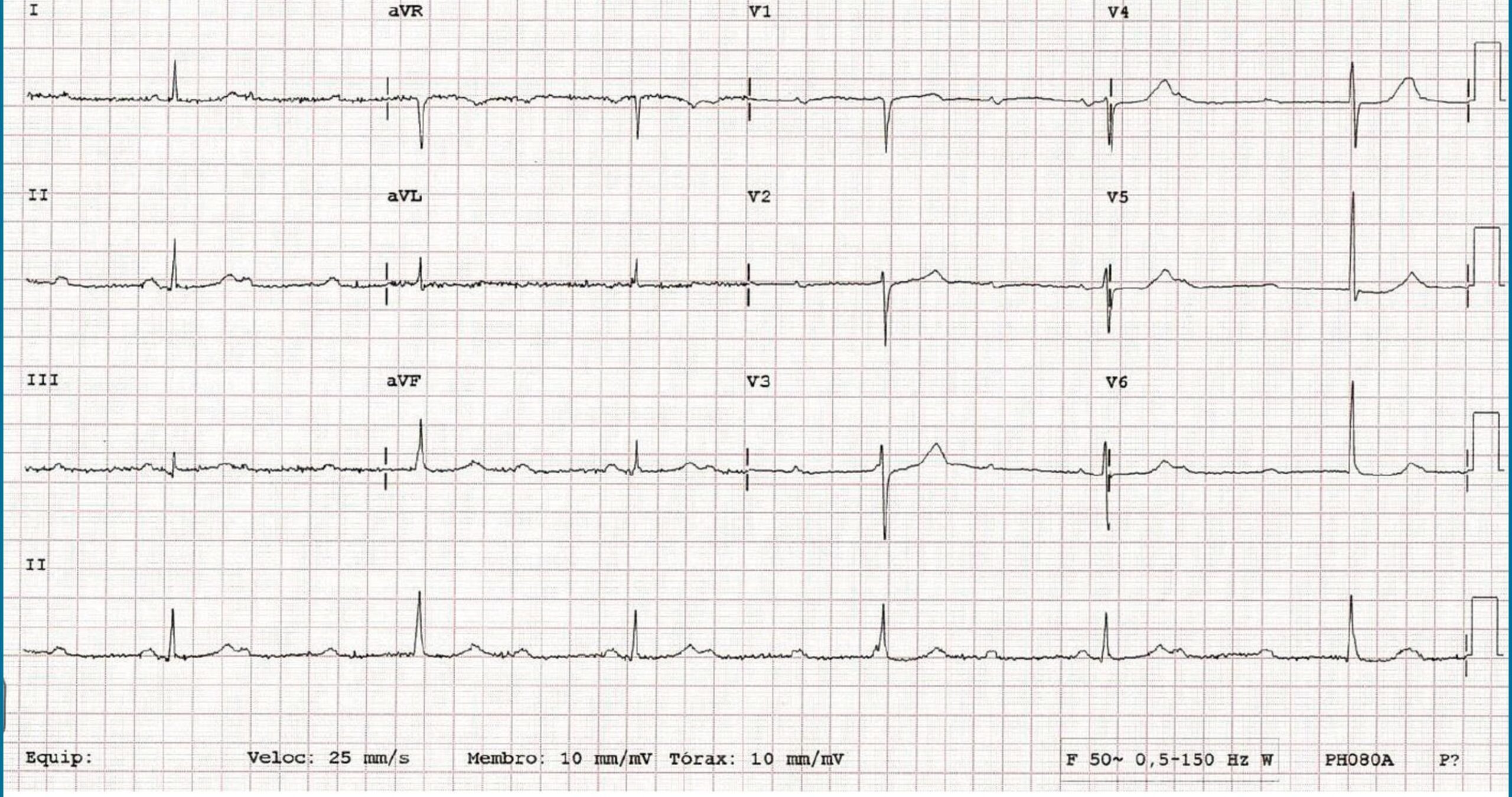
Cardiac memory, also termed Chatterjee phenomenon, is a known yet uncommonly recognized entity in which myocardial repolarization is altered after abnormal ventricular activation, such as with artificial pacemakers, intermittent left bundle branch block, ventricular premature beats, ventricular pre-excitation or episodes of tachycardia. This phenomenon is characterized by persistent but reversible T-wave changes on surface electrocardiogram (ECG) induced by an abnormal electrical activation pattern. The extent and direction of T-wave deviation depend on the duration and direction of abnormal electrical activation and can persist for several weeks. Rosenbaum et al. found that the T-wave “resembled” the abnormal QRS vector. The pathophysiology underlying cardiac memory is still complex and evolving, but alterations in the transient outward potassium current – Ito1 – and changes in the phosphorylation status of the cAMP responsive element binding protein (CREB) have been reported.
Although it seems that cardiac memory is a relatively benign pathophysiologic finding, it may lead to unnecessary and invasive diagnostic investigation if it is not recognized.
[…]