ABC Family Arquivos Brasileiros de Cardiologia International Journal of Cardiovascular Sciences ABC Heart Failure & Cardiomyopathy ABC Imagem Cardiovascular
Português English
ABC Family
Português English
  • About
    • About ABC Family
    • Internal Regulation
    • Editorial Board
    • Brazilian Society of Cardiology (SBC)
  • Issues
  • SBC Guidelines
  • Content
    • Videos
    • Podcasts
    • News
  • About
    • About ABC Family
    • Internal Regulation
    • Editorial Board
    • Brazilian Society of Cardiology (SBC)
  • Issues
  • SBC Guidelines
  • Content
    • Videos
    • Podcasts
    • News

ABC Family

  • ABC Family
  • Arquivos Brasileiros de Cardiologia
  • International Journal of Cardiovascular Sciences
  • ABC Heart Failure & Cardiomyopathy
  • ABC Imagem Cardiovascular
Search in

No content found.

Journals
Ordering
Article types
Others

  1. Home
  2. Keyword: Equity
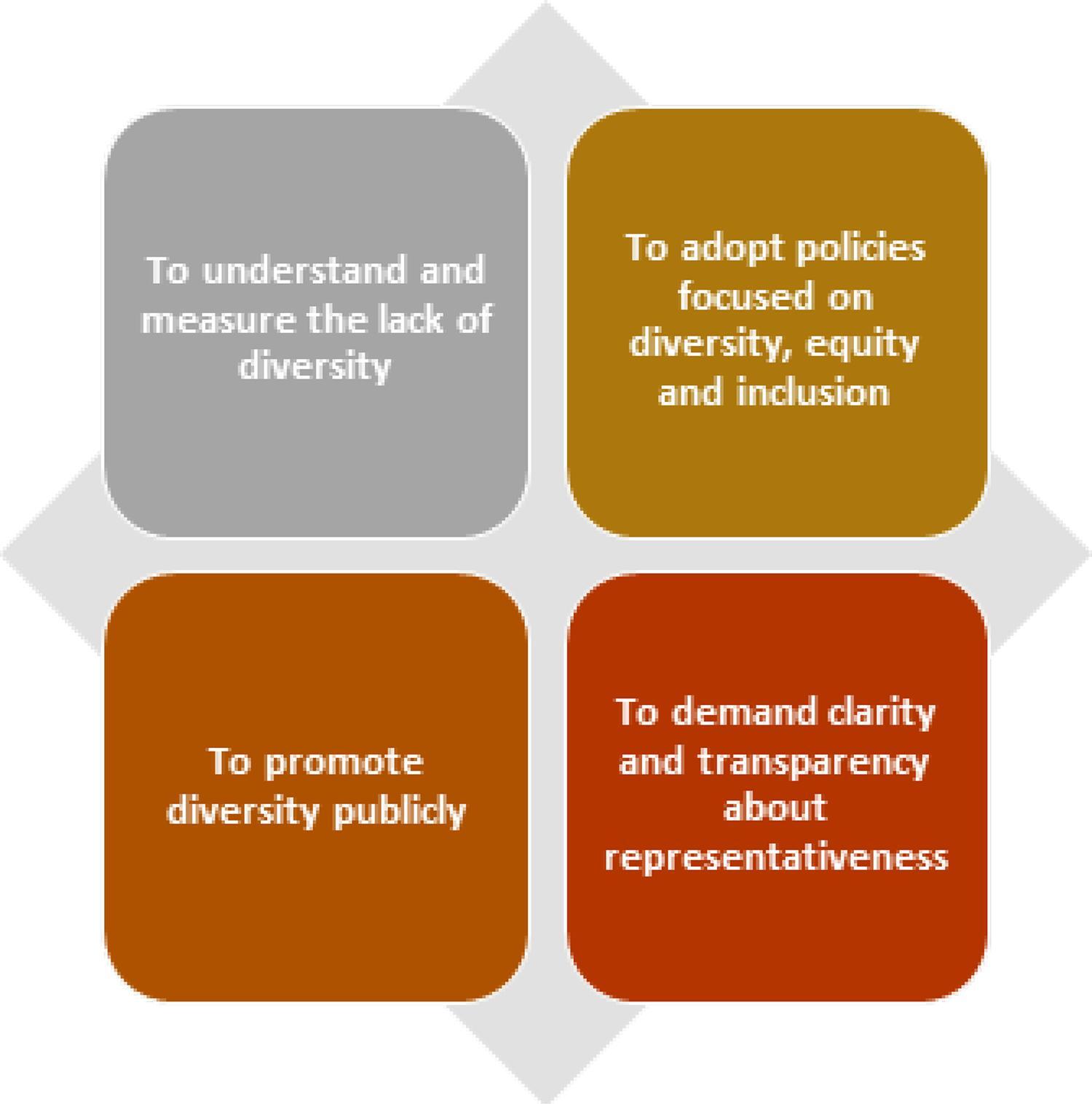
Figure 1
IJCS
Editorial

How Diversity, Equity and Inclusion are Changing Clinical Research

Claudio Tinoco Mesquita

Clinical research must be translated into changes in clinical practice. One of the difficulties faced by physicians is how to apply results of randomized clinical trials to patients with different profiles from those enrolled in the studies. So, one common question is: Is it appropriate to use clinical trial results in my patient? It is not easy to make clinical decisions based on results from clinical research that does not consider racial identity, ethnicity, age, or gender of patients. One important initiative in science is to promote diversity, equity and inclusion in clinical research in order to produce more reliable data.

Women are historically underrepresented in cardiovascular disease trials, despite sex-determined differences that lead to different forms of clinical presentation and therapeutic management. In cardiology, clinical presentation, risk stratification, prevention, treatment, and outcome parameters are gender sensitive, and this should be taken into account when designing clinical trials. Recently, the American College of Cardiology’s Cardiovascular Disease in Women Committee Leadership Council pointed out the low rates of women enrollment in cardiovascular research: the rates of women across coronary artery disease, acute coronary syndrome, and heart failure trials were 27.3%, 26.9% and 28,6%, respectively. Sex-specific data concerning therapy is essential because women may respond differently than men and may even have adverse effects from some drugs at the same dosage that are beneficial to men. To being with, part of this small participation of women in cardiovascular (CV) clinical trials can be attributed to the limited diversity in the leadership of these studies: only 10% of members in leadership committees of CV clinical trials are women. A similar number of 10% of CV trials published have a woman on the first or last author position. Women need to be included, respected, empowered, and adequately represented in clinical research to guarantee the applicability of the results to their gender. Recently, the International Journal of Cardiovascular Sciences endorsed SAGER guidelines to improve the reporting of sex and gender in research while creating an environment able to integrate equity of sex and gender into manuscripts as an integral part of the editorial process. , As women, minorities also have been underrepresented in CV clinical studies. Some minority populations have shown disproportionately higher rates of certain diseases such as hypertension, heart failure and cerebrovascular disease.

[…]

  • Ageism
  • Cardiovascular Diseases/therapy
  • Clinical Trials as Topic
  • Equity
  • Gender Diversity
  • Women, Inclusion
Read Full Article
Creative Commons Attribution (CC BY) Creative Commons license
12/09/2022 DOI: 10.36660/ijcs.20220131
IJCS
Editorial

COVID-19: An Insult to Injury on Equity

Biljana Parapid et al. Rachel M. Bond

SARS-CoV-2, which causes COVID-19, created a pandemic that not only overwhelmed the world in December 2019, but also challenged humanity in every way.

While a significant portion of the global population remained in a standstill, waiting for an end and adapting to limits of all sorts, including working from home, a new workforce category emerged: the “frontline” workers. Doctors, nurses, and all allied professions employed by the healthcare system were joined by a long line of diverse service providers. The latter faced different forms of discrimination from their surroundings, fearing the risk of infection based on high rates of medical misinformation; for the former group, Pandora’s box of bias was yet to be opened, in particular for women.

[…]

  • COVID19
  • Diversity
  • Equity
  • Inclusion
  • SARS-CoV-2
Read Full Article
Creative Commons Attribution (CC BY) Creative Commons license
19/07/2021 DOI: 10.36660/ijcs.20210165

How to cite this article

EndNote RIS

Electronic Document Format (Vancouver)

Mesquita CT. How Diversity, Equity and Inclusion are Changing Clinical Research. International Journal of Cardiovascular Sciences 2022;35(5):563-5.

Electronic Document Format (ABNT)

Mesquita, Claudio Tinoco. How Diversity, Equity and Inclusion are Changing Clinical Research. International Journal of Cardiovascular Sciences, v. 35, n. 5, p. 563-565, Sep. 2022.

Electronic Document Format (APA)

Mesquita, C. T. (2022). How Diversity, Equity and Inclusion are Changing Clinical Research. International Journal of Cardiovascular Sciences, 35(5), 563-565.

Electronic Document Format (ISO)

Mesquita, Claudio Tinoco. How Diversity, Equity and Inclusion are Changing Clinical Research. International Journal of Cardiovascular Sciences [online]. 2022, vol. 35, n. 5, [cited 2026-10-14], pp. 563-565. Available from: <https://journals.cardiol.br/en/article/how-diversity-equity-and-inclusion-are-changing-clinical-research/>. ISSN 2359-4802

EndNote RIS

Electronic Document Format (Vancouver)

Parapid B, Bond RM. COVID-19: An Insult to Injury on Equity. International Journal of Cardiovascular Sciences 2021;34(4):342-3.

Electronic Document Format (ABNT)

Parapid, Biljana; Bond, Rachel M.. COVID-19: An Insult to Injury on Equity. International Journal of Cardiovascular Sciences, v. 34, n. 4, p. 342-343, Jul. 2021.

Electronic Document Format (APA)

Parapid, B., & Bond, R. M. (2021). COVID-19: An Insult to Injury on Equity. International Journal of Cardiovascular Sciences, 34(4), 342-343.

Electronic Document Format (ISO)

Parapid, Biljana and Bond, Rachel M.. COVID-19: An Insult to Injury on Equity. International Journal of Cardiovascular Sciences [online]. 2021, vol. 34, n. 4, [cited 2026-10-14], pp. 342-343. Available from: <https://journals.cardiol.br/en/article/covid-19-an-insult-to-injury-on-equity/>. ISSN 2359-4802

  • About ABC Family
  • Internal Regulation
  • Editorial Board
  • Brazilian Society of Cardiology (SBC)

Issues

SBC Guidelines

  • Videos
  • Podcasts
  • News