Roberto Gamarski et al. Fernando Ferreira de Castro Jose Antonio Sena do Nascimento Mirhelen Mendes de Abreu
Abstract
Background
Cardiovascular outcomes in patients with rheumatoid arthritis (RA) have been extensively explored in the literature concerning biological factors.
Objectives
This nationwide retrospective cohort study aimed to explore the distribution of cardiovascular events in patients with RA in Brazil, assisted by the Unified Health System (SUS), and to identify factors associated with these outcomes.
Methods
Patients aged ≥ 18 years were identified from the Brazilian Unified Health System Database (DATASUS) through RA ICD-10 codes and their therapeutic procedures according to SUS guidelines. RA patients treated with disease-modifying antirheumatic drugs (DMARDs) were categorized as biological users and non-biological (synthetic) users. Cardiovascular outcomes, including acute coronary artery disease (ACAD), heart failure, and cerebrovascular accident (CVA), were analyzed. Patients were also categorized based on treatment patterns (switch or constant users). Socioeconomic status was assessed using the FIRJAN Municipal Development Index (IFDM). Descriptive analyses identified population distribution and cardiovascular outcomes, and multiple logistic regression explored associated factors. The statistical significance adopted was p < 0.05.
Results
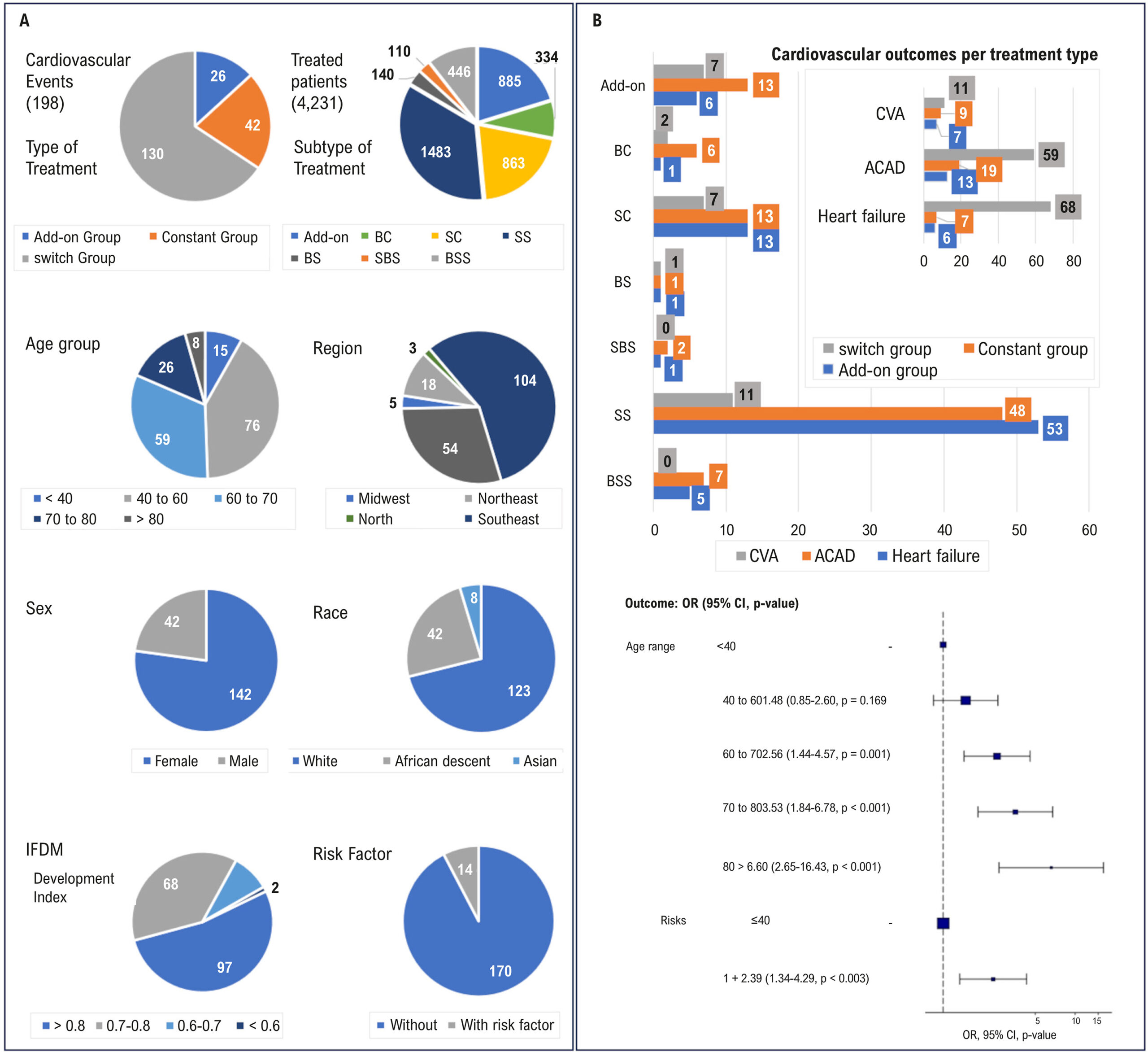
Among the 4,321 patients with RA treated with DMARDS, 198 cardiovascular outcomes (4.68%) were identified. The majority were female (3,398 [80.3%]) with a mean age of 54.2 (standard deviation 12.8) years, predominantly from the Southeast Region (2,421 [57.2%]). The predominant overall IFDM was > 0.8 (47.5%). Advanced age, the presence of cardiovascular risk factors, and the use of synthetic DMARDs were associated with cardiovascular outcomes.
Conclusion
Cardiovascular outcomes in patients with RA are common and are associated with age, comorbidities, and the drugs used for treatment.