Regional Left Ventricular Myocardial Strain Alterations in Patients with Duchenne Muscular Dystrophy and Correlation with Electrocardiographic and Motor Function Alterations
Abstract
Background
: Duchenne Muscular Dystrophy (DMD) is characterized by progressive degradation of muscle function. Myocardial dysfunction is a major cause of mortality; however, its correlation with skeletal motor function remains unclear.
Objective
To assess myocardial function and to correlate it with motor function in patients with DMD.
Methods
This was a cross-sectional observational study of patients with DMD. Evaluations included the Motor Function Measurement (MFM) scale, electrocardiogram (ECG), and echocardiography (Echo) with speckle-tracking (STE) imaging of the left ventricle (LV). The level of significance adopted in the statistical analysis was 5%.
Results
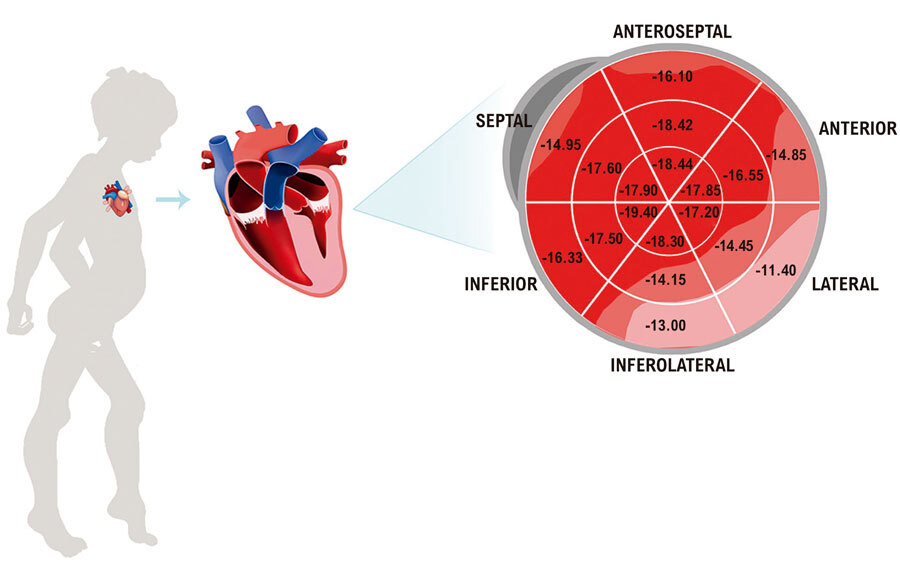
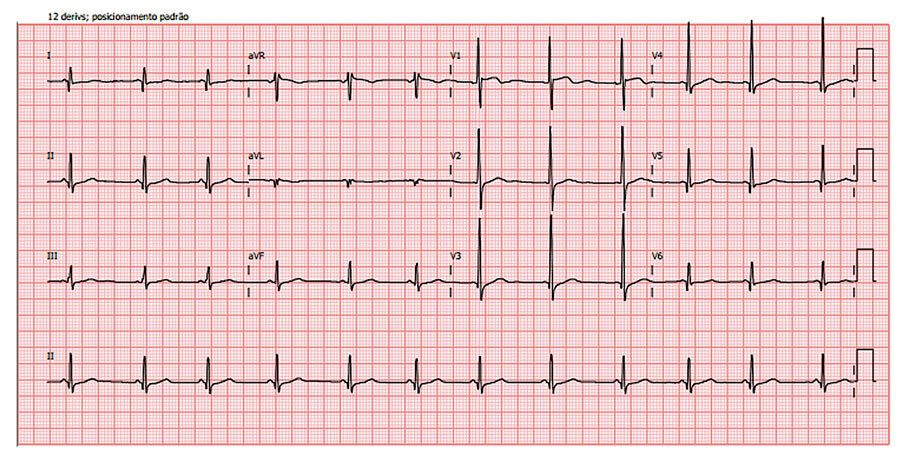
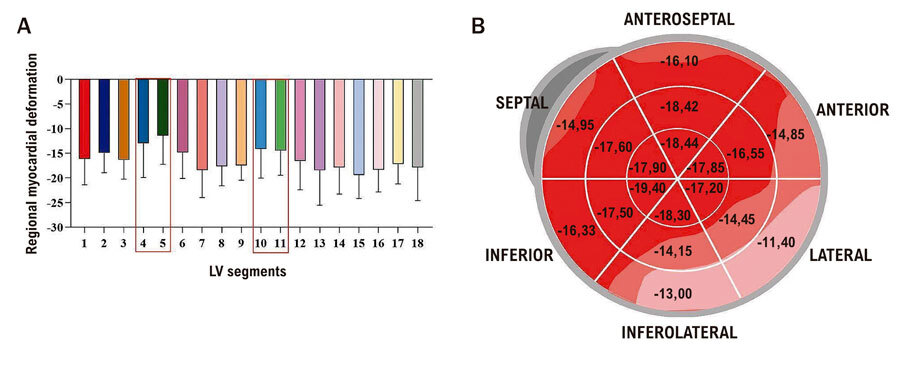
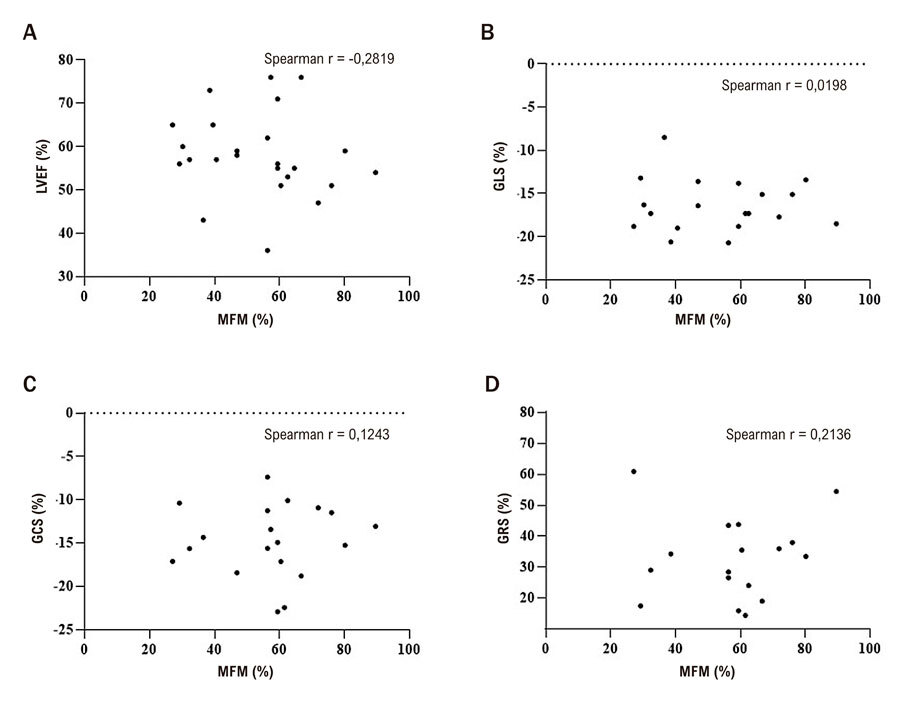
Thirty-three patients with a mean age of 14.30 ± 4.09 years. The average MFM score was 52.30 ± 16.32%. Electrocardiographic abnormalities were observed in 75% of patients. Left ventricular ejection fraction (LVEF) was preserved (57.80 ± 9.62%). Global longitudinal strain (GLS) was reduced in 70% of the patients (-15.06 ± 2.46%; normal ≤ -18%), global circumferential strain (GCS) was decreased in 76% (-12.99 ± 2.89; normal ≤ -18%), and global radial strain (GRS) was reduced in 80% (20.52 ± 15.72; normal ≥ 40%). Hypokinesia and a significant reduction in regional myocardial strain (REGLSi) were also observed in the inferior and inferolateral segments of the LV. No significant correlation was found between MFM and ECHO variables.
Conclusion
: Patients with DMD exhibit early compromise in STE parameters (GLS, GRS and GCS) and in REGLSi, particularly in the inferior and inferolateral LV regions, even with preserved LVEF (Central Figure). No significant correlation was observed between motor and cardiac function parameters.
Images
Image gallery fullscreen viewer
Comments are moderated by the editorial team before publication. Discussions should be evidence-based and use scientific language. Conflicts of interest should be declared.