Individual Effects of Angiotensin II Receptor Blockers on Major Adverse Cardiovascular Events: A Systematic Review and Network Meta-Analysis
Abstract
Background
Angiotensin II receptor blockers (ARBs) antagonize the AT1 receptor and are effective antihypertensives. Modest differences in blood pressure-lowering efficacy have been reported, reflecting variations in pharmacokinetics, receptor binding, duration of action, and potential pleiotropic effects. However, data on their comparative effects on cardiovascular outcomes in patients are scarce.
Objective
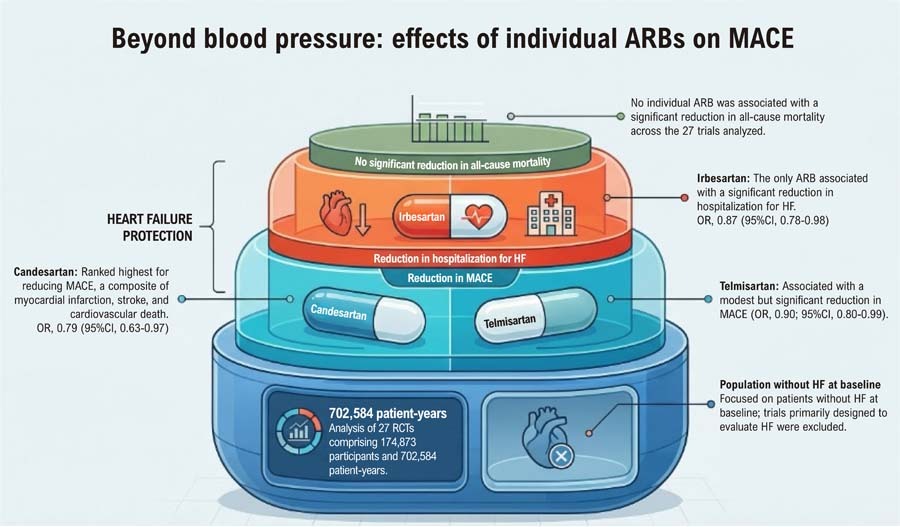
To assess the effects of ARBs on MACE, hospitalization for heart failure (HHF), and all-cause mortality in randomized trials not primarily designed to evaluate heart failure (HF).
Methods
MEDLINE/PubMed, Cochrane Central Register of Controlled Trials, and ClinicalTrials.gov databases were searched until May 2025. Published RCTs reporting major adverse cardiovascular events (MACE), HHF or all-cause death, involving ARBs, with at least 100 individuals per arm and ≥12 months of follow-up, were included. Studies focusing primarily on patients with existing HF were excluded. Incidence rates of HHF, MACE, and all-cause death. A random-effects network meta-analysis including 27 RCTs and 702,584 patient-years was performed.
Results
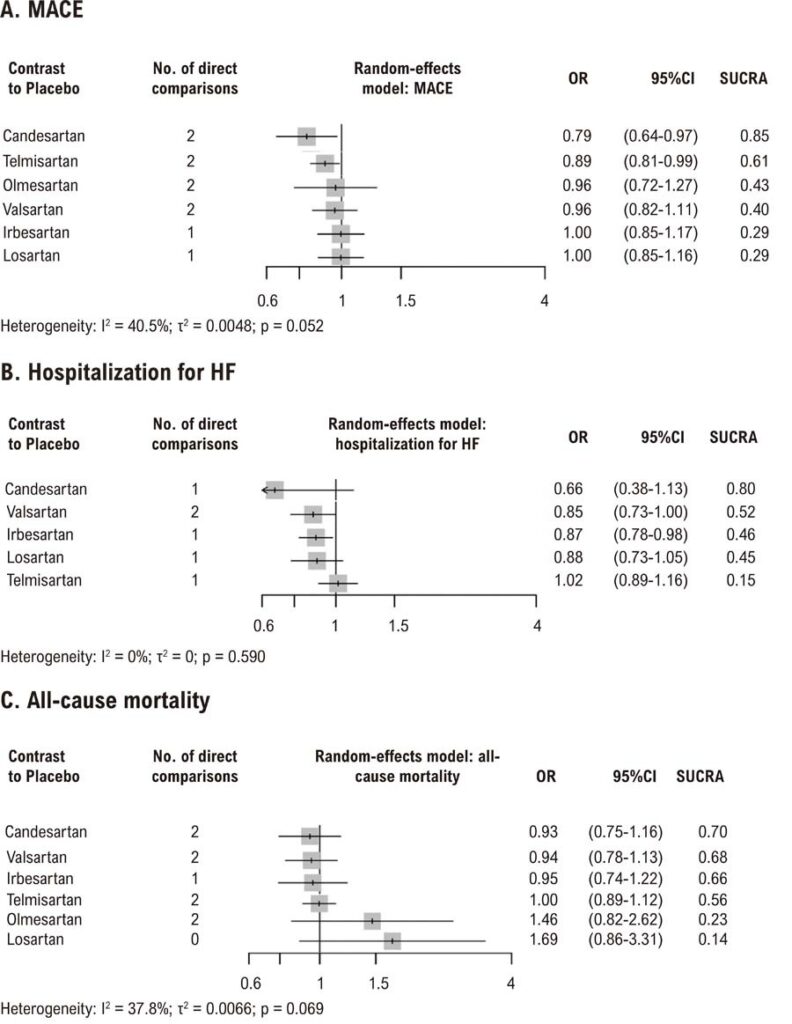
Candesartan reduced MACE versus placebo (OR 0.79; 95% CI, 0.63–0.97; SUCRA=0.85), ranking highest among ARBs, while telmisartan showed a smaller but significant reduction (OR 0.90; 95% CI, 0.80–0.99; SUCRA=0.61). The analysis relied on study-level data; included moderately sparse treatment networks with predominantly indirect comparisons between ARBs.
Conclusion
This network meta-analysis in patients without baseline HF indicates that candesartan and telmisartan reduce MACE, suggesting clinically meaningful differences among ARBs. Given the predominantly indirect nature of several comparisons, these findings should be interpreted cautiously.
Images
Image gallery fullscreen viewer
Comments are moderated by the editorial team before publication. Discussions should be evidence-based and use scientific language. Conflicts of interest should be declared.