Lipoprotein (a) is associated with basal insulin levels in patients with type 2 Diabetes Mellitus
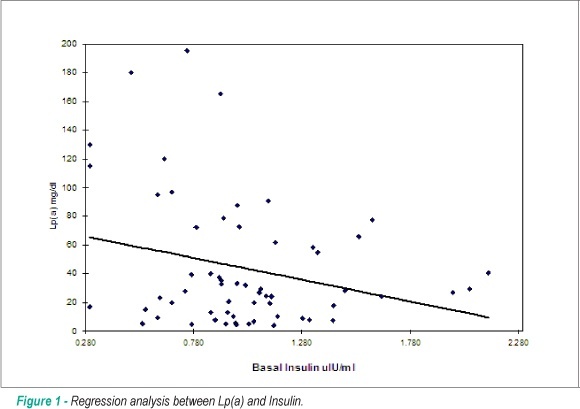
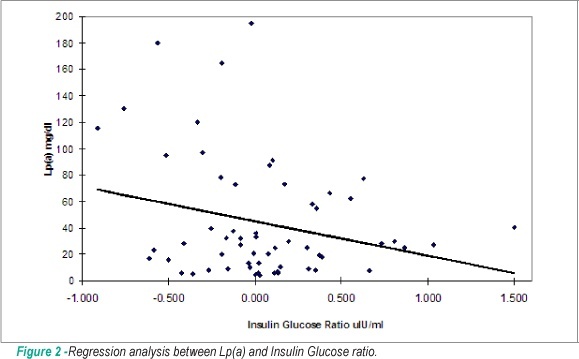
BACKGROUND: It has not been clearly established whether insulin resistance/deficiency leads directly to atherogenesis or through its association with other risk factors such as Lipoprotein(a) [Lp(a)]. OBJECTIVE: This project aimed at studying the association between basal Insulin, Lipids and Lipoprotein(a) levels in Patients with Type 2 Diabetes Mellitus. METHODS: Fasting blood samples were analyzed for Insulin, Lipoprotein(a), total cholesterol (TC), triglycerides (TG), low density lipoprotein cholesterol (LDL-C), high density lipoprotein cholesterol (HDL-C), glucose and glycosylated hemoglobin (HbA1c) levels in 60 patients with type 2 Diabetes Mellitus (DM) and 28 healthy subjects. We divided patients into two groups based on basal insulin levels: > 10 µIU/ml and < 10 µIU/ml. RESULTS: Insulin levels were higher in diabetic versus control individuals [p < 0.05]. TC (p< 0.01), LDL-C (p< 0.05), TC/HDL ratio (p< 0.01) and TG levels (p< 0.05) were higher and HDL- C levels were significantly lower (p 10 µIU/ml when compared to those with basal insulin < 10 µIU/ml (p < 0.05). Regression analysis revealed a significant relationship of Lp(a) with insulin levels (r = 0.262, p < 0.05) and Insulin Glucose ratio (r = 0.257, p < 0.05). CONCLUSION: Lp(a) levels correlate inversely with insulin levels in Type 2 diabetic patients. Lp(a) may be one of the cardiovascular risk factor in type 2 diabetic patients with longer duration of DM.
Images
Image gallery fullscreen viewer
Comments are moderated by the editorial team before publication. Discussions should be evidence-based and use scientific language. Conflicts of interest should be declared.