Electrical cardioversion and myocardial injury: evaluation by new cardiac injury markers
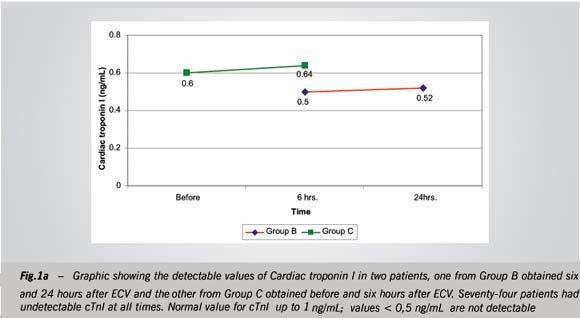
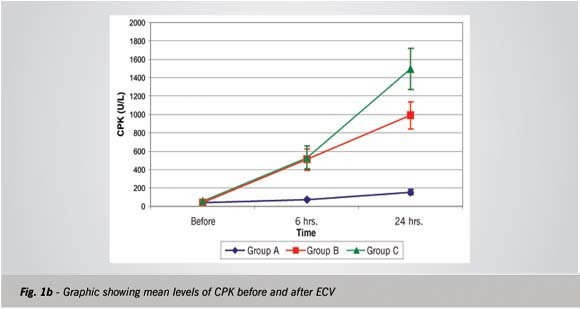
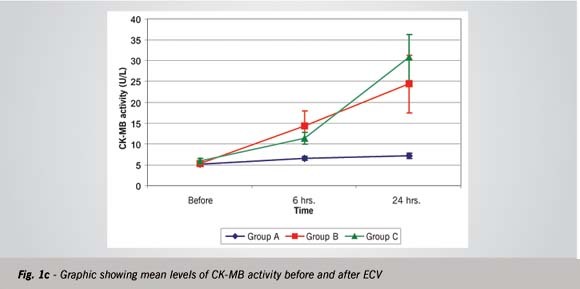
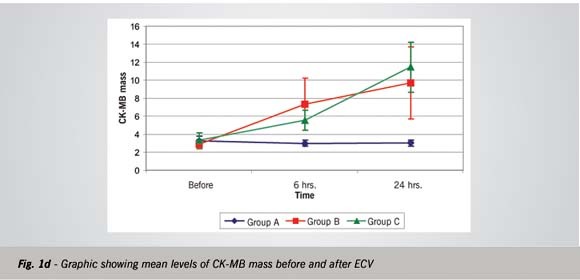
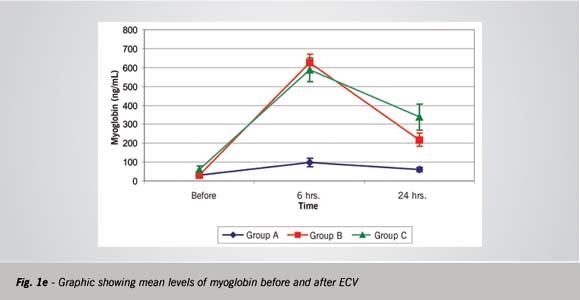
OBJECTIVE: Evaluate, based on the evolution of new biochemical markers of cardiac damage, if electrical cardioversion (ECV) causes myocardial injury. METHODS: Seventy-six patients (P) submitted to elective ECV for atrial fibrillation or atrial flutter were evaluated. Creatine phosphokinase (CPK), CK-MB activity, CK-MB mass, myoglobin and cardiac troponin I (cTnI) were measured before, and 6 and 24 hours after ECV. RESULTS: ECV was successful in 58 P (76.3%). Cumulative energy (CE) was up to 350 joules (J) in 36 P, from 500 to 650 J in 20 P and from 900 to 960 J in 20 P; the mean energy delivered being 493 J (± 309). The levels of cTnI remained within normal limits in all 76 P. The increase of cumulative energy led to an elevation of CPK levels (> p value = 0.007), CK-MB activity (> p value = 0.002), CK-MB mass (> p value = 0.03), and myoglobin (> p value = 0.015). A positive correlation between the cumulative energy and CPK peaks was observed (r = 0.660; p < 0.001), CK-MB activity (r = 0.429; p < 0.0001), CK-MB mass (r = 0.265; p = 0.02), and myoglobin (r = 0.684; p < 0.0001), as well as between the number of shocks and the CPK peaks (r = 0.770; p < 0.001), CK-MB activity (r = 0.642; p < 0.0001), CK-MB mass (r = 0.430; p < 0,0001), and myoglobin (r = 0.745; p < 0.0001). CONCLUSION: ECV does not cause myocardial injury detectable by cTnI measurement. Elevations of CPK, CK-MB activity, CK-MB mass and myoglobin result from skeletal muscle injury and are positively correlated with the CE delivered or with the number of shocks.
Images
Image gallery fullscreen viewer
Comments are moderated by the editorial team before publication. Discussions should be evidence-based and use scientific language. Conflicts of interest should be declared.