Effects of propafenone associated with propofol on myocardial contractility, heart rate, coronary flow, and the incidence of arrhythmia in isolated hearts of rats
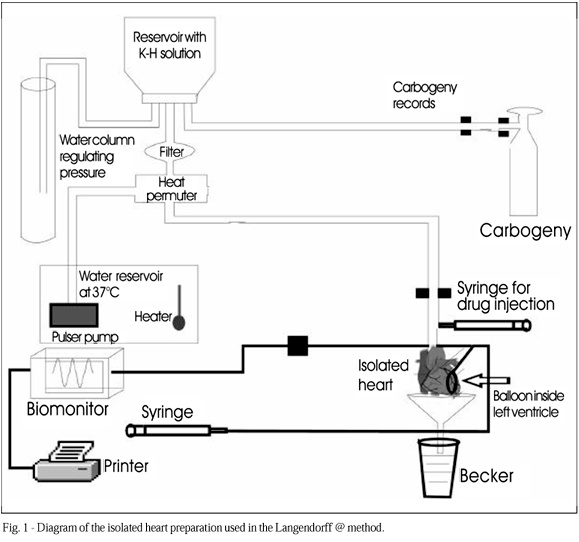
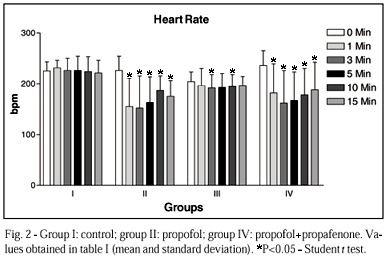
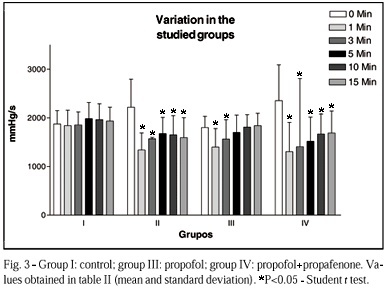
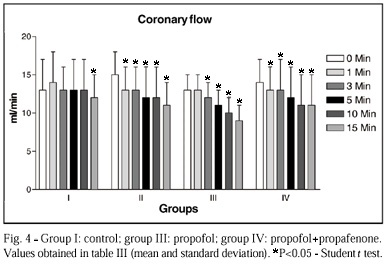
OBJECTIVE: To study the influence of propafenone associated with propofol on myocardial contractility (dP/dt and heart rate), coronary flow, and the incidence of arrhythmia in isolated rat hearts. METHODS: Forty albino rats were anesthetized with sulfuric ether, a modified Langendorff method was performed, and the rats were fed with Krebs-Henseleit (K-H) solution, (95% O2, 5% CO2, pH 7.4±0.1, perfusion pressure between 90 and 100cm of water, and temperature 37± 0.5ºC). Control records were obtained after a stabilization period and rats were distributed into the following 4 groups: I (control), II (100mcg propafenone), III (25mcg propofol), and IV (propafenone-propofol). RESULTS: A decrease (P<0.05) in the heart rate in groups II and IV was observed, with a greater decrease in group II. A decrease was noted in the dP/dt ratio (P< 0.05) in groups II and IV, during all periods. Group III experienced depression from the 1st to the 3rd minute. Coronary flow had a decrease (P<0.05) in all groups, compared with the control group, especially in group IV with a decrease from 14mL/min to 11mL/min. Arrhythmogenic effects of propafenone (pro-arrhythmia) were verified in 50% of group II. In the association with propofol (group IV), no significant difference occurred, and arrhythmias (pro-arrhythmic effect) were observed in 40% of the hearts. CONCLUSION: The association propafenone-propofol was not harmful to the use of propafenone solely, regarding the effects observed in myocardial contractility, coronary flow, and in the incidence of arrhythmias.
Images
Image gallery fullscreen viewer
Comments are moderated by the editorial team before publication. Discussions should be evidence-based and use scientific language. Conflicts of interest should be declared.