Consequences of the Prolonged Waiting Time for Patients Candidates for Heart Surgery
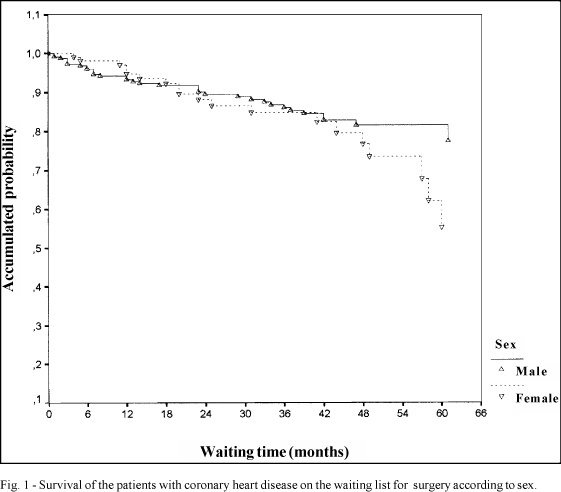
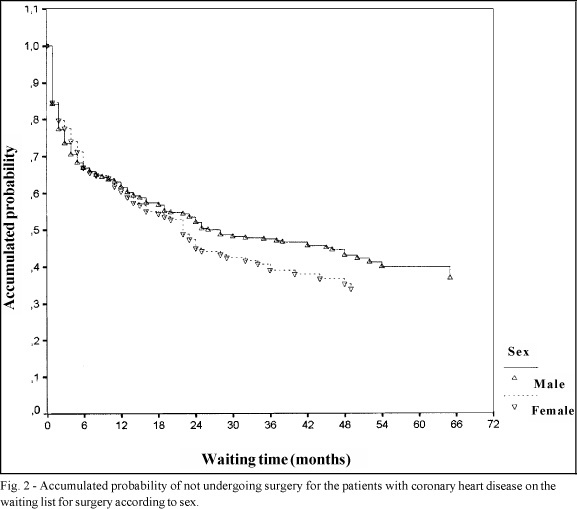
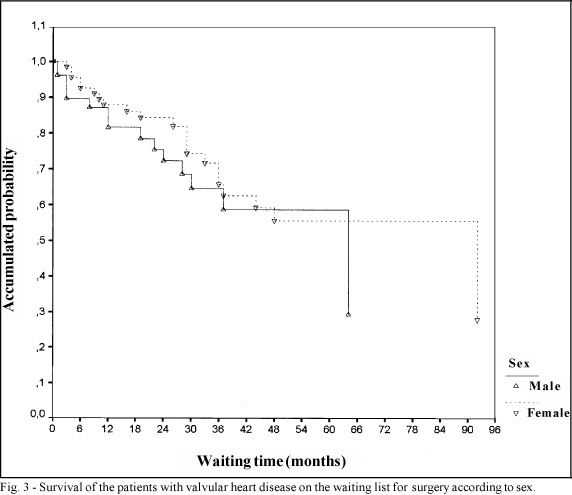
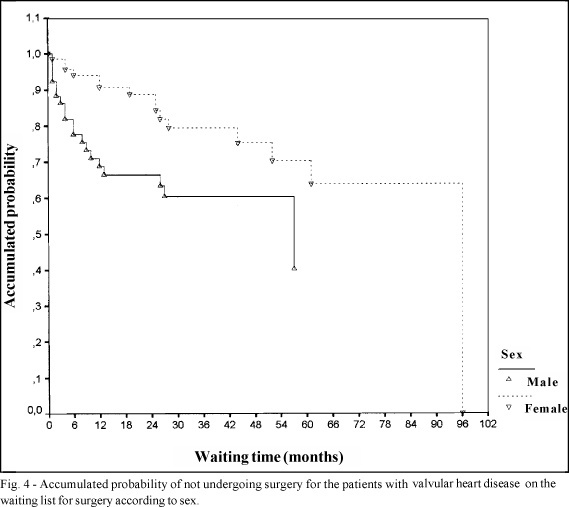
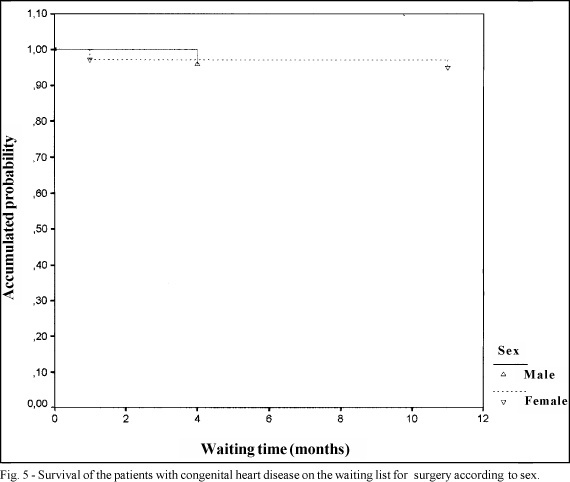
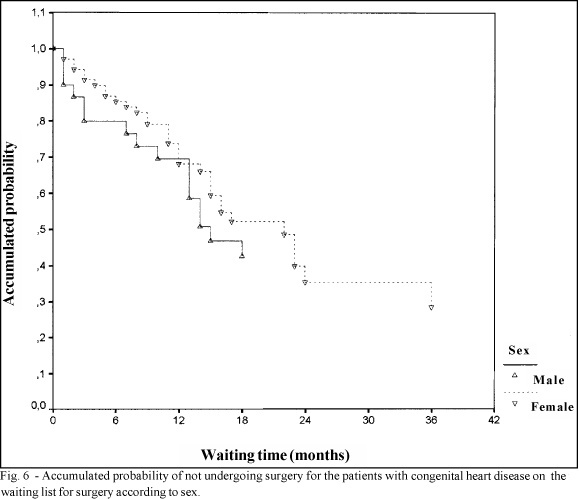
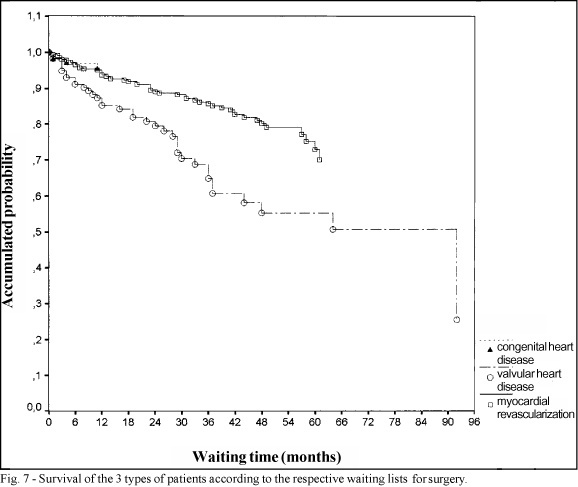
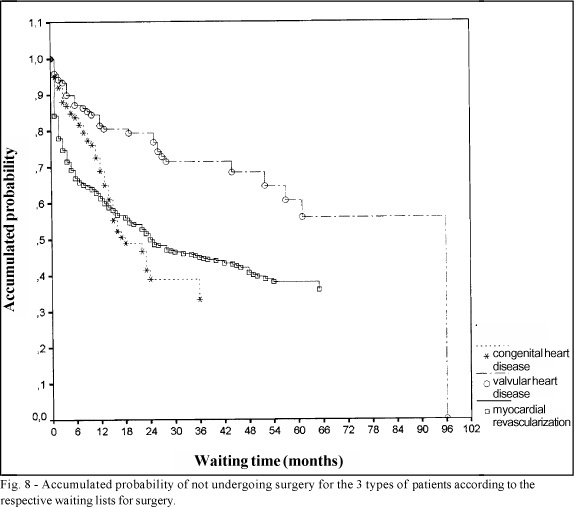
OBJECTIVE – To assess mortality and the psychological repercussions of the prolonged waiting time for candidates for heart surgery. METHODS – From July 1999 to May 2000, using a standardized questionnaire, we carried out standardized interviews and semi-structured psychological interviews with 484 patients with coronary heart disease, 121 patients with valvular heart diseases, and 100 patients with congenital heart diseases. RESULTS – The coefficients of mortality (deaths per 100 patients/year) were as follows: patients with coronary heart disease, 5.6; patients with valvular heart diseases, 12.8; and patients with congenital heart diseases, 3.1 (p<0.0001). The survival curve was lower in patients with valvular heart diseases than in patients with coronary heart disease and congenital heart diseases (p<0.001). The accumulated probability of not undergoing surgery was higher in patients with valvular heart diseases than in the other patients (p<0.001), and, among the patients with valvular heart diseases, this probability was higher in females than in males (p<0.01). Several patients experienced intense anxiety and attributed their adaptive problems in the scope of love, professional, and social lives, to not undergoing surgery. CONCLUSION – Mortality was high, and even higher among the patients with valvular heart diseases, with negative psychological and social repercussions.
Images
Image gallery fullscreen viewer
Comments are moderated by the editorial team before publication. Discussions should be evidence-based and use scientific language. Conflicts of interest should be declared.