A Prospective Cohort Study on Cardiotoxicity of Adjuvant Trastuzumab Therapy in Breast Cancer Patients
Abstract
Background:
Cardiotoxicity is an important side effect of trastuzumab therapy and cardiac surveillance is recommended.
Objectives:
The aim of our study was to prospectively assess baseline patients’ characteristics, level of N-terminal pro-brain natriuretic peptide (NT-proBNP) and echocardiographic parameters as possible predictors of trastuzumab-related cardiac dysfunction.
Methods:
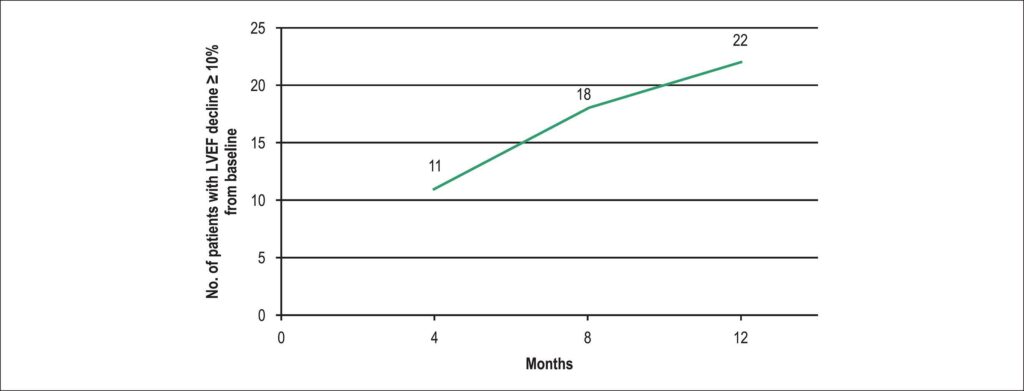
In a prospective cohort study, clinical, echocardiographic and neurohumoral assessment was performed at baseline, after 4, 8 and 12 months in breast cancer patients undergoing post-anthracycline (3-4 cycles) adjuvant therapy with trastuzumab. Trastuzumab-related cardiac dysfunction was defined as a decline of ≥ 10% in left ventricular ejection fraction (LVEF).
Results:
92 patients (mean age, 53.6 ± 9.0 years) were included. Patients who developed trastuzumab-related LVEF decline ≥ 10% (20.6%) during treatment had significantly higher baseline LVEF (70.7 ± 4.4%) than those without (64.8 ± 5.5%) (p = 0.0035). All other measured baseline parameters (age, body mass index, arterial hypertension, level of NT-proBNP and other echocardiographic parameters) were not identified as significant.
Conclusions:
Our findings suggest that baseline patient’ characteristics, level of NT-proBNP and echocardiographic parameters, as long as they are within normal range, are not a reliable tool to predict early trastuzumab-related cardiac dysfunction in patients undergoing post-low dose anthracycline adjuvant trastuzumab therapy. A LVEF decline in patients with high-normal baseline level although statistically significant is not clinically relevant.
Images
Image gallery fullscreen viewer
Comments are moderated by the editorial team before publication. Discussions should be evidence-based and use scientific language. Conflicts of interest should be declared.