Coinfection with Mycoplasma Pneumoniae and Chlamydia Pneumoniae in ruptured plaques associated with acute myocardial infarction
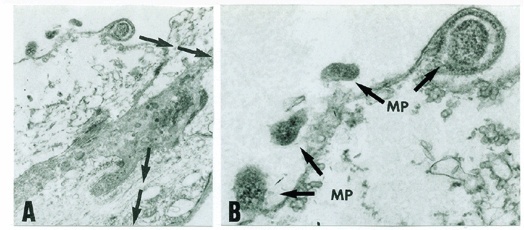
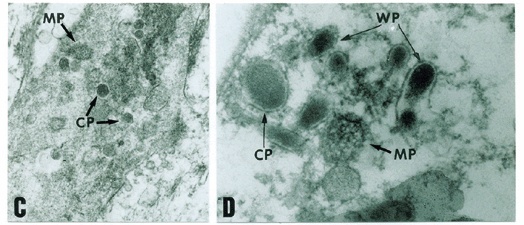
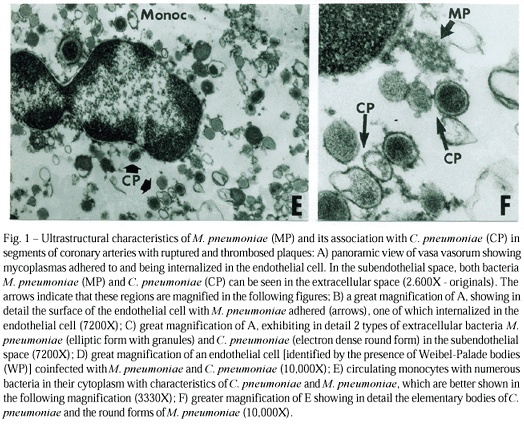
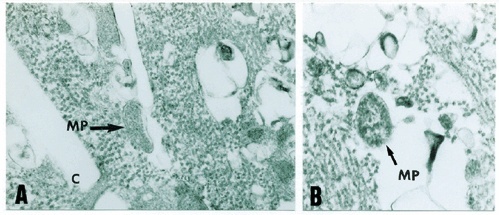
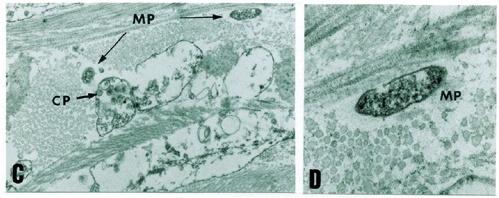
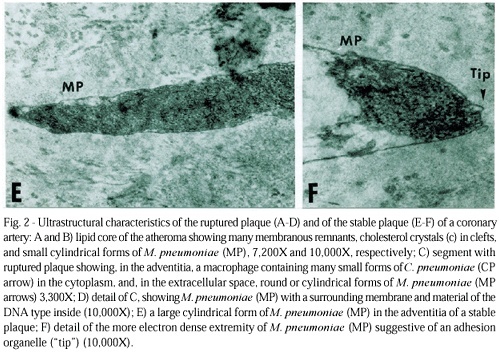
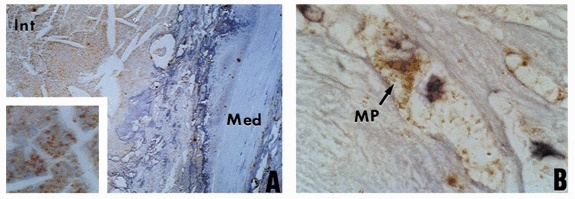
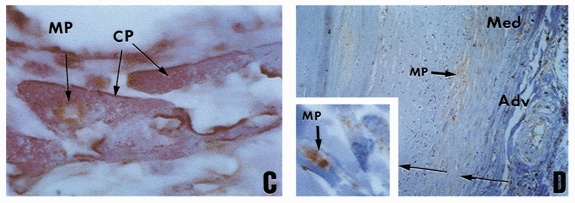
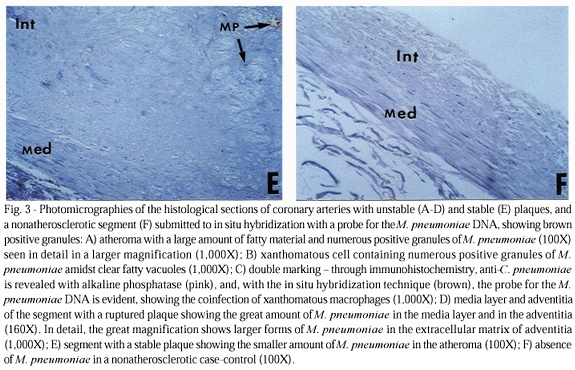
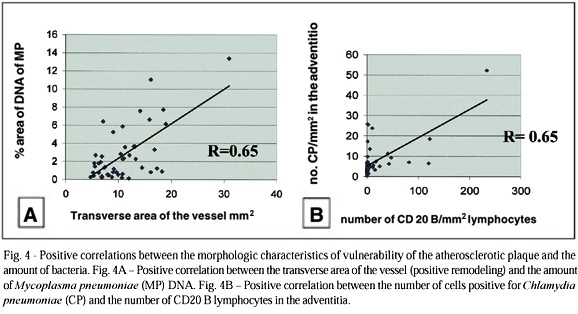
OBJECTIVE: To study atheromas, Mycoplasma pneumoniae (M. pneumoniae), and Chlamydia pneumoniae (C. pneumoniae). METHODS: C. pneumoniae was studied with immunohistochemistry and M. pneumoniae with in situ hybridization (ISH), in segments of coronary arteries (SCA) as follows: group A – thrombosed ruptured plaques (TRP) of 23 patients who died due to acute myocardial infarction (AMI); group B – 23 nonruptured plaques (NRP) of group A patients; group C – NRP of 11 coronary patients who did not die due to AMI; and group D – 11 SCA from patients with dilated cardiomyopathy or Chagas’ disease without atherosclerosis. RESULTS: The mean number of C. pneumoniae+ cells/400x in groups A, B, C, and D was, respectively, 3.3±3.6; 1.0±1.3; 1.2±2.4; and 0.4±0.3; and the percentage of M. pneumoniae area was, respectively, 3.9±3.5; 1.5± 1.6; 0.9±0.9; and 0.4±0.2. More M. pneumoniae and C. pneumoniae were found in of group A than in group B (P<0.01). Good correlation was seen between the area of the vessel and the M. pneumoniae area in the plaque (r = 0.46; P=0.001) and between C. pneumoniae+ cells and CD4+ T lymphocytes (r = 0.42; P<0.01). The number of C. pneumoniae+ cells correlated with CD20+ B cells (r=0.48; P<0.01). CONCLUSION: M. pneumoniae and C. pneumoniae are more frequently found in TRP correlate with the intensity of the inflammation and diameter of the vessel (positive remodeling).
Images
Image gallery fullscreen viewer
Comments are moderated by the editorial team before publication. Discussions should be evidence-based and use scientific language. Conflicts of interest should be declared.