7th Brazilian Guideline of Arterial Hypertension: Chapter 7 – Pharmacological Treatment
Objectives
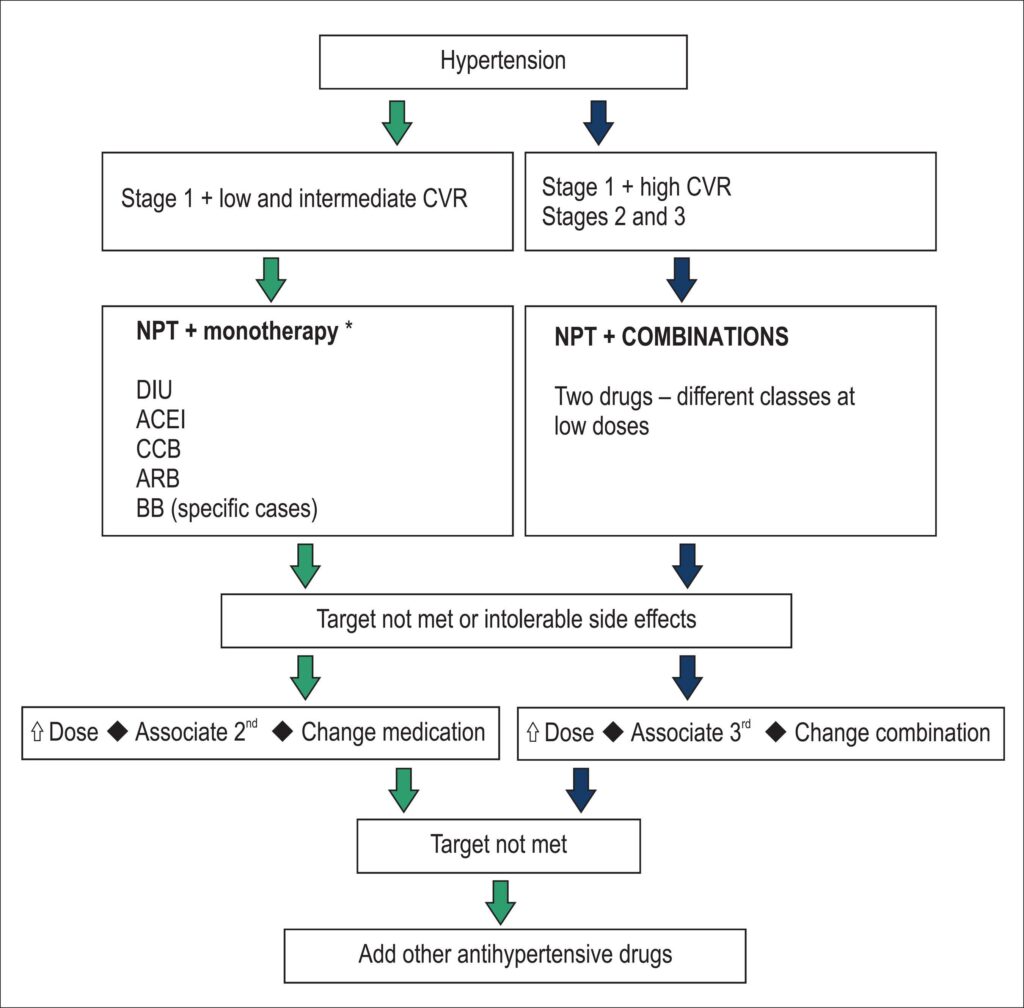
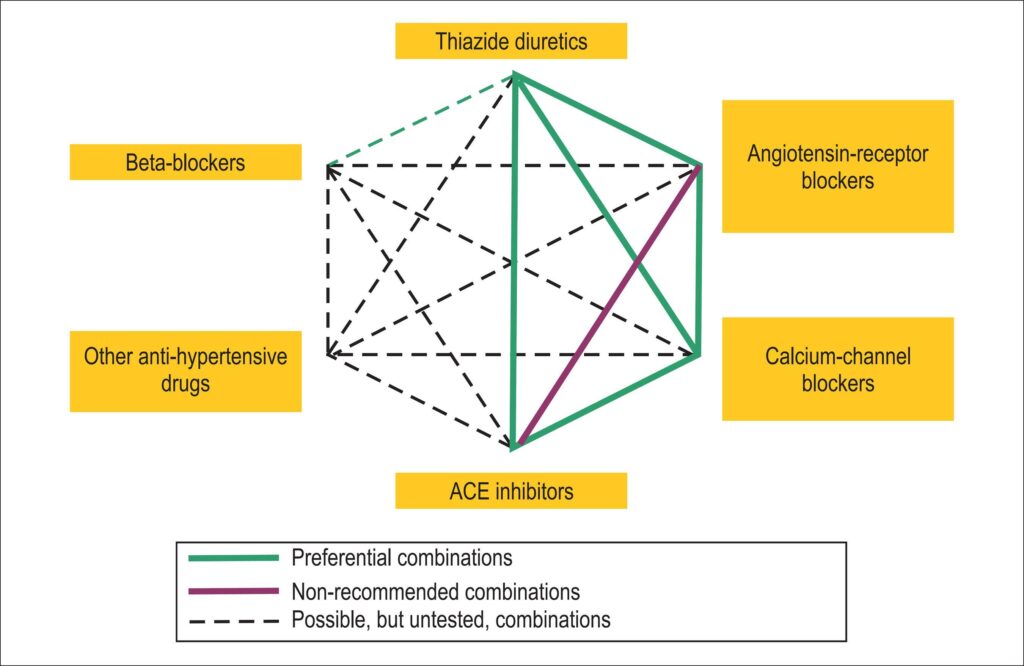
The treatment of AH is ultimately aimed at reducing CV morbidity and mortality.– Clinical studies of outcome have provided scientific evidence of the benefits of the use of diuretics (DIUs) (GR: I; LE: A),,– beta-blockers (BBs) (GR: I; LE: A),–, calcium-channel blockers (CCBs) (GR: I; LE: A),,,,– angiotensin-converting-enzyme inhibitors (ACEIs) (GR: I; LE: A),,,,,– and angiotensin-receptor blockers (ARBs) (GR: I; LE: A).,,– It is worth noting that most of those studies have used an association of drugs. Based on the information available, the protection observed does not depend on the type of drug used, but mainly on BP reduction.,–, Recent meta-analyses have reported that the benefits obtained from BB are smaller,,– as compared to those provided by the other drug groups, and, thus, BBs should be reserved for specific situations. Regarding alpha-blockers and direct vasodilators, there is no effective information on the outcomes of morbidity and mortality. Regarding direct renin inhibitors, only one study of outcome in diabetic patients has been early interrupted due to lack of benefits and possible harm. The higher the CV risk, the greater the benefits, which occur even for small BP elevations.–,,,
[…]
Images
Image gallery fullscreen viewer
Comments are moderated by the editorial team before publication. Discussions should be evidence-based and use scientific language. Conflicts of interest should be declared.